Opera
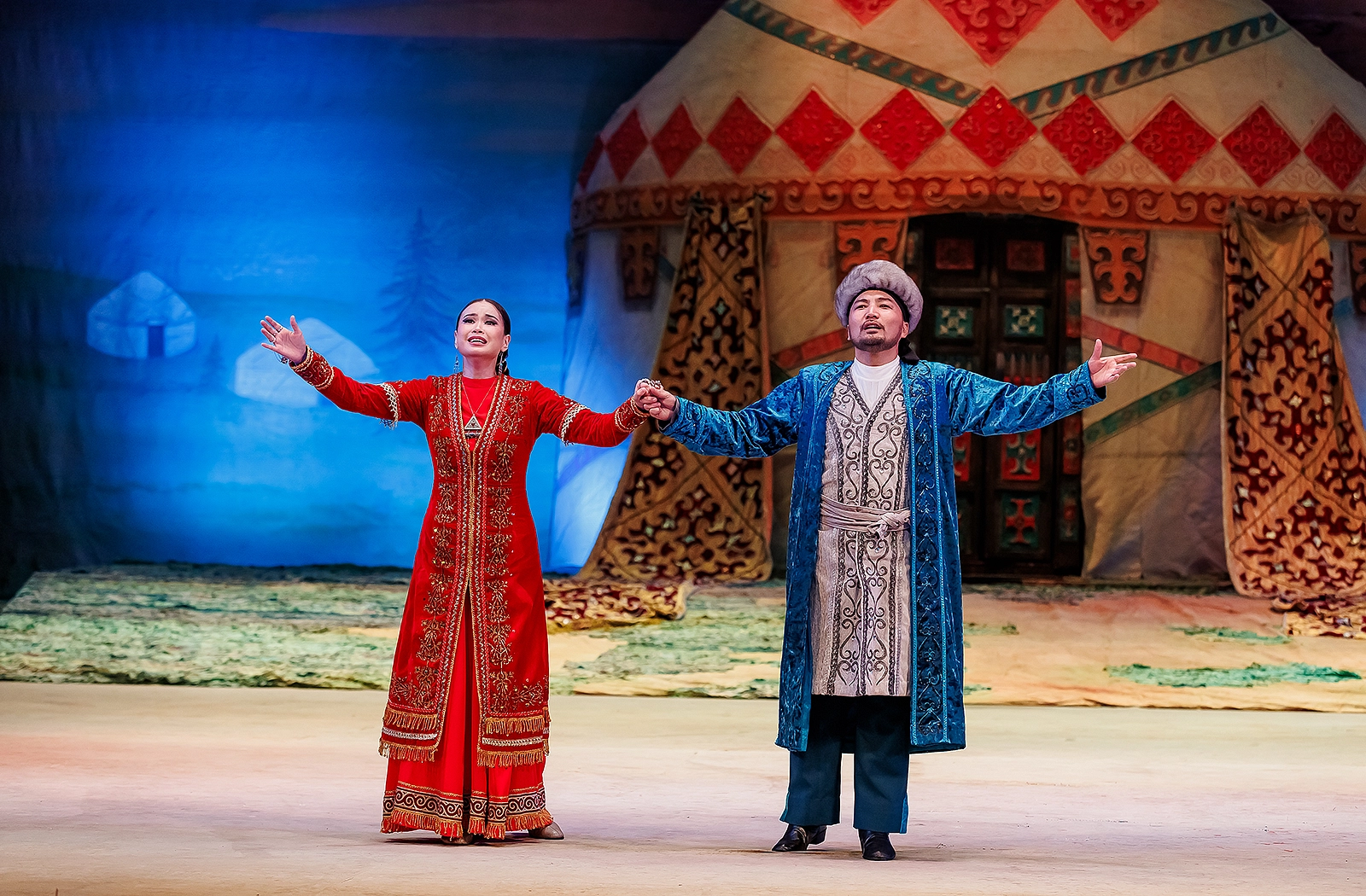
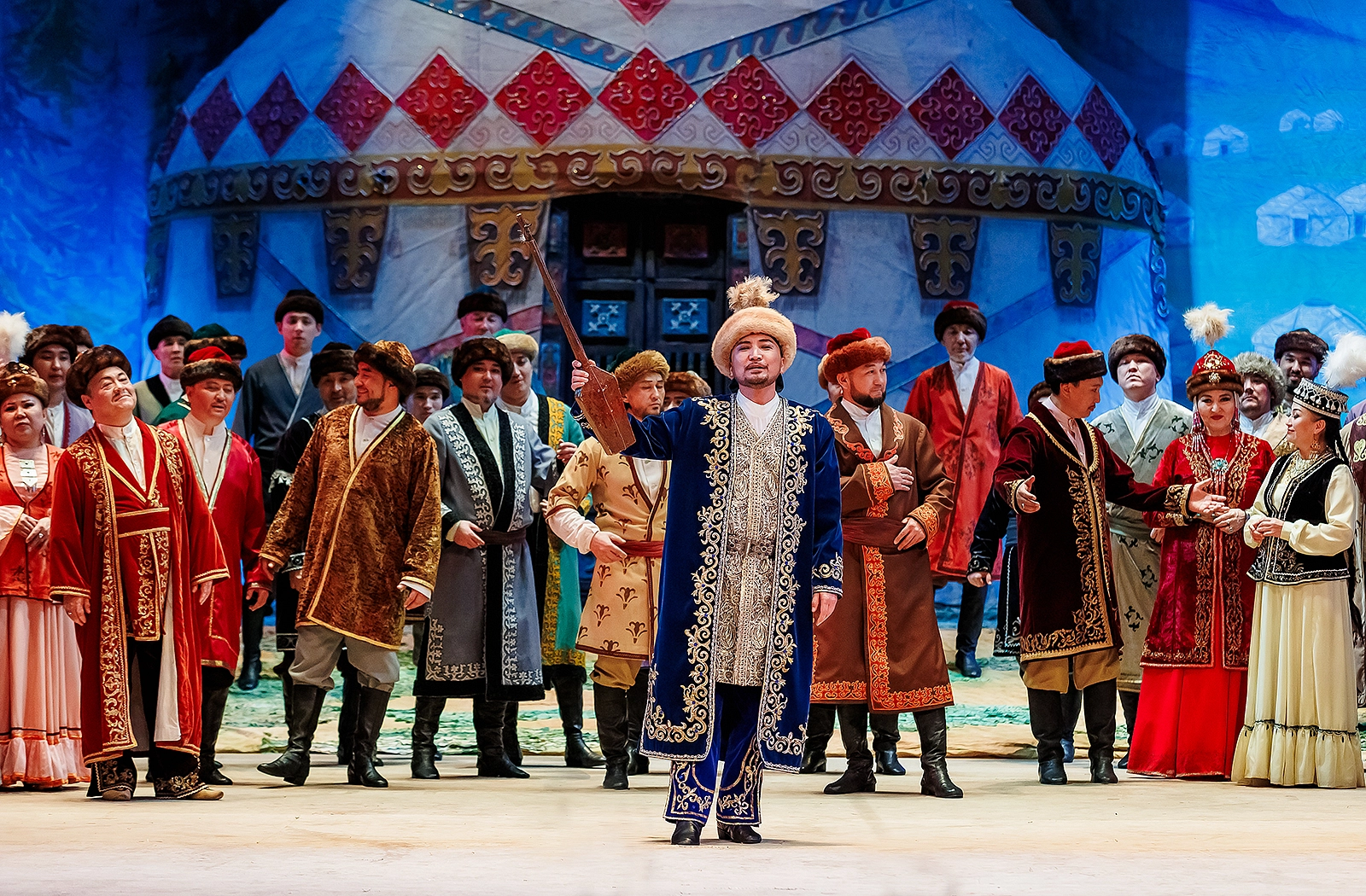
Birzhan – sara
Description
Dedicated to the day of cultural and arts workers.
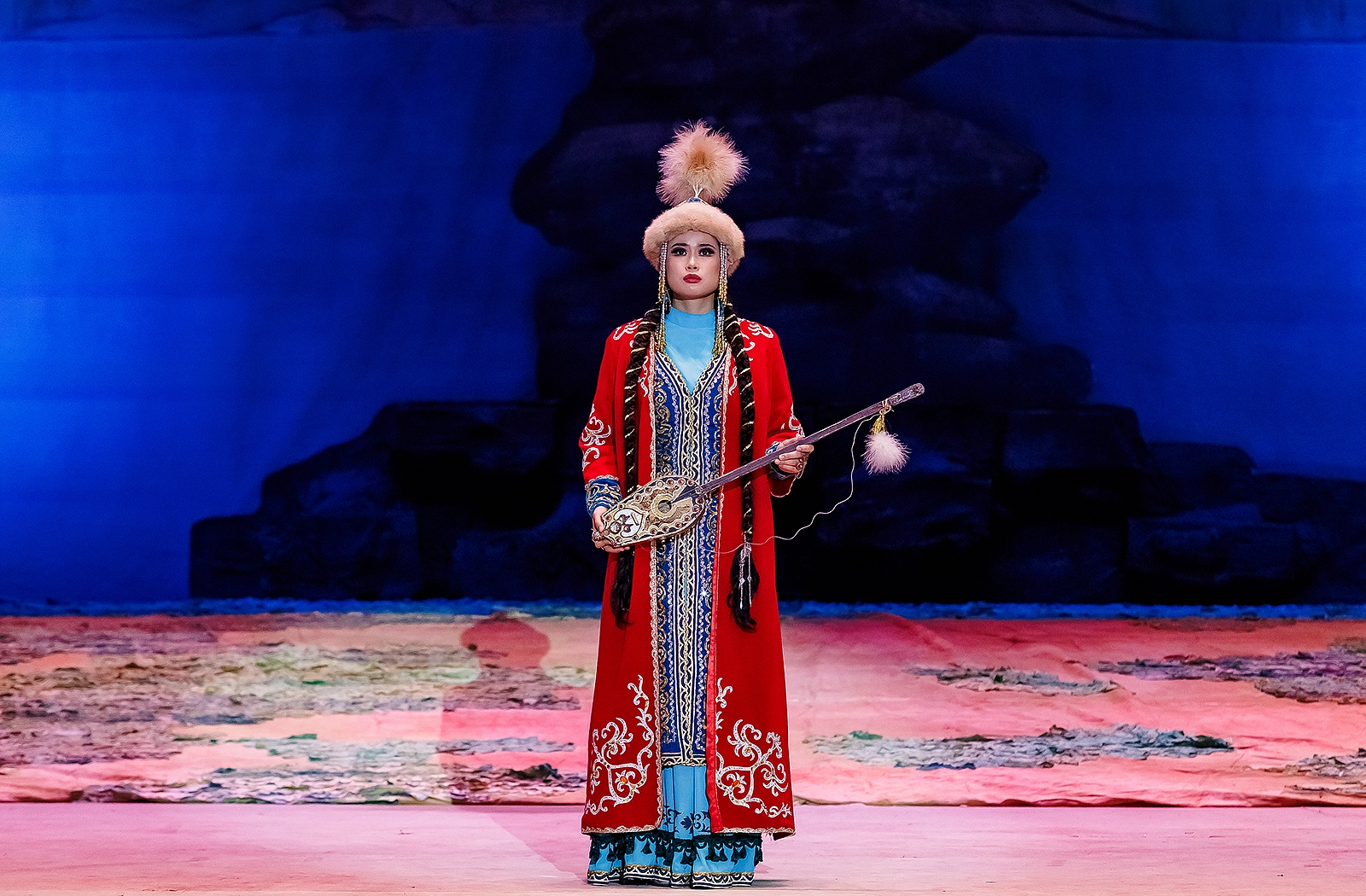
The opera Birzhan and Sara is one of the pinnacles of Kazakh musical classicism, where a story of love, freedom, and human dignity unfolds through powerful драмaturgy and the inspired music of Mukan Tulebayev. It is a large-scale and deeply emotional stage work in which folk poetry, vivid characters, and national color acquire genuine theatrical force.
M. Tulebayev
Birzhan and Sara
Opera in four acts
Libretto by K. Zhumaliyev
At the Abay Opera House, the premiere took place on 07.11.1946
New production on 26.10.2013
Production Team:
Director – Baigali Dossymzhanov, People’s Artist of the Kazakh SSR
Designer – Anatoliy Nenashev
Revival Designer – Orynbassar Zhambyrshiyev
Chief Chorus Master – Aliya Temirbekova, Honored Worker of the Republic of Kazakhstan
Choreographer – Gulzhan Tutkibayeva, People’s Artist of the Republic of Kazakhstan
Characters
- Birzhan, folk poet and singer
- Birzhan’s mother
- Birzhan’s father
- Yestay, Birzhan’s friend
- Altynay, a young girl
- Sara, folk singer
- Zhienkul, a rich landowner
- Zhambota, local ruler
- Serik, Zhambota’s bodyguard
Act One
Fairground festivities in the Kazakh village of Kulyandy. Traditional folk entertainment: wrestling, anklebone shooting, swings. Young Yestay brings good news to the villagers: his friend, everyone’s favourite, the folk singer and poet Birzhan, is coming. The most excited is a young girl named Altynay, who is in love with the young poet. She tries to find out from Yestay whether Birzhan thought of her during his journeys. Yestay laughs it off and avoids a direct answer. But the girl manages to learn that Birzhan’s heart is captivated by the splendid Sara, an inspired folk singer. She too is coming to the festival, and the audience will witness a creative contest between Birzhan and Sara, the two renowned masters of folk song.
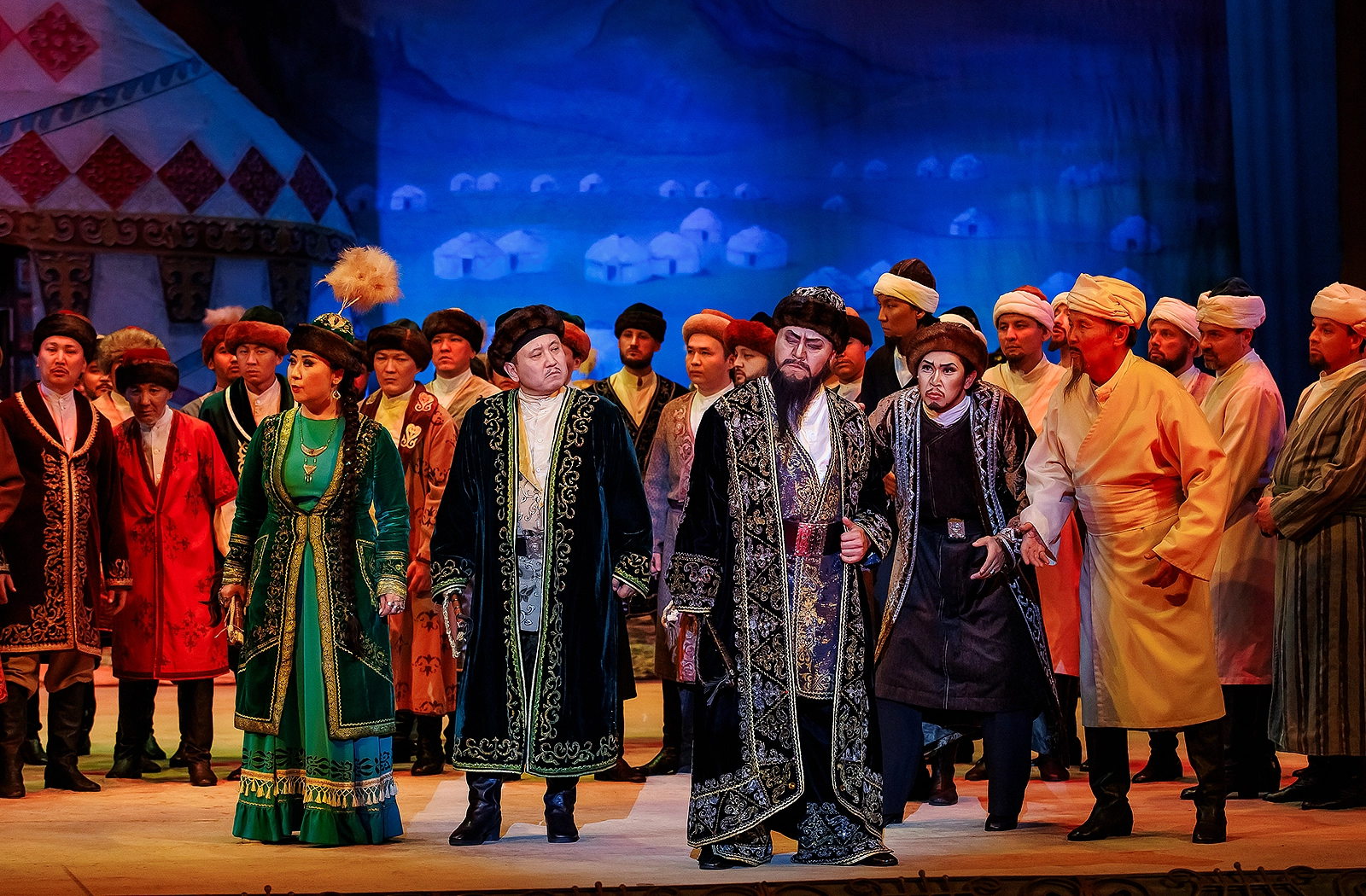
Birzhan’s song, praising his native land, is heard from afar. The people joyfully welcome their favourite. But the celebration is overshadowed by the appearance of the wealthy Zhienkul, an all-powerful landowner. He arrives with his large retinue, guards, and servants. Among them is the sly and smooth-tongued Serik, bodyguard to the despotic local ruler Zhambota. Soon the ruler himself appears as well.
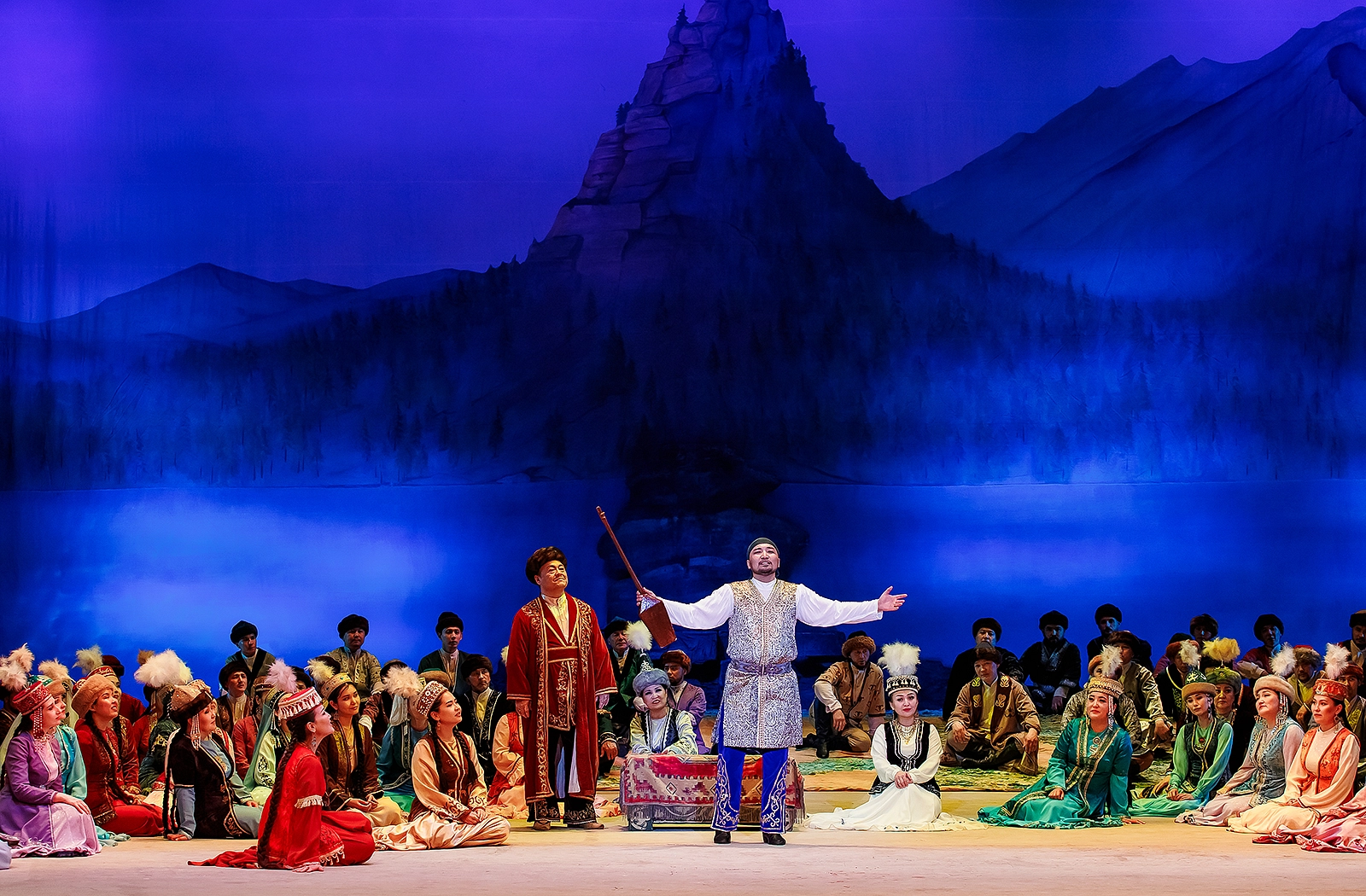
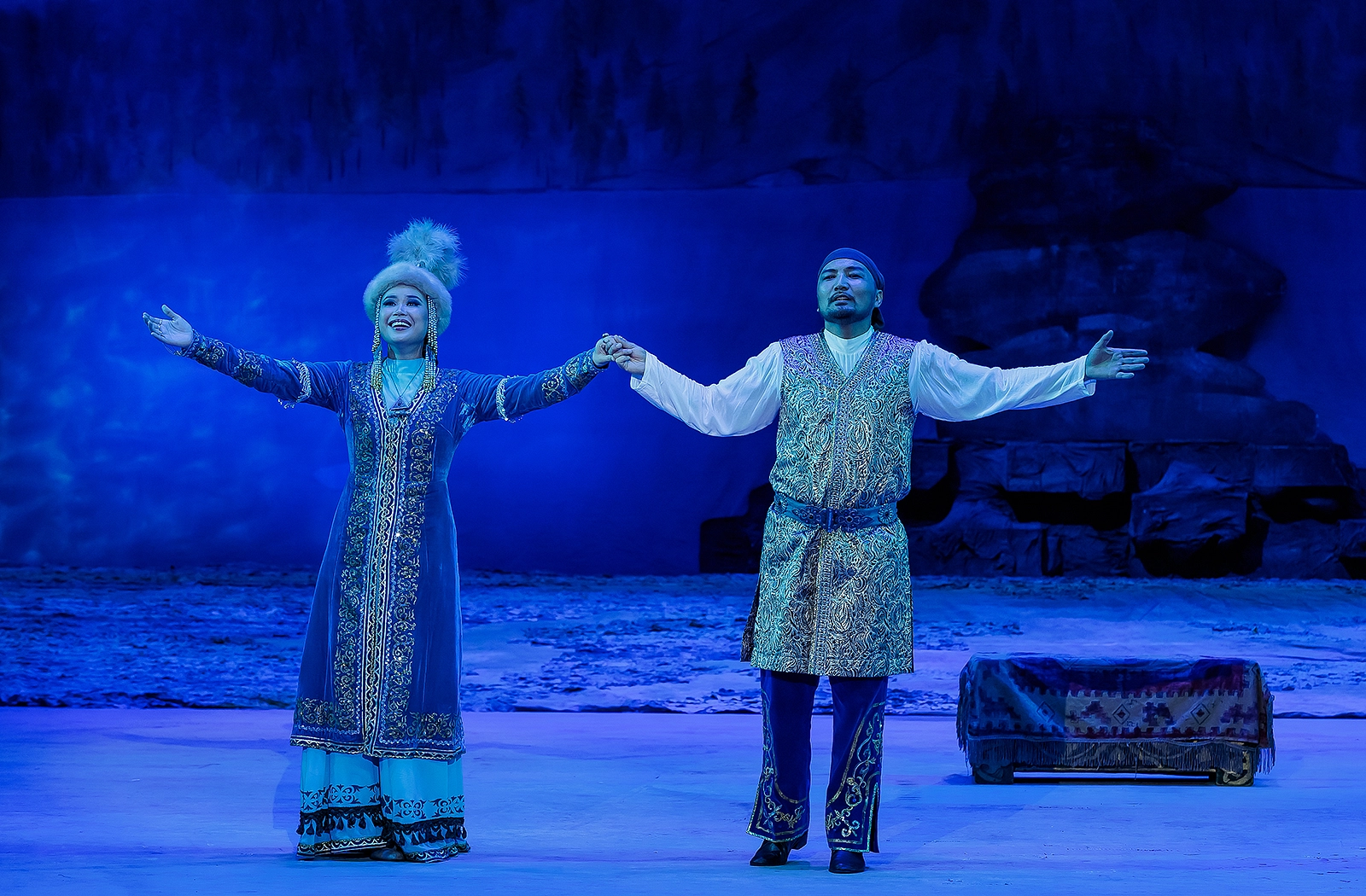
The appearance of the beautiful Sara does not escape Zhienkul’s attention; her beauty astonishes him. Yet Sara’s thoughts are only of Birzhan, and Birzhan thinks only of his beloved Sara. After greeting one another, the folk singers begin their contest, each proving the power of their song. Sara sings of joy and delight, while Birzhan sings of struggle and wrath.
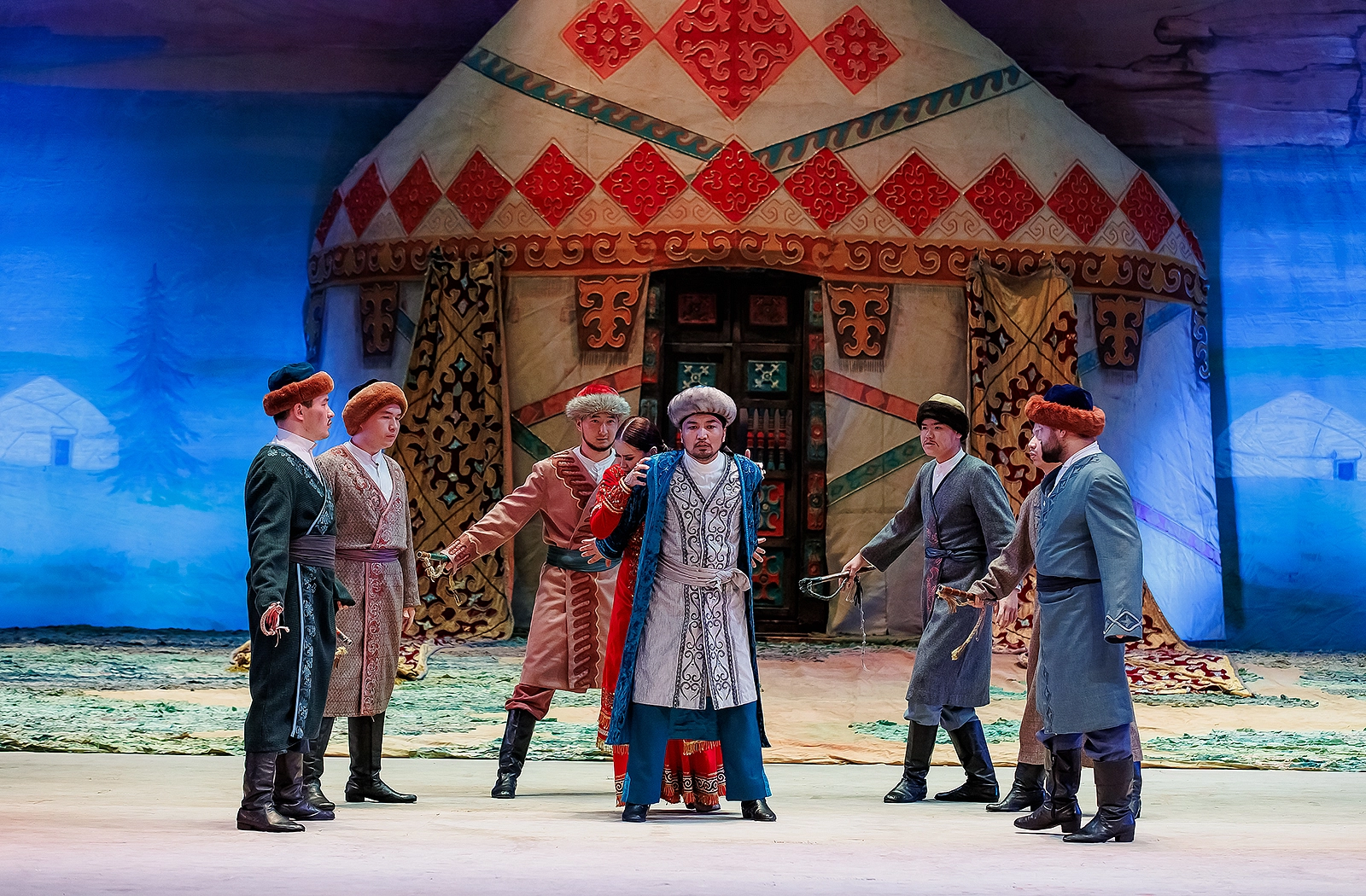
Their contest is interrupted when the wealthy Zhienkul summons Sara: she is to become his fourth wife. The girl refuses to obey. Birzhan addresses Zhienkul and Zhambota with a sharp and fearless rebuke, and answers the ruler’s threats with a witty song mocking Zhambota. The ruler orders his guards to seize Birzhan, but the people protect their beloved singer and force Zhambota and his entourage to leave the fairground.
Act Two
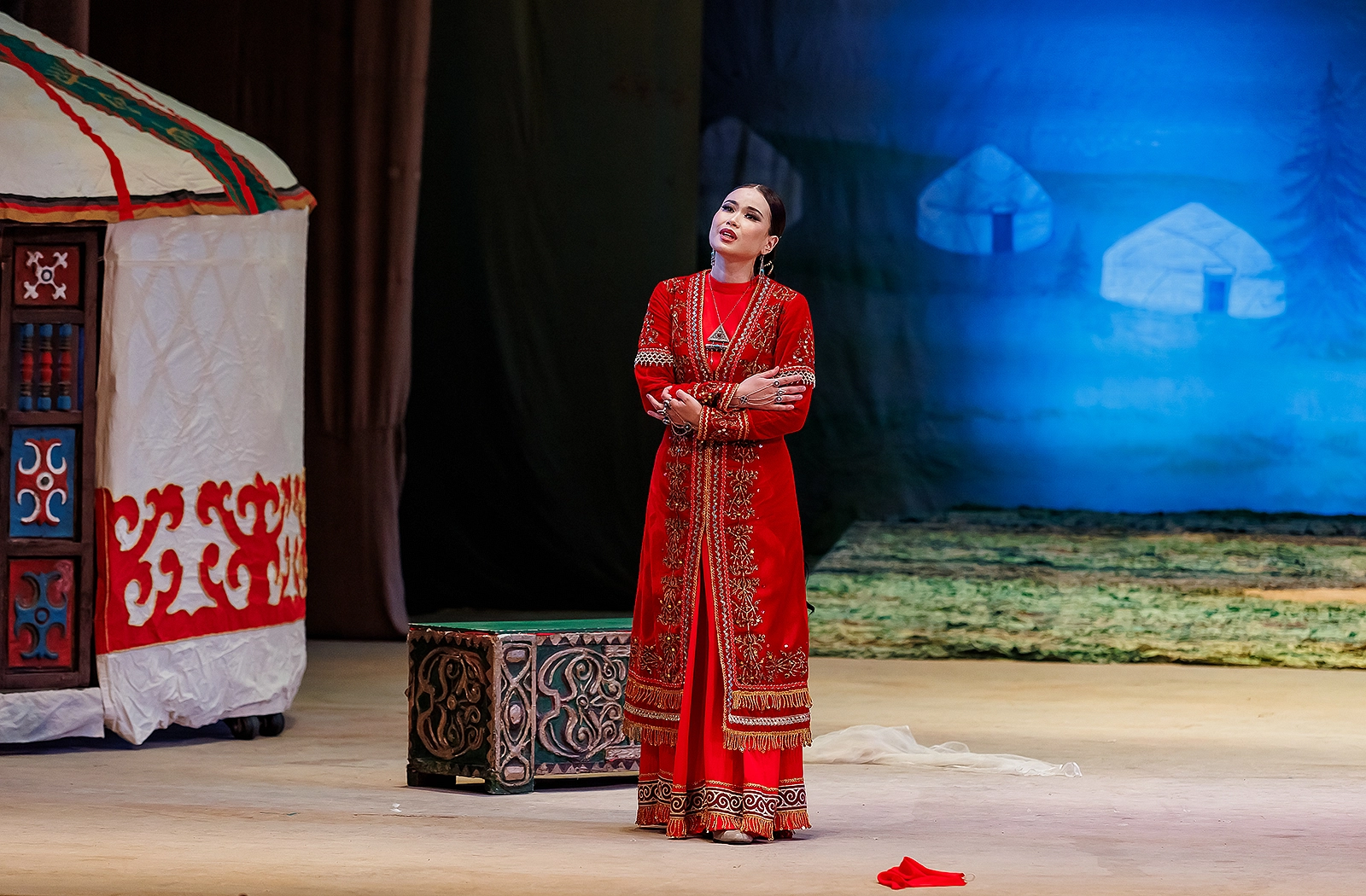
Birzhan sits before his yurt on the shore of a lake, singing passionately of his beloved Sara. Birzhan’s old mother worries for her son. His father, humbled and broken by life’s hardships, is even more afraid, for he has been warned by the mullahs of the danger of defying the rulers. But Birzhan does not fear the tsar’s minions or the powerful rich. He is not alone: the people are with him.
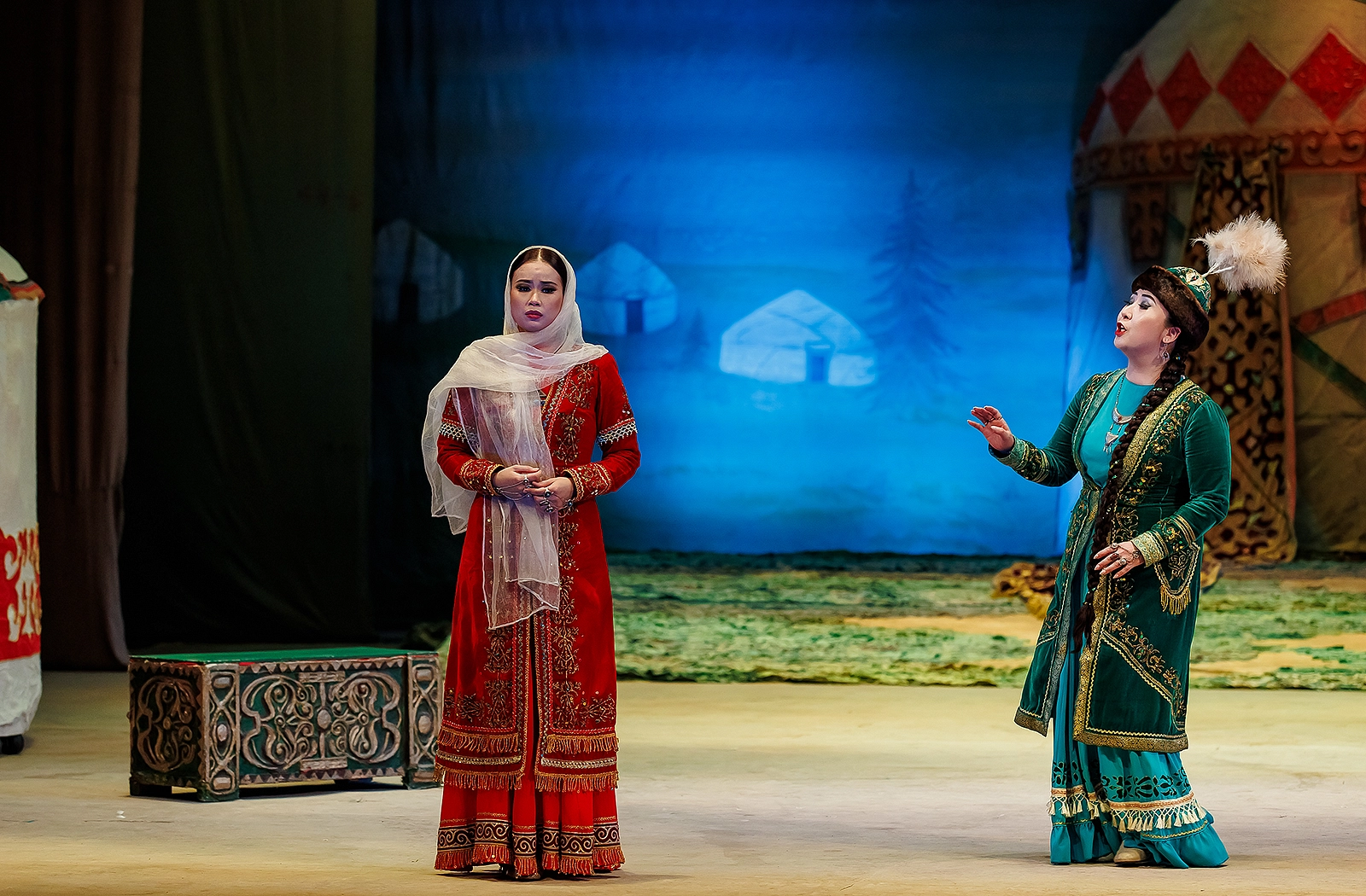
Birzhan gladly tells his friends of his travels, of meeting the great poet and champion of freedom, Abay; he sings them Abay’s marvellous songs. Birzhan’s beloved Sara is among the young people who have come to see him. So too is her rival, Altynay. His faithful friend Yestay manages to distract the jealous girl. Left alone, Birzhan and Sara swear eternal love and faithfulness to one another.
But danger is already lying in wait for the lovers. Zhambota and his guards tear Birzhan away from Sara and take him to Zhienkul’s house.
Act Three
Zhienkul’s wedding is lavish and magnificent. Songs, dances, games. Wanting to help his friend Birzhan and save poor Sara, Yestay decides to frighten the rich landowner and his guests. He spreads the rumour that Birzhan has lost his mind from grief: a madman is more dangerous than a wild beast. As he expects, the news quickly reaches the wealthy bridegroom.
The festivities continue, merry songs do not cease, and the guests dance and raise toasts. But at the ceremonial moment of the groom’s entrance, the guests scatter in terror at the appearance of Birzhan. The frightened groom flees as well. Alone with Sara, Birzhan proposes that they run away to distant lands where Russian friends can help them. But driven by blind jealousy, Altynay brings the guards to them.
The brave poet refuses to surrender: his enemies recoil before his dagger. Yet the cunning Serik creeps up from behind and throws a rope around him. Birzhan is seized and thrown into prison.
Act Four
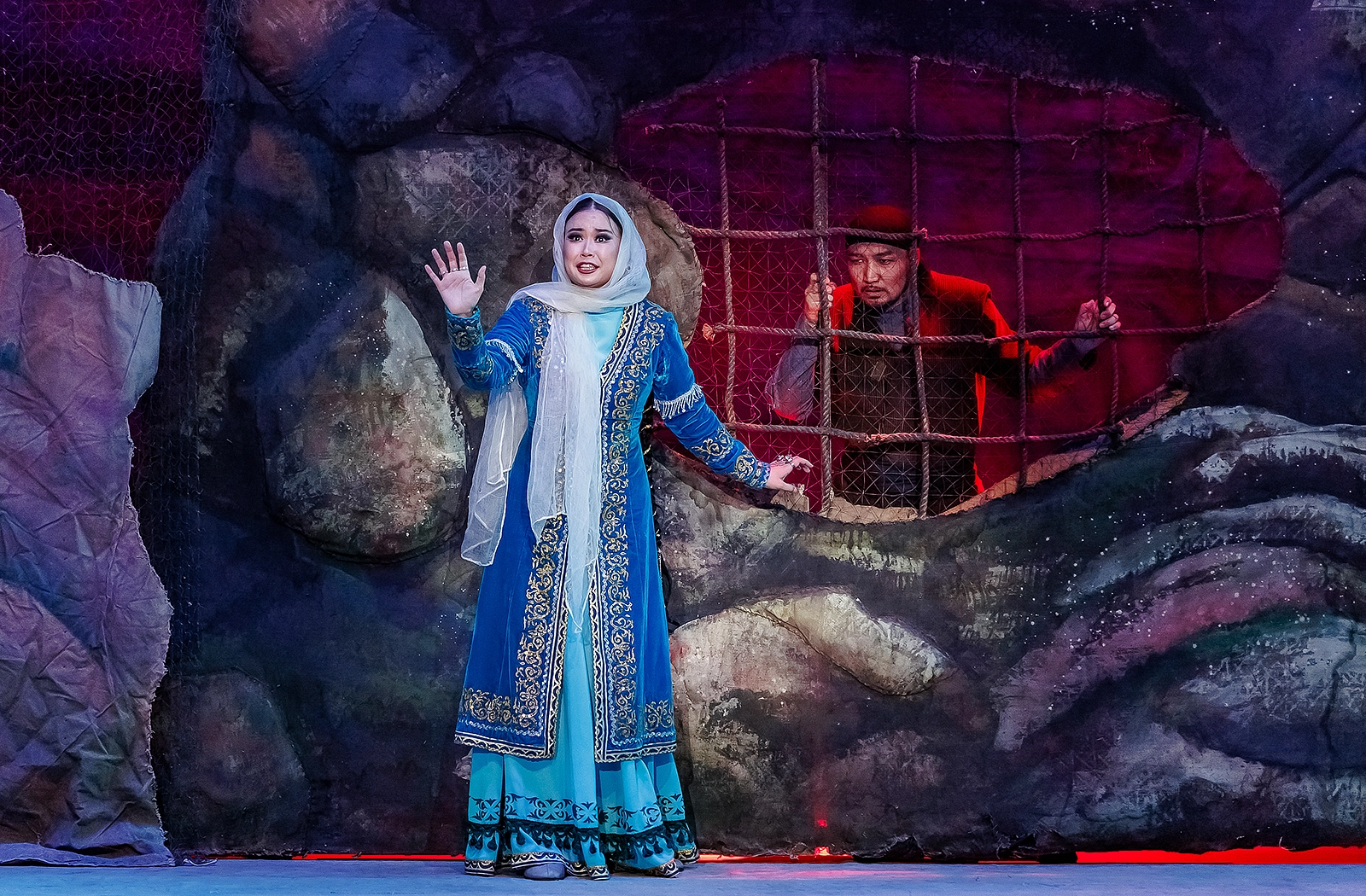
Serik falls asleep while guarding the cell of the wretched Birzhan. Sara quietly steals up to him and silently takes the key from his pocket; she enters the cell where Birzhan lies in chains. The chance to see his beloved gives Birzhan new strength.
But the treacherous Altynay remains vigilant. She brings Zhienkul to the prison. He wakes Serik and orders him to gather everyone for the trial of his unfaithful bride. Sara faces execution. Altynay rejoices: now Birzhan will be hers.
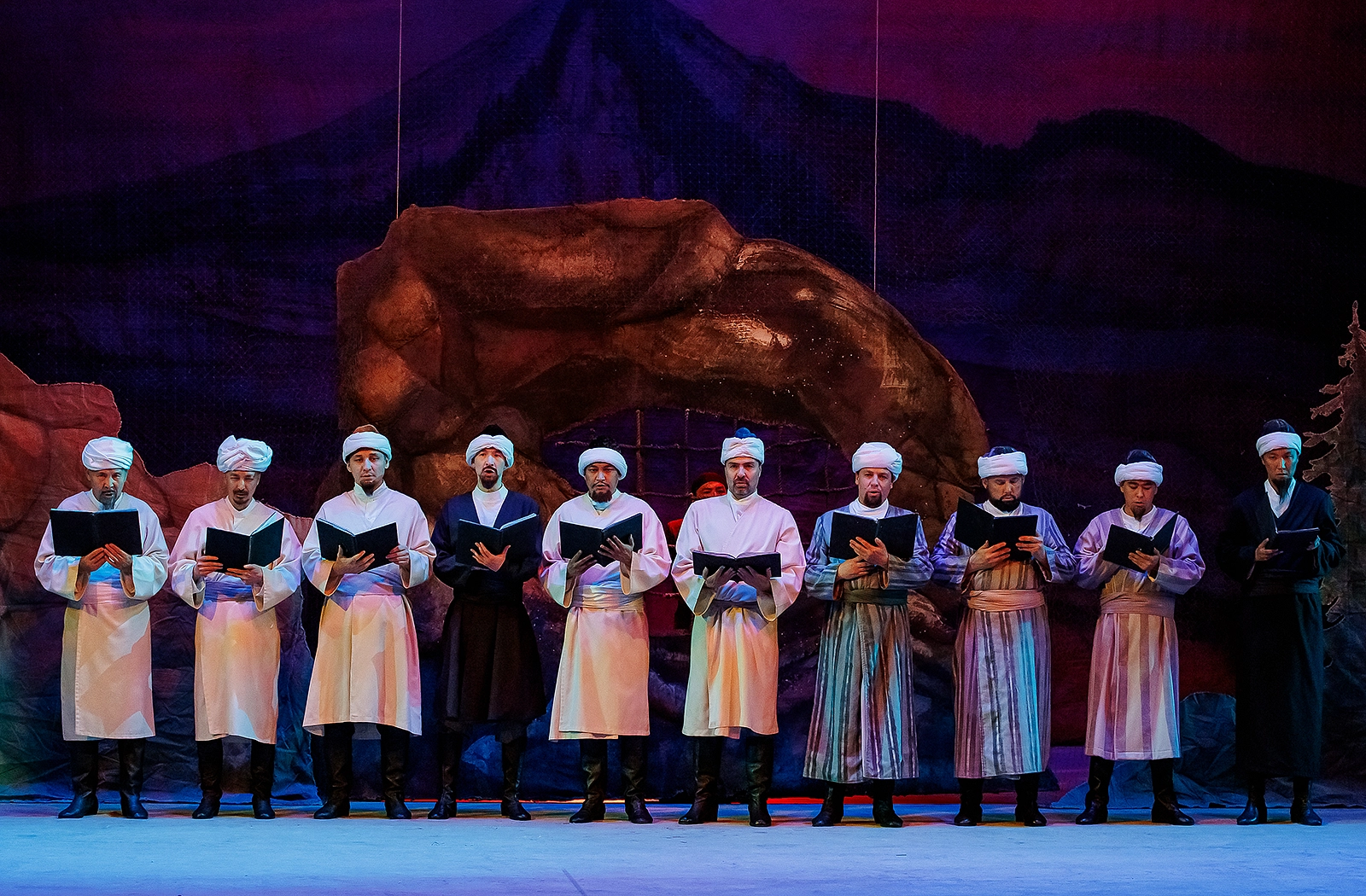
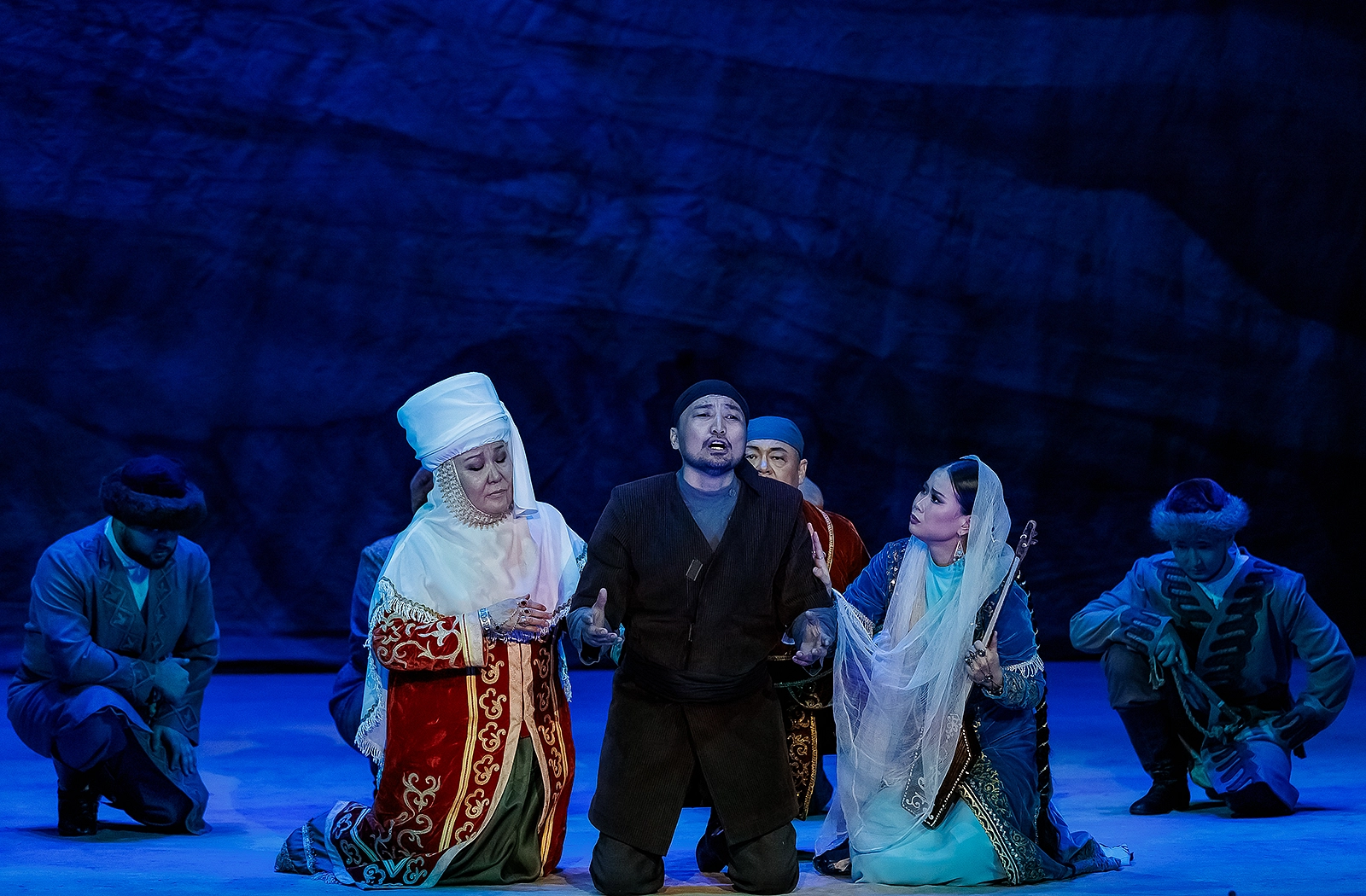
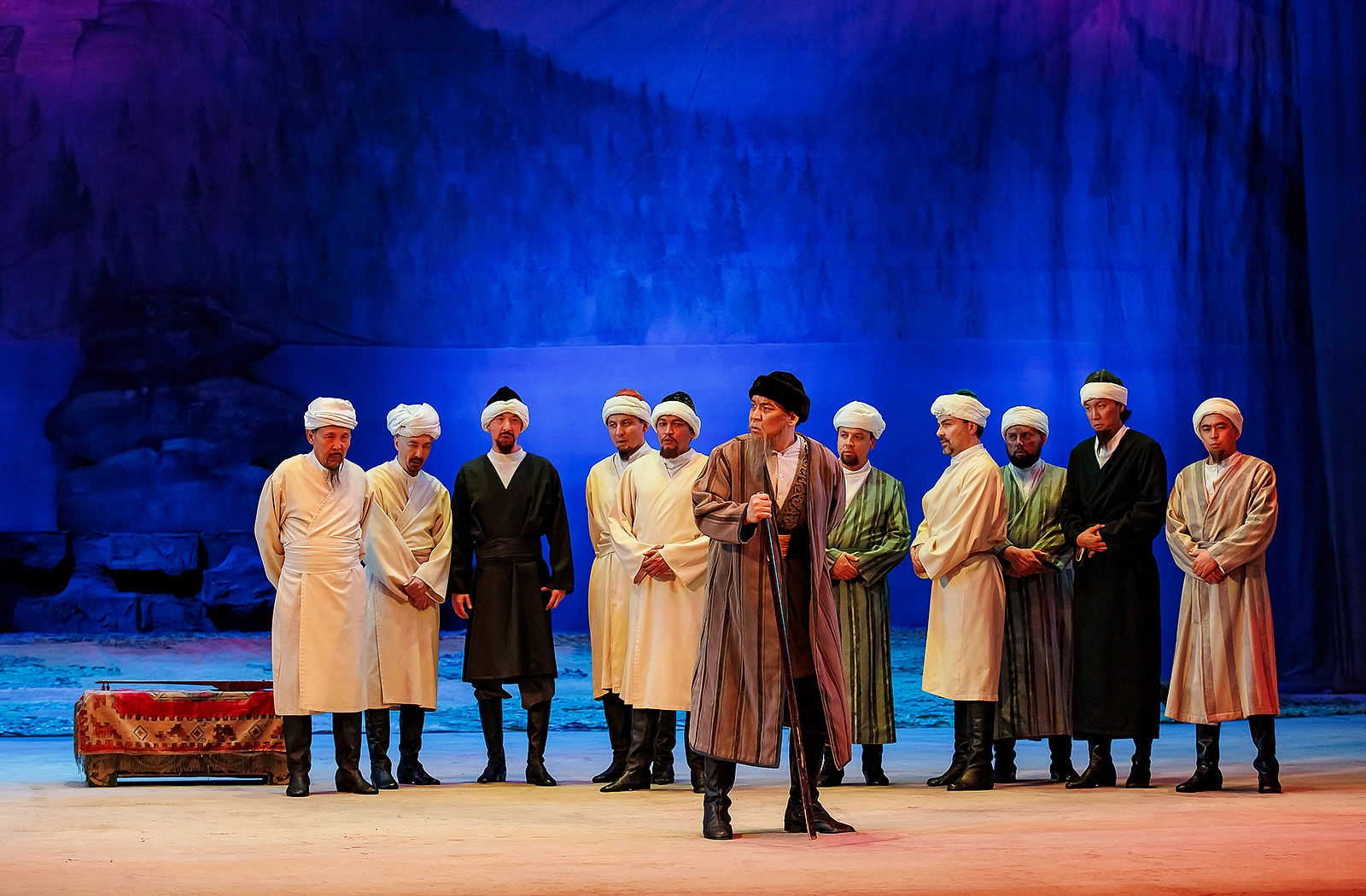
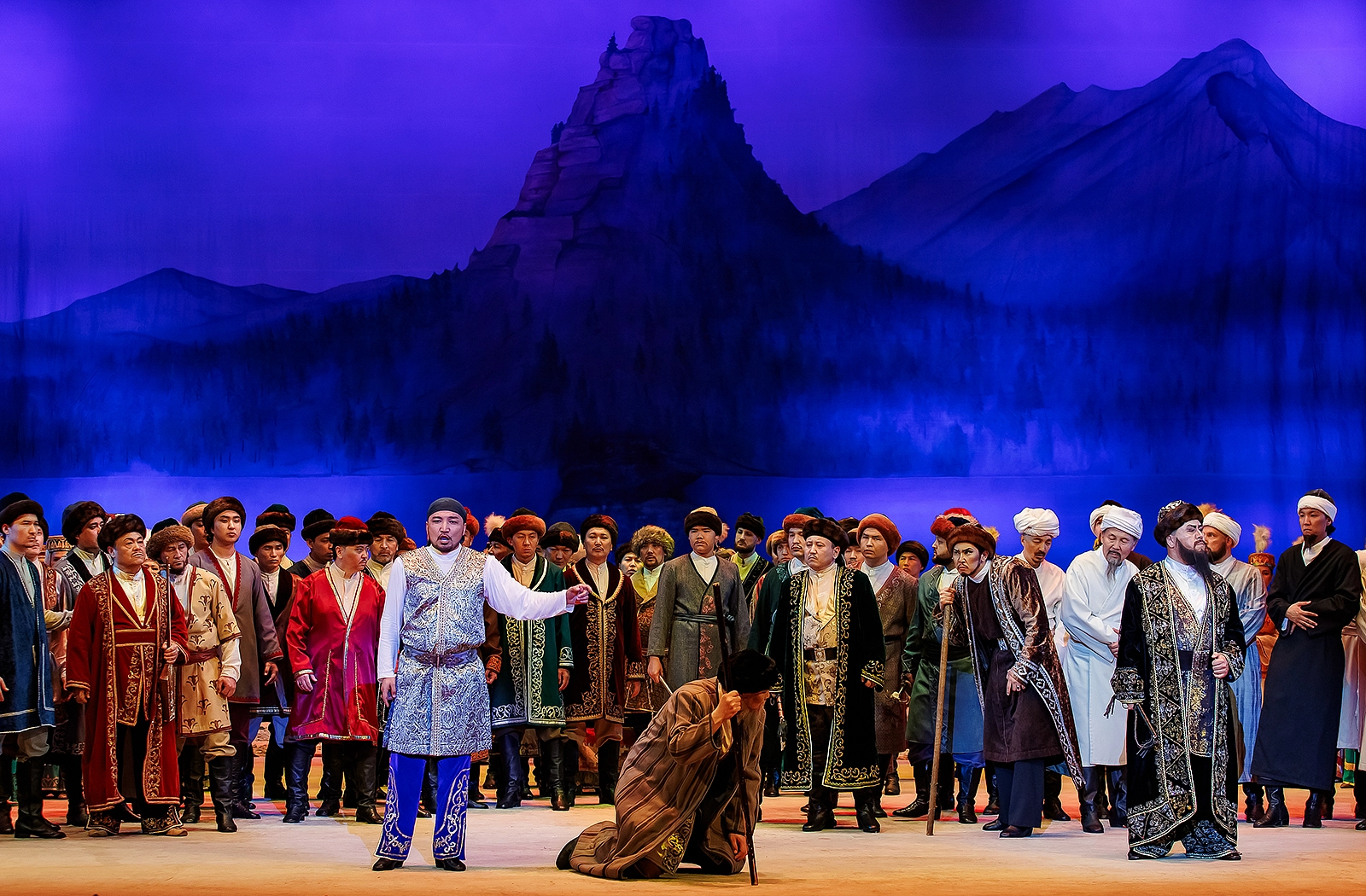
The trial is swift. Zhienkul thirsts for revenge and cannot wait. But no sooner have the mullahs pronounced their sentence than armed villagers, summoned by the brave Yestay, free Sara and Birzhan. Altynay approaches Sara and suddenly stabs her in the heart. With her final words of love for Birzhan, Sara dies. Heartbroken, Birzhan kneels over the body of his beloved.
Dedicated to the day of cultural and arts workers.
The opera Birzhan and Sara is one of the pinnacles of Kazakh musical classicism, where a story of love, freedom, and human dignity unfolds through powerful драмaturgy and the inspired music of Mukan Tulebayev. It is a large-scale and deeply emotional stage work in which folk poetry, vivid characters, and national color acquire genuine theatrical force.
M. Tulebayev
Birzhan and Sara
Opera in four acts
Libretto by K. Zhumaliyev
At the Abay Opera House, the premiere took place on 07.11.1946
New production on 26.10.2013
Production Team:
Director – Baigali Dossymzhanov, People’s Artist of the Kazakh SSR
Designer – Anatoliy Nenashev
Revival Designer – Orynbassar Zhambyrshiyev
Chief Chorus Master – Aliya Temirbekova, Honored Worker of the Republic of Kazakhstan
Choreographer – Gulzhan Tutkibayeva, People’s Artist of the Republic of Kazakhstan
Characters
- Birzhan, folk poet and singer
- Birzhan’s mother
- Birzhan’s father
- Yestay, Birzhan’s friend
- Altynay, a young girl
- Sara, folk singer
- Zhienkul, a rich landowner
- Zhambota, local ruler
- Serik, Zhambota’s bodyguard
Act One
Fairground festivities in the Kazakh village of Kulyandy. Traditional folk entertainment: wrestling, anklebone shooting, swings. Young Yestay brings good news to the villagers: his friend, everyone’s favourite, the folk singer and poet Birzhan, is coming. The most excited is a young girl named Altynay, who is in love with the young poet. She tries to find out from Yestay whether Birzhan thought of her during his journeys. Yestay laughs it off and avoids a direct answer. But the girl manages to learn that Birzhan’s heart is captivated by the splendid Sara, an inspired folk singer. She too is coming to the festival, and the audience will witness a creative contest between Birzhan and Sara, the two renowned masters of folk song.
Birzhan’s song, praising his native land, is heard from afar. The people joyfully welcome their favourite. But the celebration is overshadowed by the appearance of the wealthy Zhienkul, an all-powerful landowner. He arrives with his large retinue, guards, and servants. Among them is the sly and smooth-tongued Serik, bodyguard to the despotic local ruler Zhambota. Soon the ruler himself appears as well.
The appearance of the beautiful Sara does not escape Zhienkul’s attention; her beauty astonishes him. Yet Sara’s thoughts are only of Birzhan, and Birzhan thinks only of his beloved Sara. After greeting one another, the folk singers begin their contest, each proving the power of their song. Sara sings of joy and delight, while Birzhan sings of struggle and wrath.
Their contest is interrupted when the wealthy Zhienkul summons Sara: she is to become his fourth wife. The girl refuses to obey. Birzhan addresses Zhienkul and Zhambota with a sharp and fearless rebuke, and answers the ruler’s threats with a witty song mocking Zhambota. The ruler orders his guards to seize Birzhan, but the people protect their beloved singer and force Zhambota and his entourage to leave the fairground.
Act Two
Birzhan sits before his yurt on the shore of a lake, singing passionately of his beloved Sara. Birzhan’s old mother worries for her son. His father, humbled and broken by life’s hardships, is even more afraid, for he has been warned by the mullahs of the danger of defying the rulers. But Birzhan does not fear the tsar’s minions or the powerful rich. He is not alone: the people are with him.
Birzhan gladly tells his friends of his travels, of meeting the great poet and champion of freedom, Abay; he sings them Abay’s marvellous songs. Birzhan’s beloved Sara is among the young people who have come to see him. So too is her rival, Altynay. His faithful friend Yestay manages to distract the jealous girl. Left alone, Birzhan and Sara swear eternal love and faithfulness to one another.
But danger is already lying in wait for the lovers. Zhambota and his guards tear Birzhan away from Sara and take him to Zhienkul’s house.
Act Three
Zhienkul’s wedding is lavish and magnificent. Songs, dances, games. Wanting to help his friend Birzhan and save poor Sara, Yestay decides to frighten the rich landowner and his guests. He spreads the rumour that Birzhan has lost his mind from grief: a madman is more dangerous than a wild beast. As he expects, the news quickly reaches the wealthy bridegroom.
The festivities continue, merry songs do not cease, and the guests dance and raise toasts. But at the ceremonial moment of the groom’s entrance, the guests scatter in terror at the appearance of Birzhan. The frightened groom flees as well. Alone with Sara, Birzhan proposes that they run away to distant lands where Russian friends can help them. But driven by blind jealousy, Altynay brings the guards to them.
The brave poet refuses to surrender: his enemies recoil before his dagger. Yet the cunning Serik creeps up from behind and throws a rope around him. Birzhan is seized and thrown into prison.
Act Four
Serik falls asleep while guarding the cell of the wretched Birzhan. Sara quietly steals up to him and silently takes the key from his pocket; she enters the cell where Birzhan lies in chains. The chance to see his beloved gives Birzhan new strength.
But the treacherous Altynay remains vigilant. She brings Zhienkul to the prison. He wakes Serik and orders him to gather everyone for the trial of his unfaithful bride. Sara faces execution. Altynay rejoices: now Birzhan will be hers.
The trial is swift. Zhienkul thirsts for revenge and cannot wait. But no sooner have the mullahs pronounced their sentence than armed villagers, summoned by the brave Yestay, free Sara and Birzhan. Altynay approaches Sara and suddenly stabs her in the heart. With her final words of love for Birzhan, Sara dies. Heartbroken, Birzhan kneels over the body of his beloved.
Cast and Performers
The cast will be announced along with the official date
Gallery
Gallery