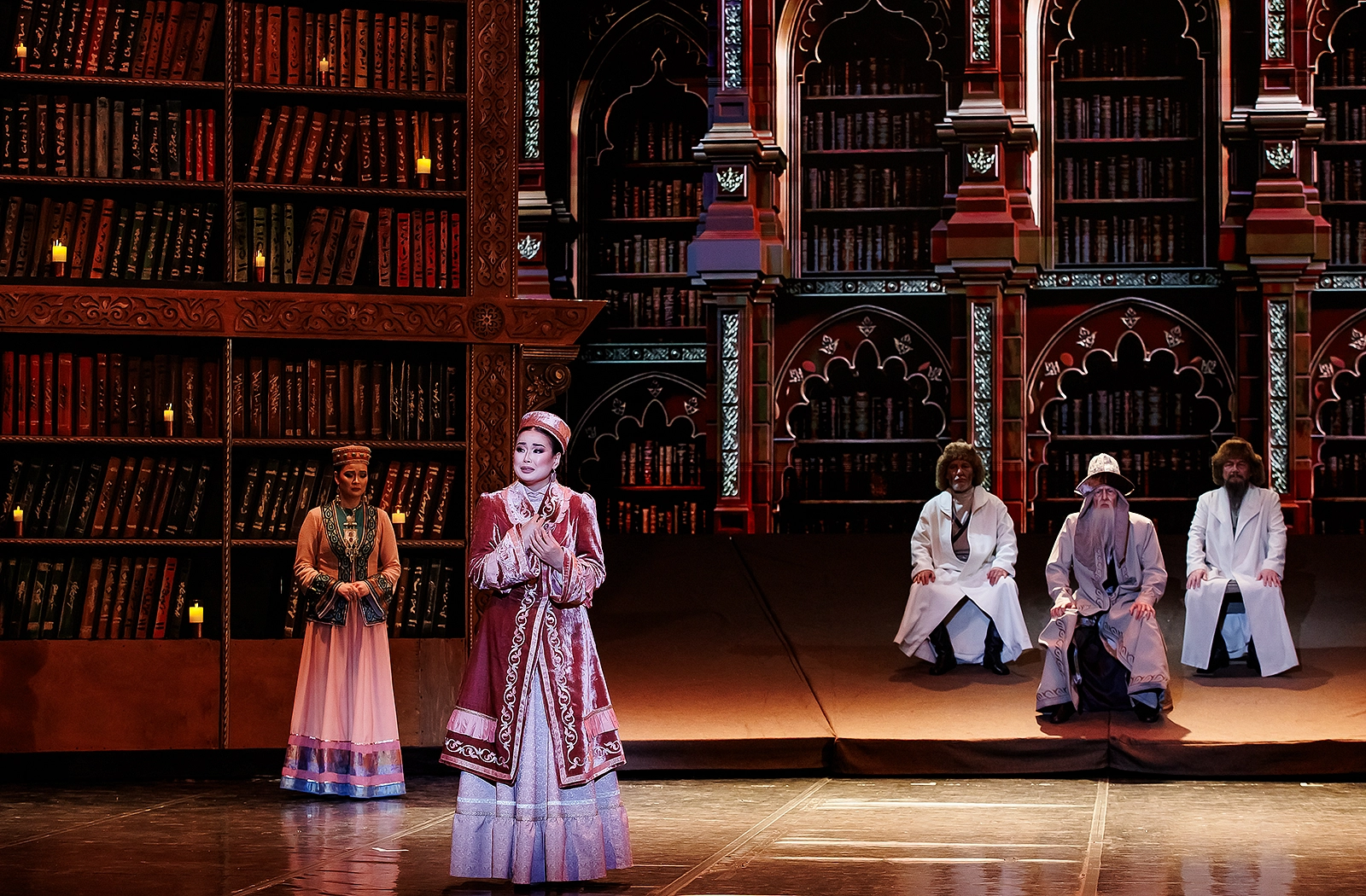
Opera
Abay June 28, 2026, 18:00
Description
Archived
“Abay” is a classic Kazakh opera about the fate of the poet-enlightener, the power of reason, love, and moral choice.
A. Zhubanov, L. Khamedi
ABAY
opera in 3 acts and 5 scenes
Libretto by M. Auezov
At the Abay Opera House, the premiere took place on 24.12.1944
New production premiere on 30.01.2026
Production Team:
Chief Conductor-Director – Nurzhan Baibusinov, Honored Worker of the RK
Stage Director – Farhat Moldagali
Assistant Director – Natalia Kagadiy
Costume Designer – Rauan Kairullaeva
Set Designer – Yesengeldy Tuyakov, Honored Worker of the RK
Choirmaster – Aliya Temirbekova, Honored Worker of the RK
Ballet Master-Director – Asem Aldibekova
Accompanist – Zhanar Akhmetova
Cast
- Abay
- Azhar, Aydar’s beloved
- Aydar, poet, Abay’s student
- Zhirenshe, elder
- Syrttan, supreme elder
- Azim, Abay’s relative and student
- Karlygash, Abay’s relative
- Kokbay, poet, young friend of Abay
- Narymbet, Zhirenshe’s relative
- Mes, young man from Narymbet’s entourage
Scene 1
Nighttime. Azhar runs out – she and her beloved Aidar are being pursued. Aidar appears and informs sorrowfully that his horse has died, and they cannot escape the infuriated relatives of Narymbet, who by will of fate was appointed to be her husband, although Abay’s village was very close now. Azhar begs Aidar to continue on without her, but he refuses: “To roam in shame for the rest of my life?! I would rather die!” Their pursuers appear, crying out: “Seize them! Bind them!” They throw a noose around the young lovers, with the intent of executing them by tying them to horses and sending the horses galloping across the steppes. Azhar and Aidar say goodbye to each other. Aidar desperately calls out for his teacher Abay.
Abay appears, followed by Aidar’s friends – Kokbay, Azim, and others. At first, Abay tries to ask them to spare the lovers, but seeing the pursuers’ determination, he orders Kokbay to cut the rope. Narymbet’s relatives lead the clan chief Zhirenshe to invoke ancestral laws. Abay demands a people’s court. Zhirenshe is confident in the outcome; he orders his people to set Aidar and Azhar free, and threatens Abay with defeat.
Scene 2
Azim is alone, pondering whether Aidar is guilty. Zhirenshe enters and asks Azim for help in returning Azhar to his village. It would bring peace and quiet, which Azim wants as well. Zhirenshe says: “You might be close to Abay, but the people are your friend. And even if merciless wrath is to fall on Abay, you will not be punished!” He leaves Azim with his thoughts.
Abay and Aidar enter. During their conversation, Abay encourages Aidar to write poems. Azim thinks that Aidar’s poems will only serve to infuriate the enemies and accuses Aidar of stoking the fires of enmity. But Abay thinks that “silence cannot produce poems. The heat of struggle inspires the mind!”
The elder Syrttan comes to hear what Azhar has to say, as she has no right to speak to the court and to defend herself. Azhar tells of her desperate life and her feelings for Aidar. Upon hearing her sincere and touching words, Syrttan leaves in deep thought, telling her that he will announce the sentence after the hearing tomorrow.
Left alone, Abay decides to do everything in his power to defend the young lovers.
Scene 3
The court. The assembled people are worried for the fate of Azhar and Aidar. During his first address, Syrttan calls to discuss the issues of ancient laws. Zhirenshe advocates the priority of forefathers’ customs, for they help to keep the peace in the steppes. Azim is his opponent. He proclaims the importance of human feelings, talks about the power of love, illustrating it with the examples of Zhibek, Bayan, Leila, and Juliette. He asks that Aidar be forgiven; youthful love should not lead to clan feuds. Zhirenshe is ready to spare Azhar’s life if she returns to her village, but wants to execute Aidar, to stop the breaking of ancient laws in the future. He illustrates this with the example of the elder Kengirbay, who had condemned Yenlik and Kebek to death in ancient times. Zhirenshe also accuses Abay, who defends the violators of the law. Abay asks to speak and in his speech reminds everyone that after his severe decision Kengirbay was feared and avoided by everyone. He pleads that no blood be spilled, or this day would forever be remembered in sorrow and shame.
The elder Syrttan admits the guilt of the young lovers, but neither of them is to be executed. As the respondent, Abay will pay the damages, thus absolving Azhar and Aidar before the court.
Happy with the outcome, the people congratulate Abay, his students, Azhar and Aidar. Everyone leaves. Only Zhirenshe, Narymbet, and Mes remain; they blame Abay for their defeat and swear to kill him. Narymbet passes the poison to Zhirenshe.
Scene 4
Wedding preparations. Kokbay clumsily courts Karlygash, who mocks his words of love for her, suspecting base motives. Abay, Aidar and Azim enter. Abay makes fun of the hapless admirer and sends Kokbay and Karlygash to prepare for the wedding performance. Voices are heard, asking Aidar to sing. Azim asks Aidar not to sing about Yenlik, as they might cause more tumult. But Aidar leaves without listening to him. In Azim’s opinion, Aidar has chosen the wrong path, leading Abay astray. Azim believes the ancient laws are just and decides to kill the perpetrator. Zhirenshe, who has been eavesdropping, hands him the vial of poison.
The wedding begins. Abay is content. Kokbay gives the young poet Aidar the “rebel” quill. The festive dance commences, followed by the opening of the bridal veil and the bride paying respects to esteemed relatives and guests. Azim spots an opportunity and adds poison to the cup that he gives to Aidar. The dancing continues, accompanied by the lyrical song “Karlygash”.
Aidar is asked to sing again. He sings “Aittym Salem, Kalamkas” and suddenly collapses.
Scene 5
Upon learning that Aidar has been poisoned, the people are seized by rage and demand to know who gave the poison. Kokbay publicly points to Zhirenshe. The furious crowd demands a confession. However, Zhirenshe declares that he is ready to swear his innocence on the Qur’an before the biy Syrttan. Syrttan accepts his oath, and at that moment Zhirenshe points to Azim.
Azim cannot bring himself to take the Qur’an and swear. The people curse Azim, the poisoner, and drive him into exile. Aidar is dying. He bids farewell to Azhar and regrets that they were destined to spend so little time together. Abay and Azhar are overcome with grief. Aidar asks:
“Can a person die from a curse?”
Abay denies it. Then Aidar, pointing to his chest, asks:
“Then what kind of illness is this?”
Everyone is struck: his body has turned black. Aidar breathes his last. Azhar’s mournful lament fills the air. Abay instructs Kokbay to gather the people and, in deep sorrow, announces what has happened.
Unbroken, Abay finds his strength and support in his people.
Archived
“Abay” is a classic Kazakh opera about the fate of the poet-enlightener, the power of reason, love, and moral choice.
A. Zhubanov, L. Khamedi
ABAY
opera in 3 acts and 5 scenes
Libretto by M. Auezov
At the Abay Opera House, the premiere took place on 24.12.1944
New production premiere on 30.01.2026
Production Team:
Chief Conductor-Director – Nurzhan Baibusinov, Honored Worker of the RK
Stage Director – Farhat Moldagali
Assistant Director – Natalia Kagadiy
Costume Designer – Rauan Kairullaeva
Set Designer – Yesengeldy Tuyakov, Honored Worker of the RK
Choirmaster – Aliya Temirbekova, Honored Worker of the RK
Ballet Master-Director – Asem Aldibekova
Accompanist – Zhanar Akhmetova
Cast
- Abay
- Azhar, Aydar’s beloved
- Aydar, poet, Abay’s student
- Zhirenshe, elder
- Syrttan, supreme elder
- Azim, Abay’s relative and student
- Karlygash, Abay’s relative
- Kokbay, poet, young friend of Abay
- Narymbet, Zhirenshe’s relative
- Mes, young man from Narymbet’s entourage
Scene 1
Nighttime. Azhar runs out – she and her beloved Aidar are being pursued. Aidar appears and informs sorrowfully that his horse has died, and they cannot escape the infuriated relatives of Narymbet, who by will of fate was appointed to be her husband, although Abay’s village was very close now. Azhar begs Aidar to continue on without her, but he refuses: “To roam in shame for the rest of my life?! I would rather die!” Their pursuers appear, crying out: “Seize them! Bind them!” They throw a noose around the young lovers, with the intent of executing them by tying them to horses and sending the horses galloping across the steppes. Azhar and Aidar say goodbye to each other. Aidar desperately calls out for his teacher Abay.
Abay appears, followed by Aidar’s friends – Kokbay, Azim, and others. At first, Abay tries to ask them to spare the lovers, but seeing the pursuers’ determination, he orders Kokbay to cut the rope. Narymbet’s relatives lead the clan chief Zhirenshe to invoke ancestral laws. Abay demands a people’s court. Zhirenshe is confident in the outcome; he orders his people to set Aidar and Azhar free, and threatens Abay with defeat.
Scene 2
Azim is alone, pondering whether Aidar is guilty. Zhirenshe enters and asks Azim for help in returning Azhar to his village. It would bring peace and quiet, which Azim wants as well. Zhirenshe says: “You might be close to Abay, but the people are your friend. And even if merciless wrath is to fall on Abay, you will not be punished!” He leaves Azim with his thoughts.
Abay and Aidar enter. During their conversation, Abay encourages Aidar to write poems. Azim thinks that Aidar’s poems will only serve to infuriate the enemies and accuses Aidar of stoking the fires of enmity. But Abay thinks that “silence cannot produce poems. The heat of struggle inspires the mind!”
The elder Syrttan comes to hear what Azhar has to say, as she has no right to speak to the court and to defend herself. Azhar tells of her desperate life and her feelings for Aidar. Upon hearing her sincere and touching words, Syrttan leaves in deep thought, telling her that he will announce the sentence after the hearing tomorrow.
Left alone, Abay decides to do everything in his power to defend the young lovers.
Scene 3
The court. The assembled people are worried for the fate of Azhar and Aidar. During his first address, Syrttan calls to discuss the issues of ancient laws. Zhirenshe advocates the priority of forefathers’ customs, for they help to keep the peace in the steppes. Azim is his opponent. He proclaims the importance of human feelings, talks about the power of love, illustrating it with the examples of Zhibek, Bayan, Leila, and Juliette. He asks that Aidar be forgiven; youthful love should not lead to clan feuds. Zhirenshe is ready to spare Azhar’s life if she returns to her village, but wants to execute Aidar, to stop the breaking of ancient laws in the future. He illustrates this with the example of the elder Kengirbay, who had condemned Yenlik and Kebek to death in ancient times. Zhirenshe also accuses Abay, who defends the violators of the law. Abay asks to speak and in his speech reminds everyone that after his severe decision Kengirbay was feared and avoided by everyone. He pleads that no blood be spilled, or this day would forever be remembered in sorrow and shame.
The elder Syrttan admits the guilt of the young lovers, but neither of them is to be executed. As the respondent, Abay will pay the damages, thus absolving Azhar and Aidar before the court.
Happy with the outcome, the people congratulate Abay, his students, Azhar and Aidar. Everyone leaves. Only Zhirenshe, Narymbet, and Mes remain; they blame Abay for their defeat and swear to kill him. Narymbet passes the poison to Zhirenshe.
Scene 4
Wedding preparations. Kokbay clumsily courts Karlygash, who mocks his words of love for her, suspecting base motives. Abay, Aidar and Azim enter. Abay makes fun of the hapless admirer and sends Kokbay and Karlygash to prepare for the wedding performance. Voices are heard, asking Aidar to sing. Azim asks Aidar not to sing about Yenlik, as they might cause more tumult. But Aidar leaves without listening to him. In Azim’s opinion, Aidar has chosen the wrong path, leading Abay astray. Azim believes the ancient laws are just and decides to kill the perpetrator. Zhirenshe, who has been eavesdropping, hands him the vial of poison.
The wedding begins. Abay is content. Kokbay gives the young poet Aidar the “rebel” quill. The festive dance commences, followed by the opening of the bridal veil and the bride paying respects to esteemed relatives and guests. Azim spots an opportunity and adds poison to the cup that he gives to Aidar. The dancing continues, accompanied by the lyrical song “Karlygash”.
Aidar is asked to sing again. He sings “Aittym Salem, Kalamkas” and suddenly collapses.
Scene 5
Upon learning that Aidar has been poisoned, the people are seized by rage and demand to know who gave the poison. Kokbay publicly points to Zhirenshe. The furious crowd demands a confession. However, Zhirenshe declares that he is ready to swear his innocence on the Qur’an before the biy Syrttan. Syrttan accepts his oath, and at that moment Zhirenshe points to Azim.
Azim cannot bring himself to take the Qur’an and swear. The people curse Azim, the poisoner, and drive him into exile. Aidar is dying. He bids farewell to Azhar and regrets that they were destined to spend so little time together. Abay and Azhar are overcome with grief. Aidar asks:
“Can a person die from a curse?”
Abay denies it. Then Aidar, pointing to his chest, asks:
“Then what kind of illness is this?”
Everyone is struck: his body has turned black. Aidar breathes his last. Azhar’s mournful lament fills the air. Abay instructs Kokbay to gather the people and, in deep sorrow, announces what has happened.
Unbroken, Abay finds his strength and support in his people.
Cast and Performers
(June 28, 2026, 18:00)
- Abay Talgat Kuzembayev, People’s Artist of Kazakhstan, Laureate of the State Prize of the RK
- Azhar, Aydar’s beloved Ayazhan Kuanshalieva
- Aydar, poet, Abay’s student Farkhat Kubiyev
- Zhirenshe, elder Evgeny Shagarov
- Syrttan, supreme elder Ilyas Artagaliev
- Azim, Abay’s relative and student Yerulan Kamel
- Karlygash, Abay’s relative Dildiyara Duysekeeva
- Kokbay, poet, young friend of Abay Tolegen Rakhimbayev
- Narymbet, Zhirenshe’s relative Islam Khamzayev
- Mes, young man from Narymbet’s entourage Shyngys Nurgaliuly
-
Symphony Orchestra, Chorus and Ballet of the Kazakh National Opera and Ballet Theatre named after Abay
- Conductor – Kuanysh Ismailov
Gallery
Gallery