Opera
Cinderella April 11, 2026, 18:00
Description
Archived
Rossini’s vibrant, dynamic, and witty Cinderella is a vibrant fairy tale filled with humor, emotion, and beautiful music that easily captivates and delivers true theatrical pleasure.
Two centuries ago, during the Christmas season, one of Gioachino Rossini’s finest operas, «Cinderella», whose full title is «Cinderella, or The Triumph of Virtue», was written in just twenty-four days for Rome’s Teatro Valle. Its premiere took place in Rome on January 25, 1817, after which «Cinderella» became one of the most frequently performed operas by the great composer.
The famous fairy tale by Charles Perrault about a poor girl who meets a prince was transformed by Gioachino Rossini and librettist Jacopo Ferretti into a comic opera enriched with new characters, unexpected plot turns, sparkling humor, and surprises. From its very first sounds, the opera captivates with its extraordinary beauty, wit, gaiety, and, of course, enchantment. In it, Rossini playfully mocks human weaknesses, placing the characters in a variety of comic situations.
For 200 years, «Cinderella» has adorned the repertoire of the world’s greatest opera houses. In its bicentenary year, Rossini’s masterpiece was presented for the first time in Kazakhstan on the stage of the Abay Opera House.
G. Rossini
CINDERELLA
(La Cenerentola)
Comic opera in three acts
Libretto by J. Ferretti
At the Abay Opera House, the premiere took place on 09.12.2017
Production team:
Musical Director and Conductor – Askar Buribayev, Honored Worker of the Republic of Kazakhstan
Director – Lyaylim Imangazina, Honored Worker of the Republic of Kazakhstan
Designer – Vyacheslav Okunev, People’s Artist of Russia, Laureate of the State Prizes of the Russian Federation and the Republic of Kazakhstan (St. Petersburg)
Choirmaster – Aliya Temirbekova, Honored Worker of the Republic of Kazakhstan
Multimedia Designer – Victoria Zlotnikova (St. Petersburg)
Characters
- Cinderella (Cenerentola), Don Magnifico’s stepdaughter
- Don Ramiro, Prince
- Dandini, his valet
- Alidoro, philosopher in the service of the Prince
- Don Magnifico, baron
- His daughters: Clorinda and Tisbe
Act One
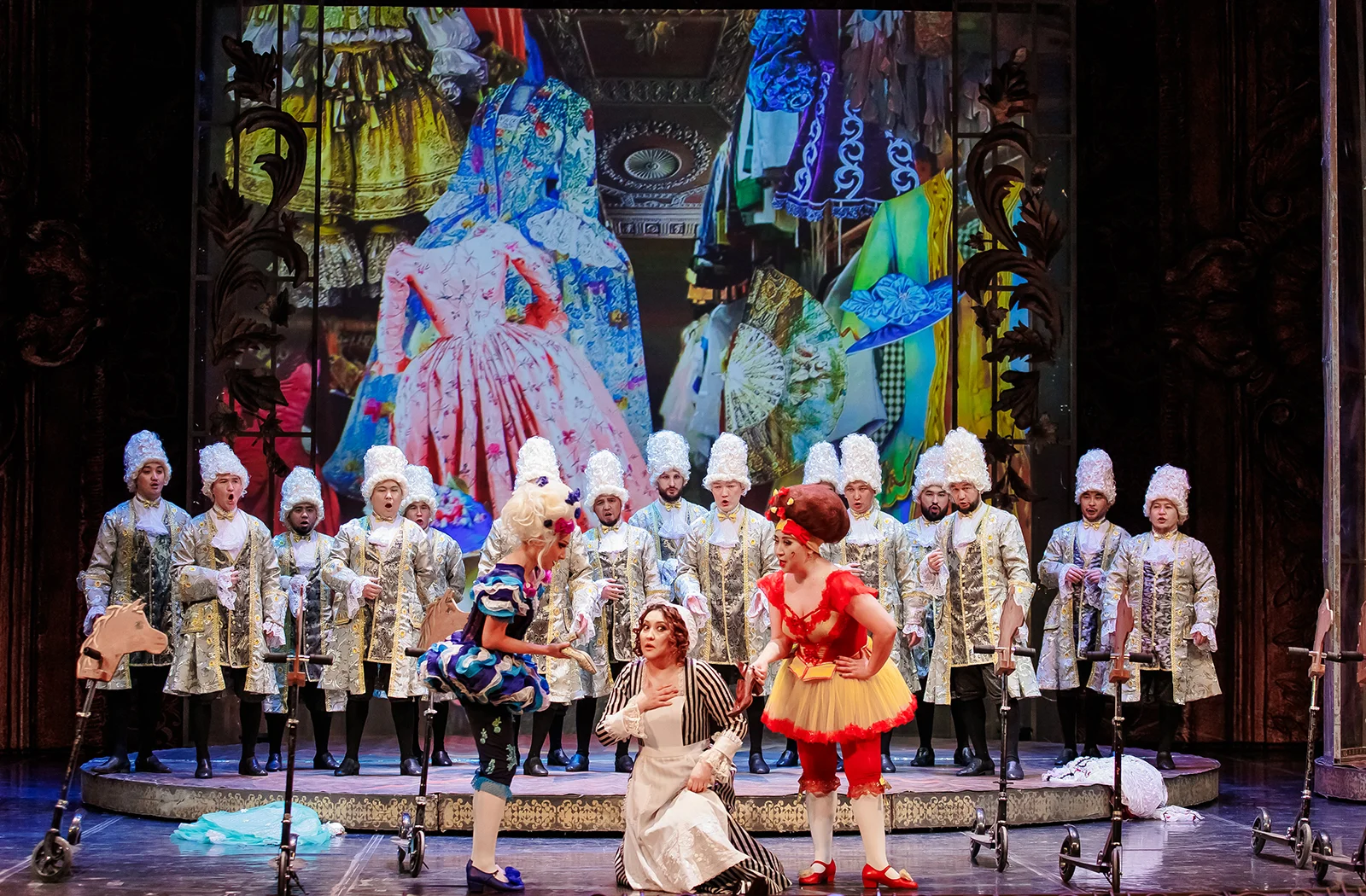
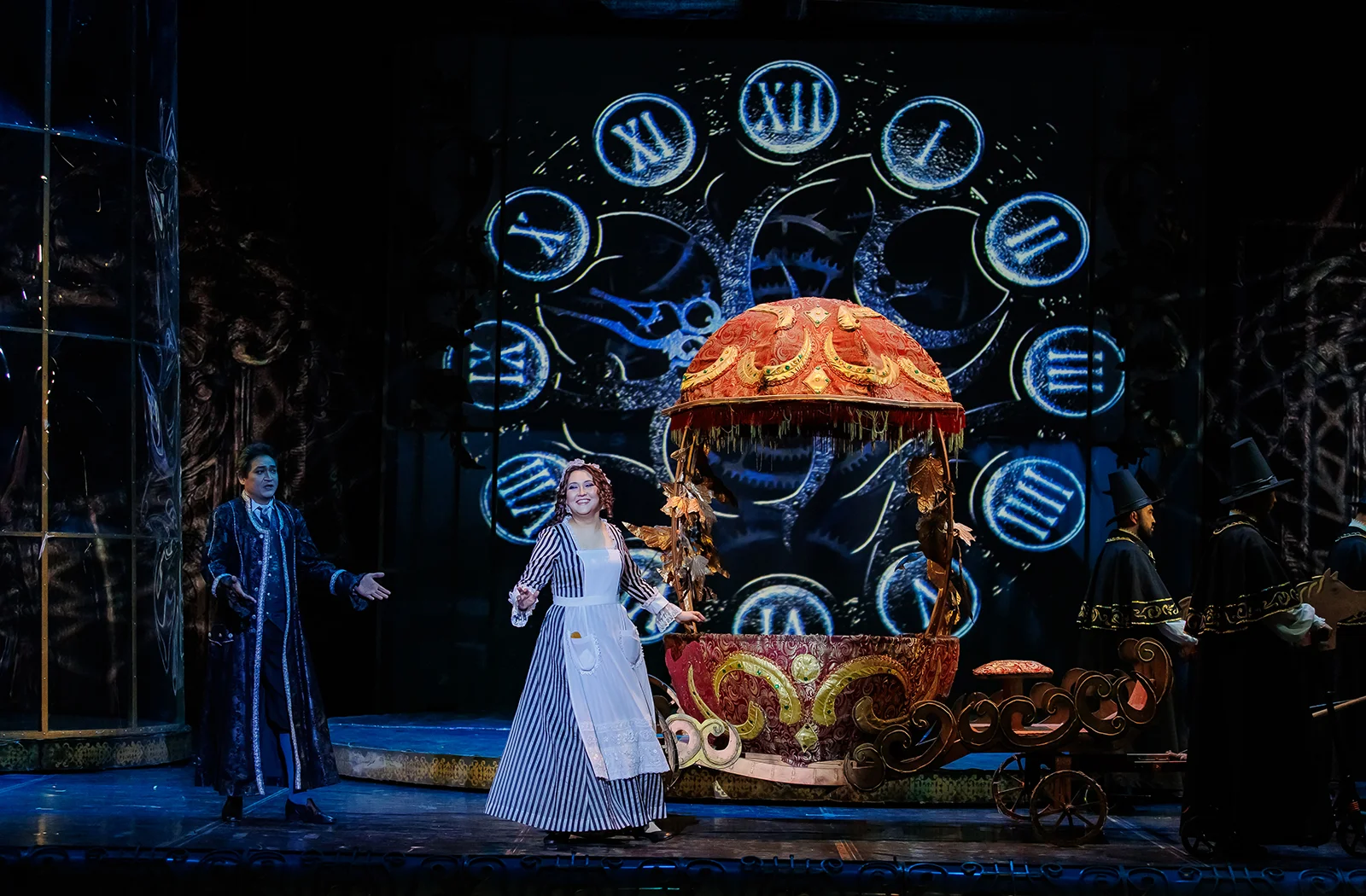
In the house of Don Magnifico, everything is as usual: his daughters Tisbe and Clorinda are absorbed in themselves, while his stepdaughter Cinderella does all the housework. She sings a song about a king who chose a bride from among three sisters and preferred not the vain one, but the virtuous girl.
There is a knock at the door — a poor old man has arrived. In fact, it is Alidoro, Prince Ramiro’s tutor. He is searching for a bride for the prince and has deliberately come to this house dressed in poor clothes to learn the true nature of the girls. Clorinda and Tisbe try to drive the uninvited guest away, but Cinderella kindly offers him coffee. Touched by her goodness, Alidoro promises that heaven will reward her for her kindness.
Messengers announce the visit of Prince Ramiro and deliver invitations to a ball at the palace. The sisters begin to prepare frantically, tormenting Cinderella with errands. The poor girl is saddened that she is not destined to visit the palace.
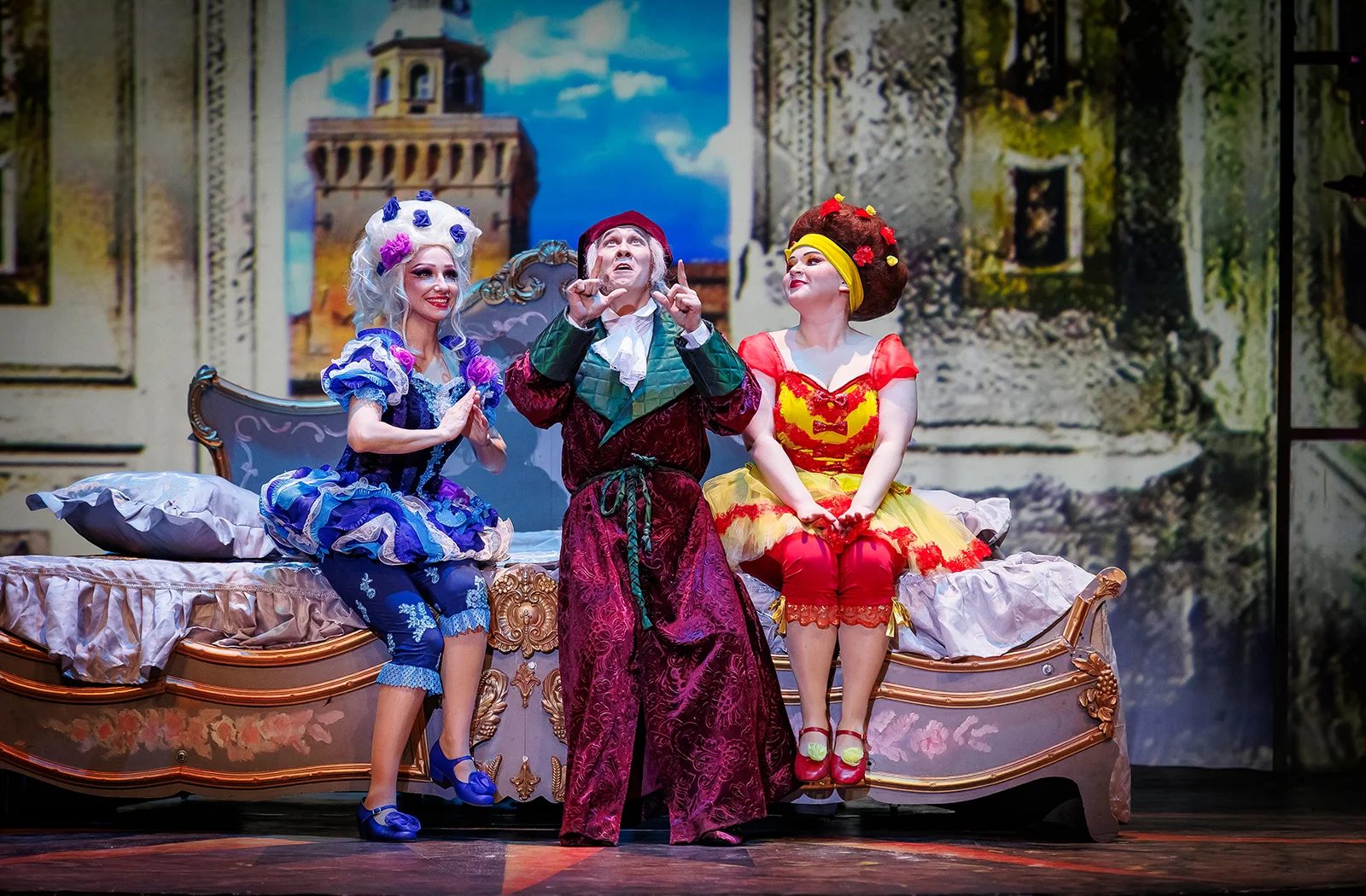
Don Magnifico, awakened by the chirping of his daughters, appears. He is furious because he was unable to finish a wonderful dream. He dreamed of a winged donkey covered in feathers flying up to a bell tower. Magnifico tries to interpret the dream. Bell ringing? A sign of celebration! Feathers? His daughters, his little birds! Flight on wings? Farewell to poverty and common life! That means his daughters will marry well, become queens, and give him a dozen grandchildren. At last the ruined baron will restore his fortune. And who, then, is the donkey? Why, himself — Don Magnifico!
Prince Ramiro appears disguised as a valet. Having exchanged clothes with his servant, he dreams of finding a sincere girl who will love him for himself, not for his title. Seeing Cinderella, he speaks with her and, captivated by her beauty and natural grace, falls in love. Cinderella, too, is not indifferent to the pleasant stranger.
Ramiro solemnly announces to the хозяин of the house the arrival of the “prince”.
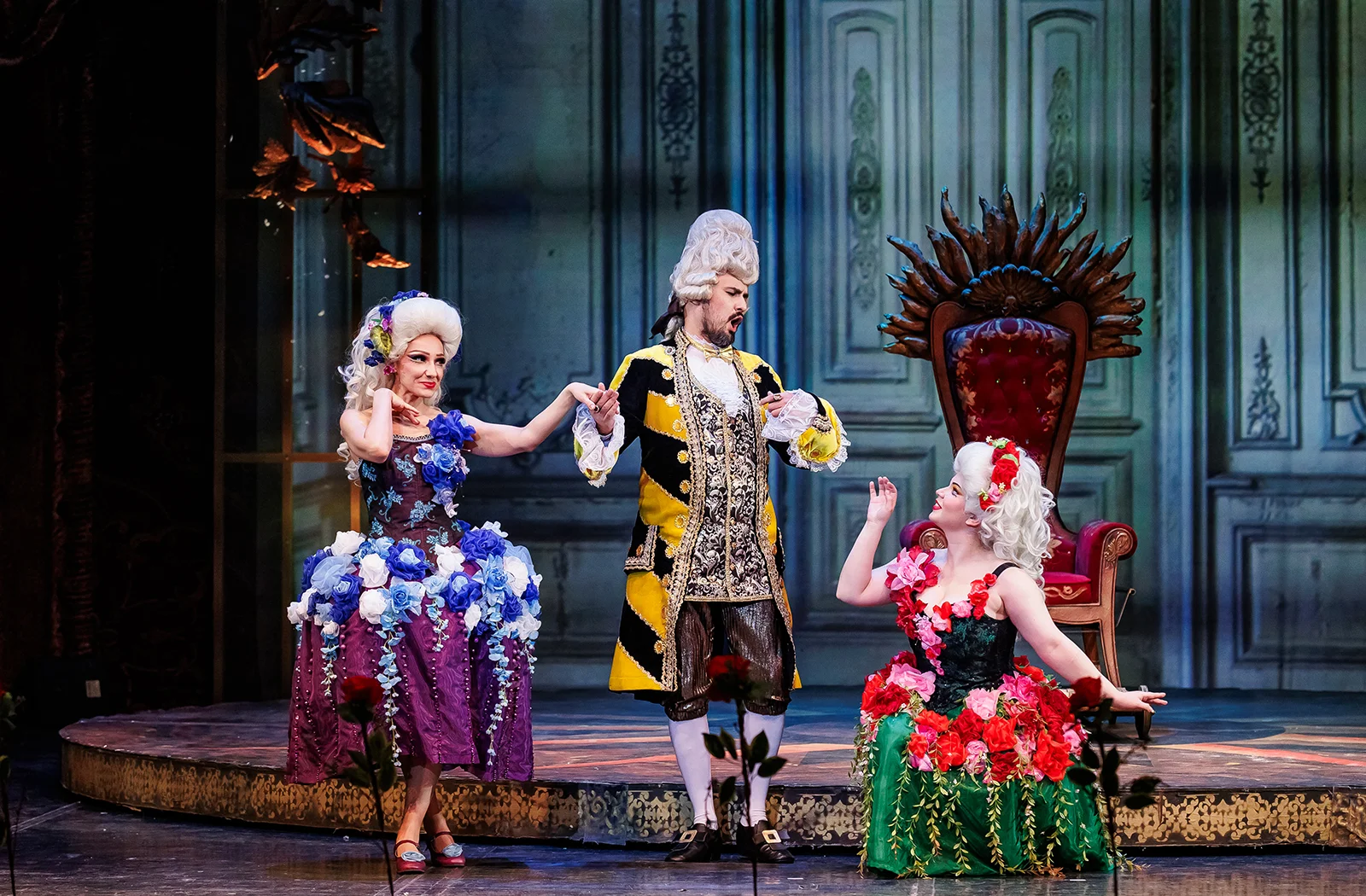
Dandini appears. The splendidly dressed valet is taken by all for the real prince. Magnifico hopes he will choose one of his daughters. Clorinda and Tisbe begin flirting with the guest.
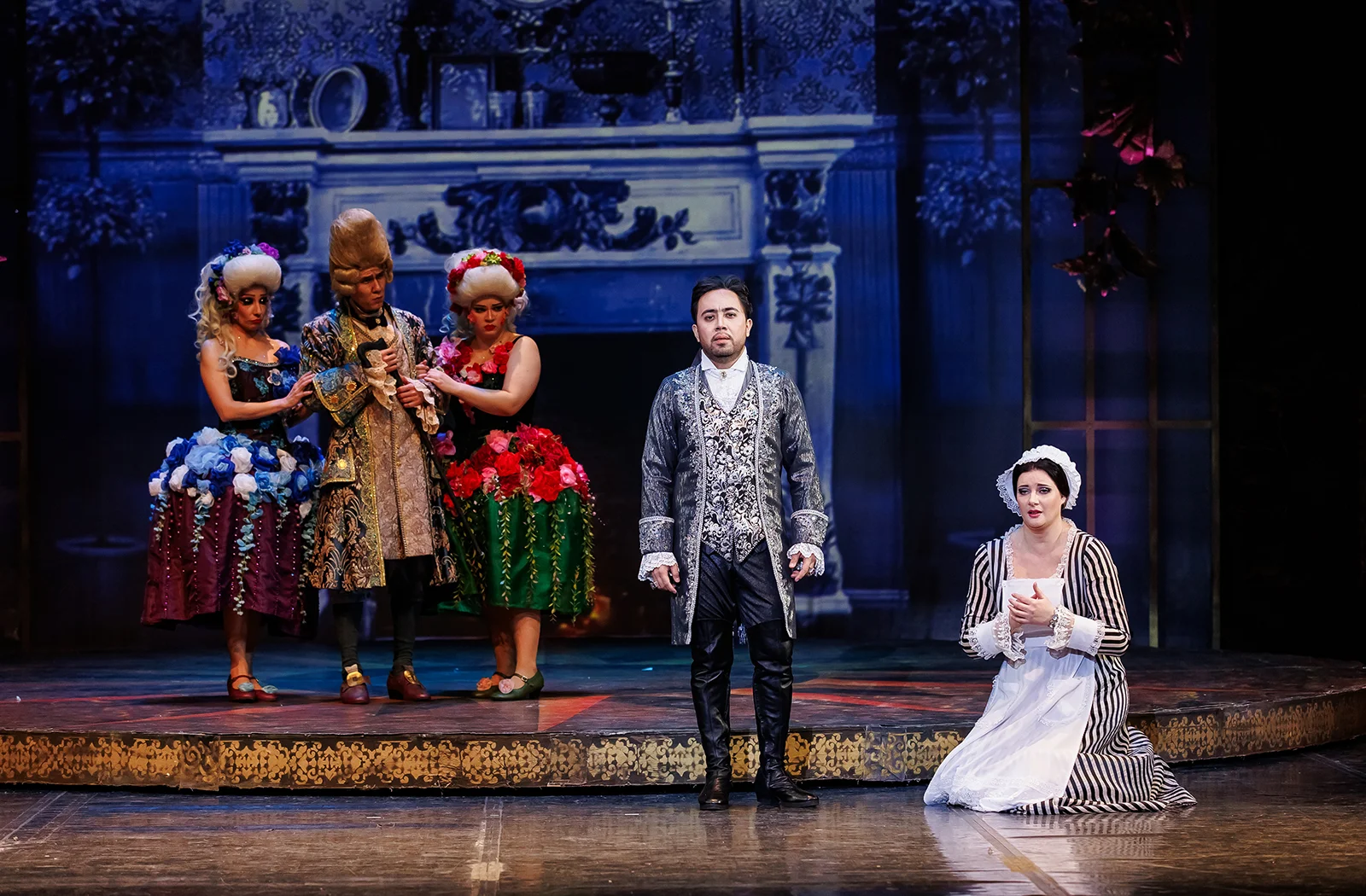
Cinderella asks her stepfather to take her with him to the palace, but Don Magnifico angrily protests: is it fitting for servant girls to dance at balls? Alidoro appears with documents in hand and states that, according to the records, the owner of the house has not two daughters, but three. Don Magnifico insists that his third daughter has died. Cinderella tries to deny his words, but her stepfather threatens her with punishment if she says a word. Ramiro is shocked by the baron’s rude treatment of the girl. Dandini observes that the comedy is in danger of turning into tragedy.
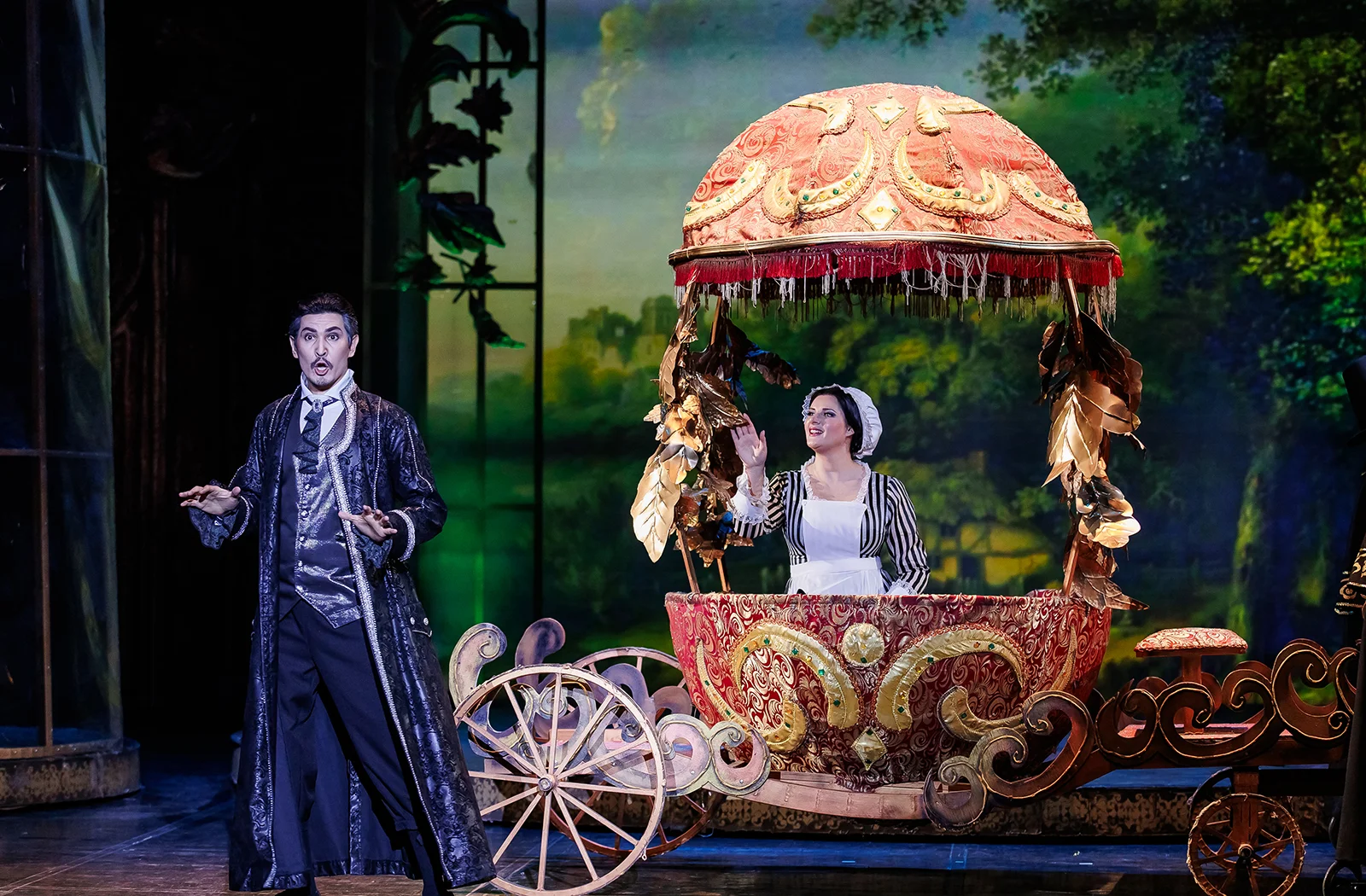
Alidoro urges Cinderella to forget her sorrow and go to the ball. Cinderella is astonished: is that really possible? What about a dress? A carriage?
Everything is already prepared for her departure. He is moved by her excitement and admires her kindness and innocence — for such qualities are as rare as true treasures.
Act Two
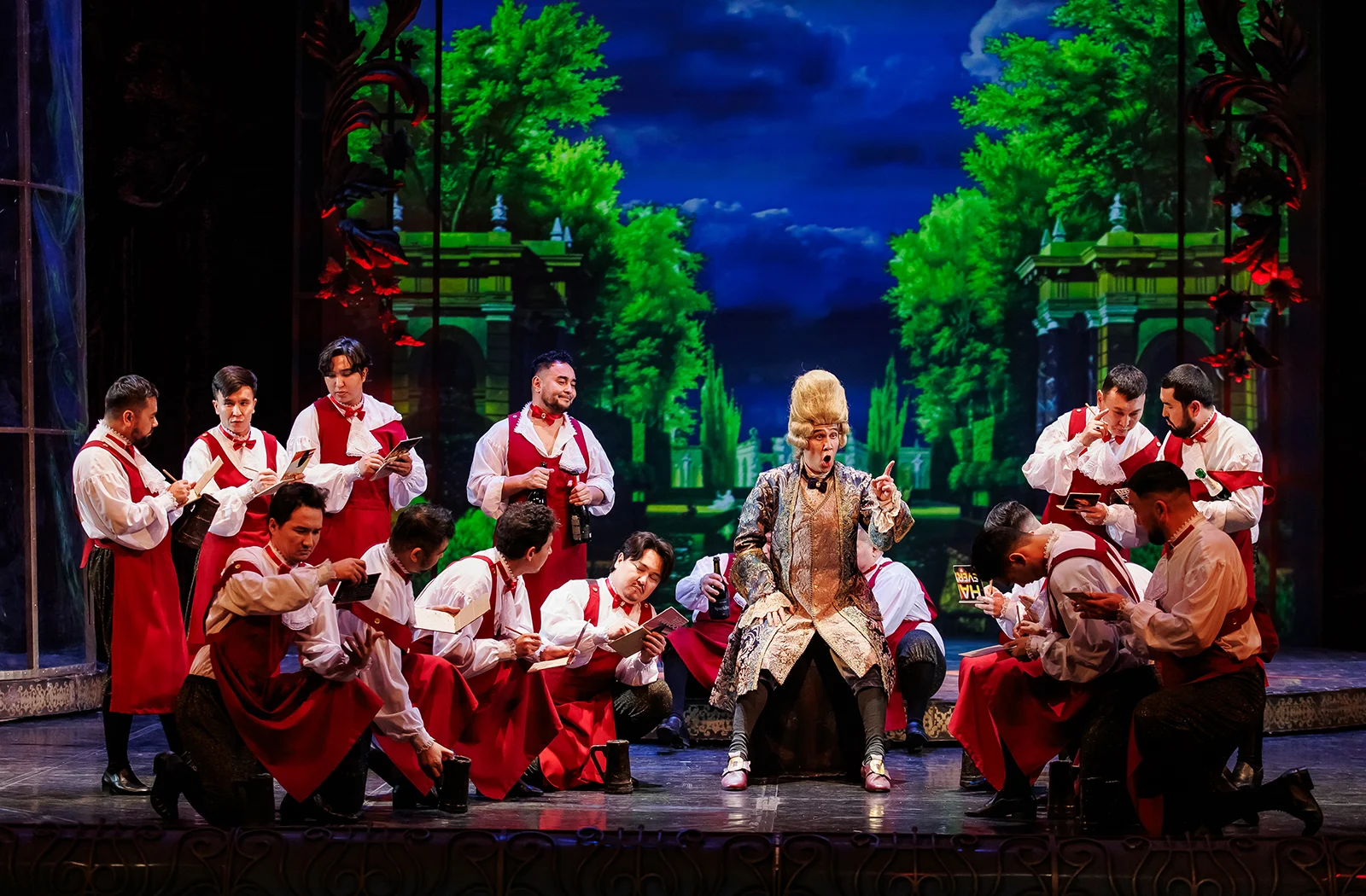
Dandini, in the role of the prince, amuses himself by promising to appoint Don Magnifico as chief cupbearer. The baron descends to the wine cellar, leaving his daughters to entertain the prince.
Beginning his new duties, Magnifico proclaims a new law: from now on, on pain of hanging, it is forbidden to dilute wine with water!
Dandini and Ramiro delight in their invention, which has revealed the arrogance and impudence of the would-be brides. Tisbe and Clorinda endlessly ask the “prince” which of them he will choose. He replies that in any case he will give the other sister to his valet. The sisters are outraged: he is a commoner, and with such an ordinary appearance!
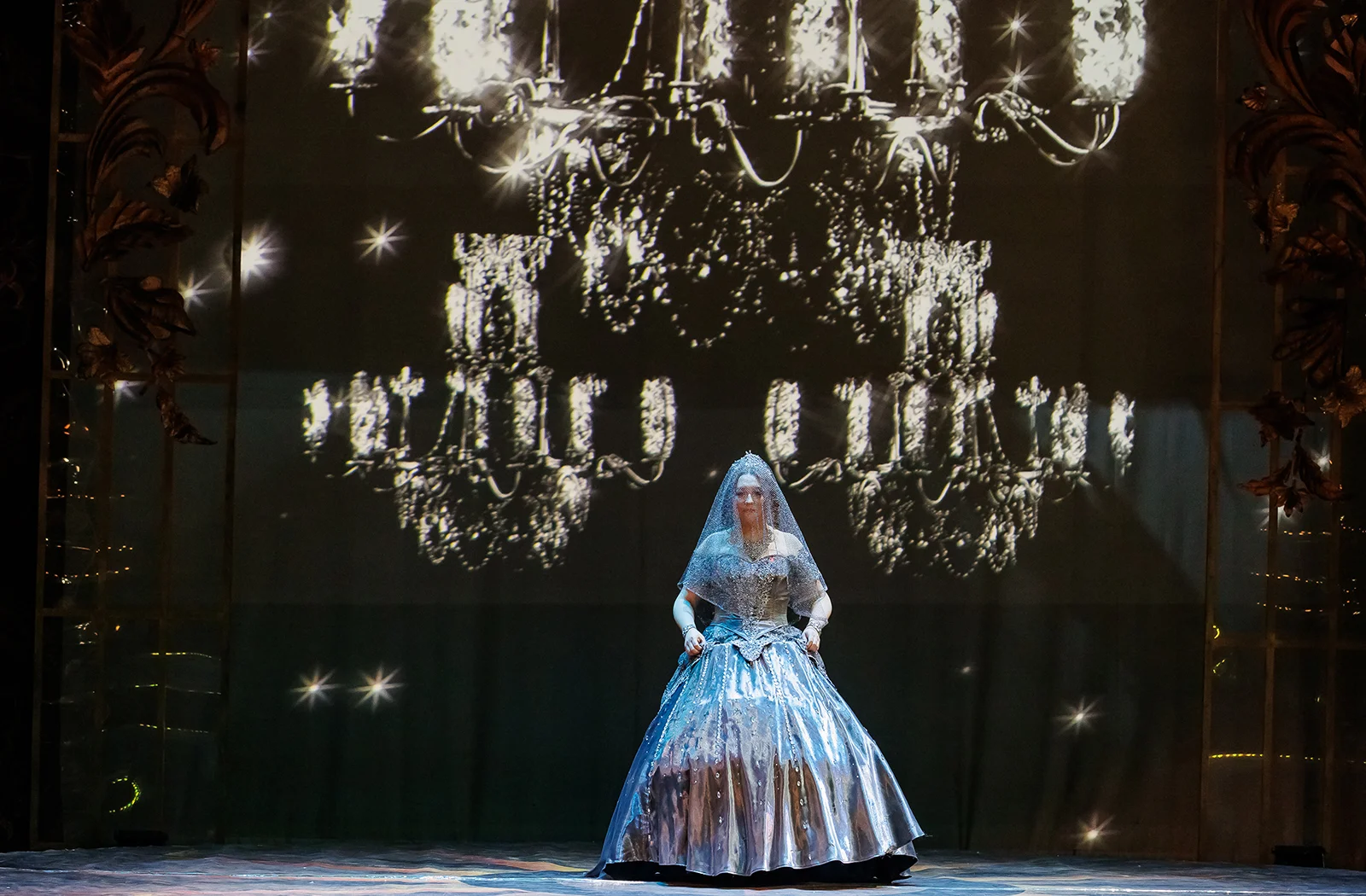
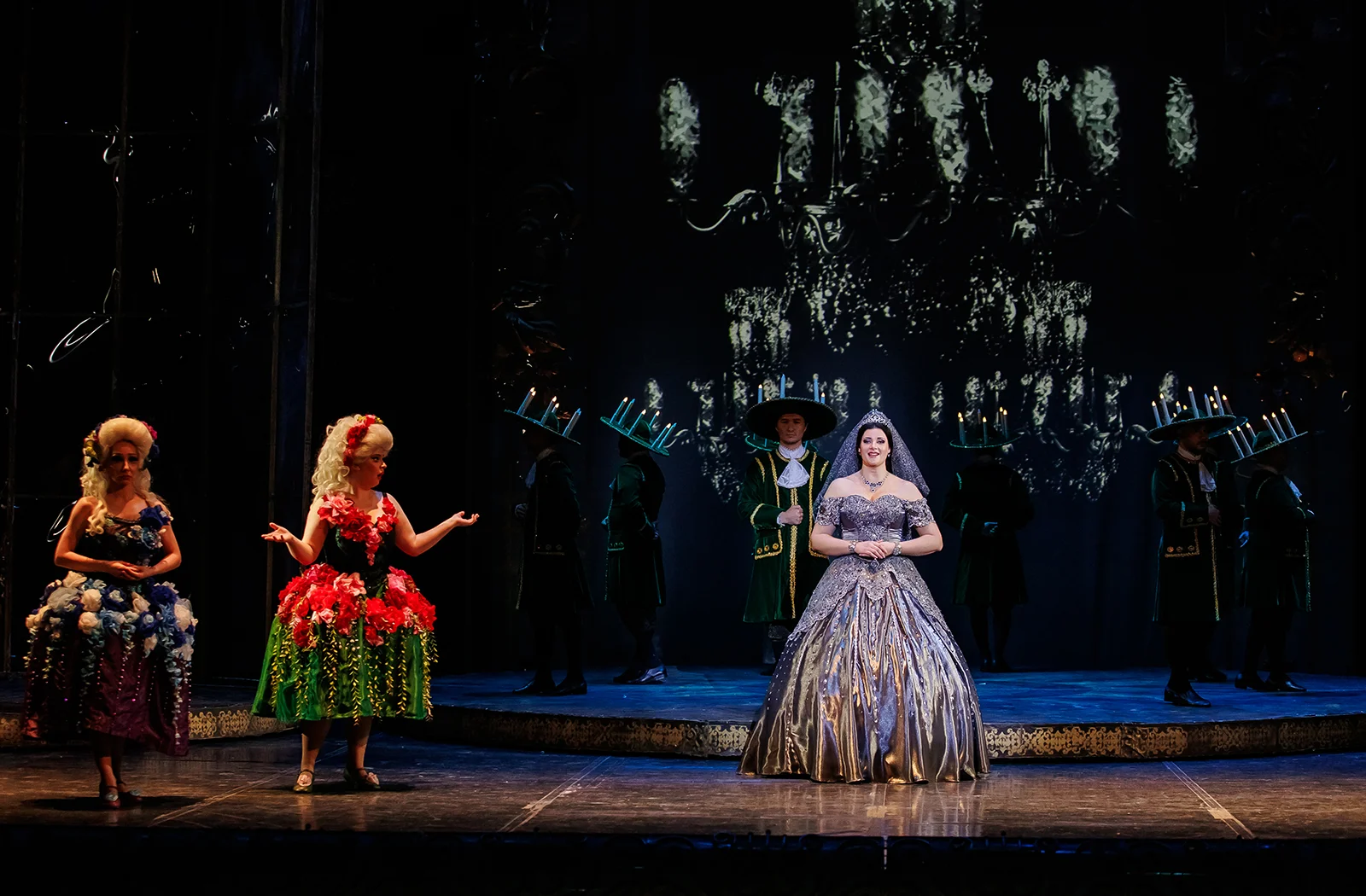
Suddenly, the ball is interrupted by the appearance of a beautiful stranger. Everyone is intrigued and astonished. The Magnifico family is troubled by the beauty’s resemblance to Cinderella.
Act Three
Dandini pursues Cinderella to confess his love to her. But the girl tells him directly that she loves another — his valet. Overhearing this by chance, Ramiro is overjoyed. The lovers declare themselves to one another. But Cinderella unexpectedly leaves the palace. How can the beautiful stranger be found? She has left a bracelet for her beloved. The girl who wears its matching pair is his chosen one.
At last Ramiro puts on his proper clothes and sets out in search of her. Love itself guides him.
Dandini is forced to confess to Don Magnifico that he is nothing more than a valet, a servant. The baron is devastated — what disgrace! He will become a laughingstock to everyone.
A thunderstorm breaks out. The irritated sisters return home from the ball. Seeing Cinderella, they are convinced that this drudge could not possibly have been the beauty at the ball.
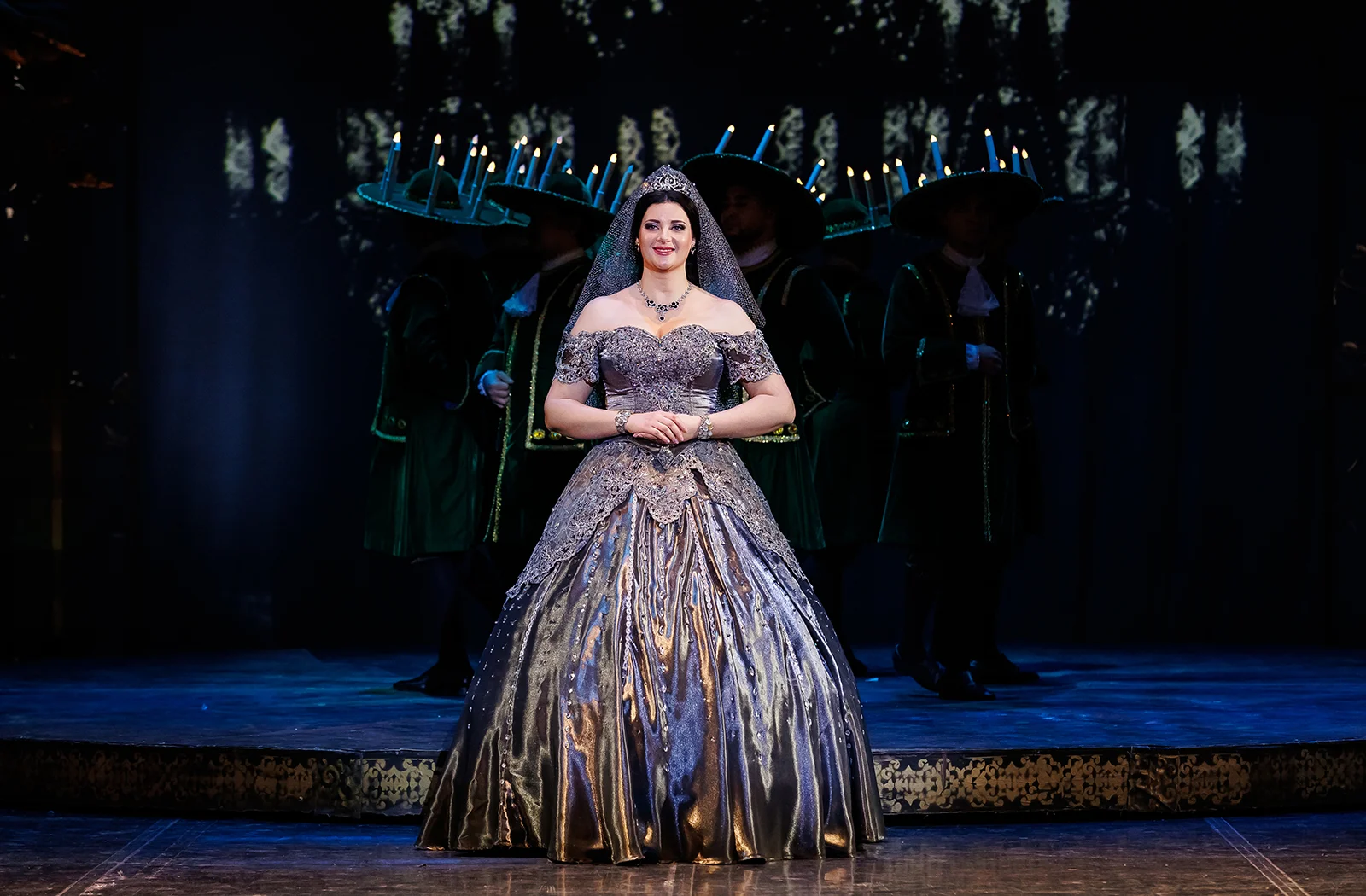
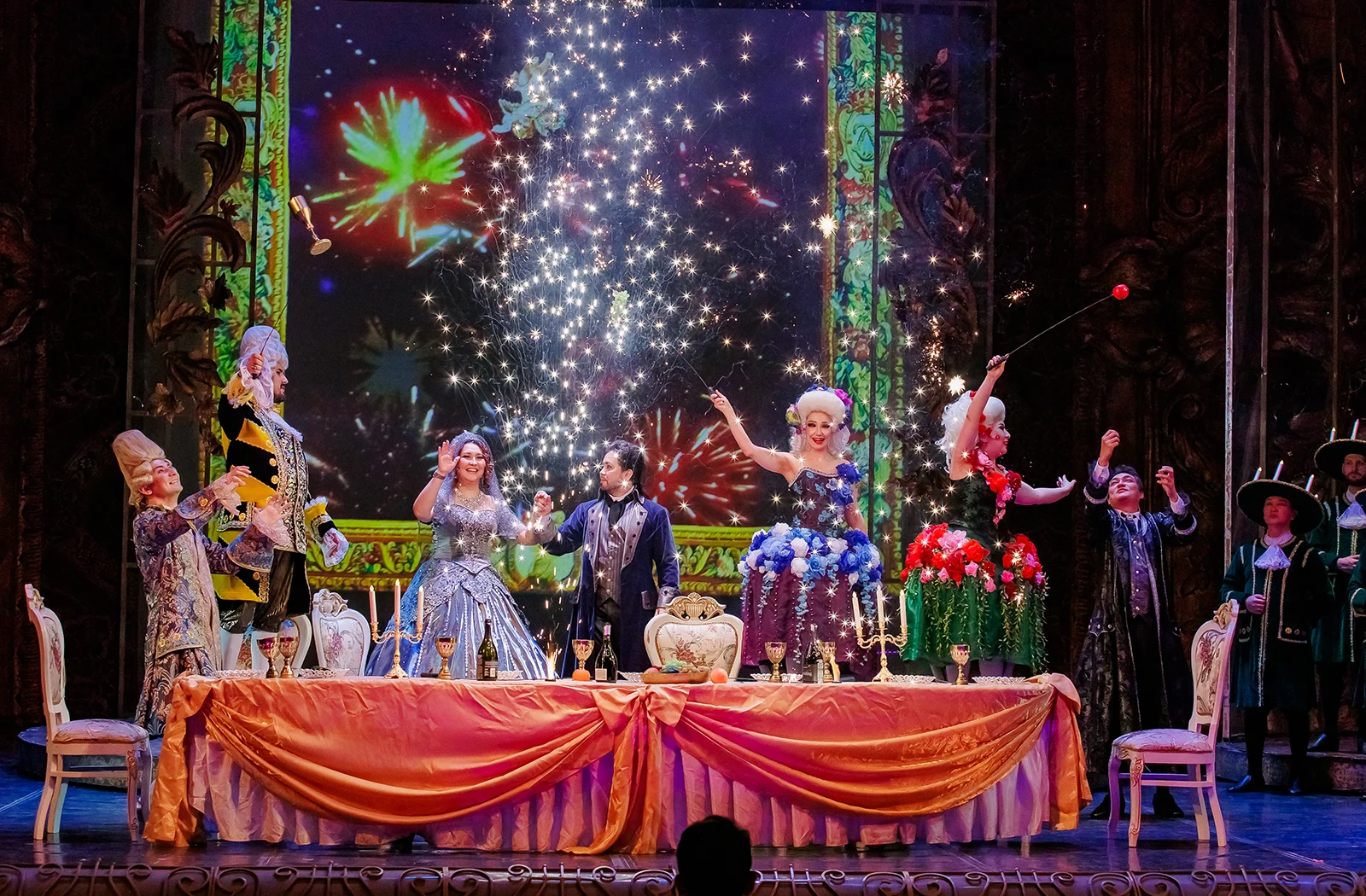
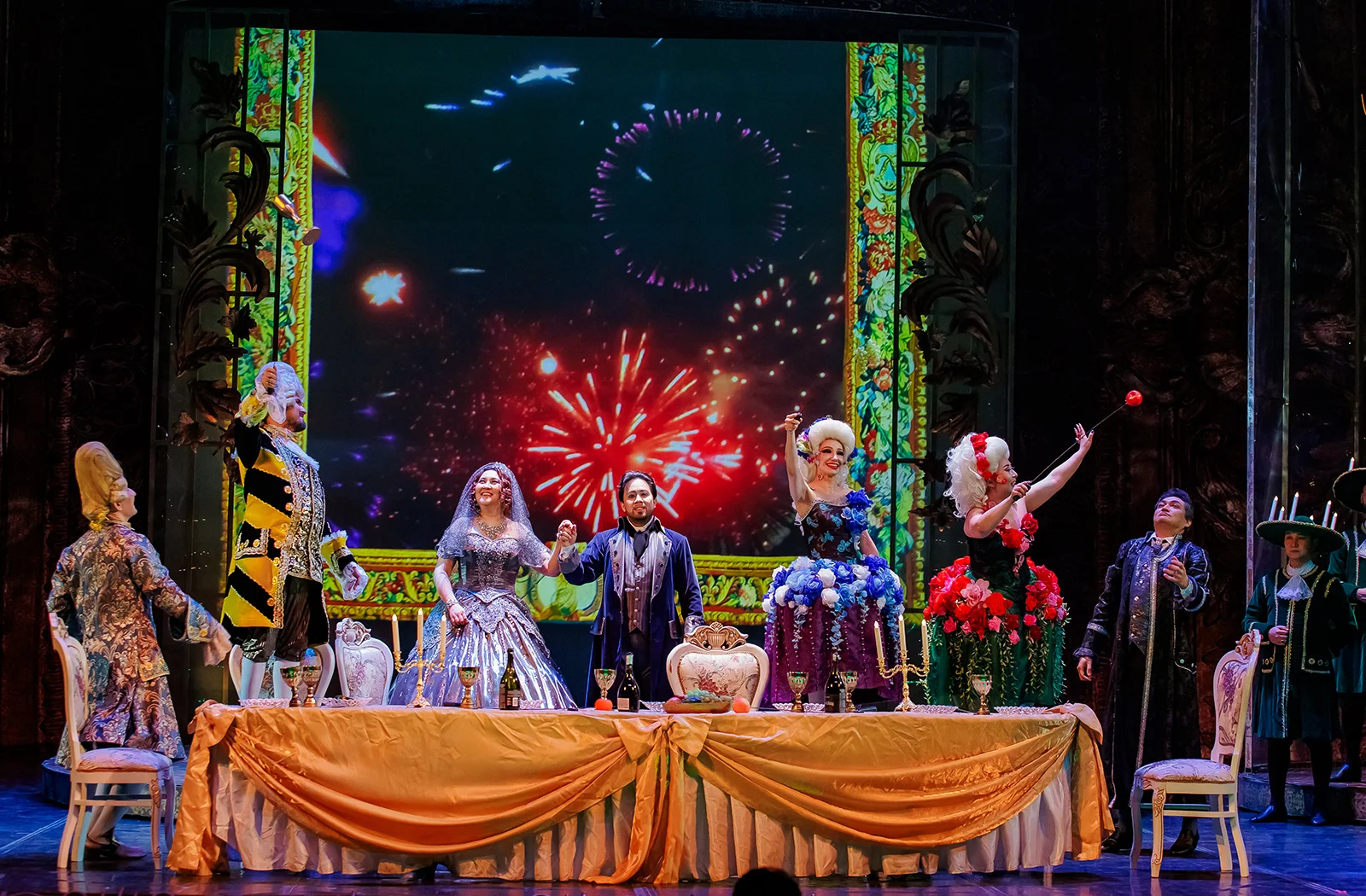
Alidoro arranges for the prince’s carriage to break down unexpectedly near Magnifico’s house. Ramiro and Dandini are forced to take shelter from the storm in the baron’s home. Cinderella is astonished to learn that the chosen one of her heart is a prince, and Ramiro sees the bracelet on her arm and realizes that Cinderella is exactly the one with whom he has fallen so passionately in love. He leads her to the palace to celebrate a magnificent wedding. Happy Cinderella forgives both her stepfather and her sisters with a light heart.
The chorus proclaims: “The wheel of fickle Fortune is always turning: one rises to the top, another falls to the bottom. And so it happens that pride and vanity crumble into dust, while kindness and innocence celebrate their triumph!”
Archived
Rossini’s vibrant, dynamic, and witty Cinderella is a vibrant fairy tale filled with humor, emotion, and beautiful music that easily captivates and delivers true theatrical pleasure.
Two centuries ago, during the Christmas season, one of Gioachino Rossini’s finest operas, «Cinderella», whose full title is «Cinderella, or The Triumph of Virtue», was written in just twenty-four days for Rome’s Teatro Valle. Its premiere took place in Rome on January 25, 1817, after which «Cinderella» became one of the most frequently performed operas by the great composer.
The famous fairy tale by Charles Perrault about a poor girl who meets a prince was transformed by Gioachino Rossini and librettist Jacopo Ferretti into a comic opera enriched with new characters, unexpected plot turns, sparkling humor, and surprises. From its very first sounds, the opera captivates with its extraordinary beauty, wit, gaiety, and, of course, enchantment. In it, Rossini playfully mocks human weaknesses, placing the characters in a variety of comic situations.
For 200 years, «Cinderella» has adorned the repertoire of the world’s greatest opera houses. In its bicentenary year, Rossini’s masterpiece was presented for the first time in Kazakhstan on the stage of the Abay Opera House.
G. Rossini
CINDERELLA
(La Cenerentola)
Comic opera in three acts
Libretto by J. Ferretti
At the Abay Opera House, the premiere took place on 09.12.2017
Production team:
Musical Director and Conductor – Askar Buribayev, Honored Worker of the Republic of Kazakhstan
Director – Lyaylim Imangazina, Honored Worker of the Republic of Kazakhstan
Designer – Vyacheslav Okunev, People’s Artist of Russia, Laureate of the State Prizes of the Russian Federation and the Republic of Kazakhstan (St. Petersburg)
Choirmaster – Aliya Temirbekova, Honored Worker of the Republic of Kazakhstan
Multimedia Designer – Victoria Zlotnikova (St. Petersburg)
Characters
- Cinderella (Cenerentola), Don Magnifico’s stepdaughter
- Don Ramiro, Prince
- Dandini, his valet
- Alidoro, philosopher in the service of the Prince
- Don Magnifico, baron
- His daughters: Clorinda and Tisbe
Act One
In the house of Don Magnifico, everything is as usual: his daughters Tisbe and Clorinda are absorbed in themselves, while his stepdaughter Cinderella does all the housework. She sings a song about a king who chose a bride from among three sisters and preferred not the vain one, but the virtuous girl.
There is a knock at the door — a poor old man has arrived. In fact, it is Alidoro, Prince Ramiro’s tutor. He is searching for a bride for the prince and has deliberately come to this house dressed in poor clothes to learn the true nature of the girls. Clorinda and Tisbe try to drive the uninvited guest away, but Cinderella kindly offers him coffee. Touched by her goodness, Alidoro promises that heaven will reward her for her kindness.
Messengers announce the visit of Prince Ramiro and deliver invitations to a ball at the palace. The sisters begin to prepare frantically, tormenting Cinderella with errands. The poor girl is saddened that she is not destined to visit the palace.
Don Magnifico, awakened by the chirping of his daughters, appears. He is furious because he was unable to finish a wonderful dream. He dreamed of a winged donkey covered in feathers flying up to a bell tower. Magnifico tries to interpret the dream. Bell ringing? A sign of celebration! Feathers? His daughters, his little birds! Flight on wings? Farewell to poverty and common life! That means his daughters will marry well, become queens, and give him a dozen grandchildren. At last the ruined baron will restore his fortune. And who, then, is the donkey? Why, himself — Don Magnifico!
Prince Ramiro appears disguised as a valet. Having exchanged clothes with his servant, he dreams of finding a sincere girl who will love him for himself, not for his title. Seeing Cinderella, he speaks with her and, captivated by her beauty and natural grace, falls in love. Cinderella, too, is not indifferent to the pleasant stranger.
Ramiro solemnly announces to the хозяин of the house the arrival of the “prince”.
Dandini appears. The splendidly dressed valet is taken by all for the real prince. Magnifico hopes he will choose one of his daughters. Clorinda and Tisbe begin flirting with the guest.
Cinderella asks her stepfather to take her with him to the palace, but Don Magnifico angrily protests: is it fitting for servant girls to dance at balls? Alidoro appears with documents in hand and states that, according to the records, the owner of the house has not two daughters, but three. Don Magnifico insists that his third daughter has died. Cinderella tries to deny his words, but her stepfather threatens her with punishment if she says a word. Ramiro is shocked by the baron’s rude treatment of the girl. Dandini observes that the comedy is in danger of turning into tragedy.
Alidoro urges Cinderella to forget her sorrow and go to the ball. Cinderella is astonished: is that really possible? What about a dress? A carriage?
Everything is already prepared for her departure. He is moved by her excitement and admires her kindness and innocence — for such qualities are as rare as true treasures.
Act Two
Dandini, in the role of the prince, amuses himself by promising to appoint Don Magnifico as chief cupbearer. The baron descends to the wine cellar, leaving his daughters to entertain the prince.
Beginning his new duties, Magnifico proclaims a new law: from now on, on pain of hanging, it is forbidden to dilute wine with water!
Dandini and Ramiro delight in their invention, which has revealed the arrogance and impudence of the would-be brides. Tisbe and Clorinda endlessly ask the “prince” which of them he will choose. He replies that in any case he will give the other sister to his valet. The sisters are outraged: he is a commoner, and with such an ordinary appearance!
Suddenly, the ball is interrupted by the appearance of a beautiful stranger. Everyone is intrigued and astonished. The Magnifico family is troubled by the beauty’s resemblance to Cinderella.
Act Three
Dandini pursues Cinderella to confess his love to her. But the girl tells him directly that she loves another — his valet. Overhearing this by chance, Ramiro is overjoyed. The lovers declare themselves to one another. But Cinderella unexpectedly leaves the palace. How can the beautiful stranger be found? She has left a bracelet for her beloved. The girl who wears its matching pair is his chosen one.
At last Ramiro puts on his proper clothes and sets out in search of her. Love itself guides him.
Dandini is forced to confess to Don Magnifico that he is nothing more than a valet, a servant. The baron is devastated — what disgrace! He will become a laughingstock to everyone.
A thunderstorm breaks out. The irritated sisters return home from the ball. Seeing Cinderella, they are convinced that this drudge could not possibly have been the beauty at the ball.
Alidoro arranges for the prince’s carriage to break down unexpectedly near Magnifico’s house. Ramiro and Dandini are forced to take shelter from the storm in the baron’s home. Cinderella is astonished to learn that the chosen one of her heart is a prince, and Ramiro sees the bracelet on her arm and realizes that Cinderella is exactly the one with whom he has fallen so passionately in love. He leads her to the palace to celebrate a magnificent wedding. Happy Cinderella forgives both her stepfather and her sisters with a light heart.
The chorus proclaims: “The wheel of fickle Fortune is always turning: one rises to the top, another falls to the bottom. And so it happens that pride and vanity crumble into dust, while kindness and innocence celebrate their triumph!”
Cast and Performers
(April 11, 2026, 18:00)
- La Cenerentola, stepdaughter of Don Magnifico Elena Nikonova
- Don Ramiro, Prince Damir Saduakhassov
- Dandini, his valet Emil Sakavov
- Alidoro, the philosopher on service of Prince Tair Tazhi
- Don Magnifico, baron Zhandarbek Yerkinbayev
- Clorinda Nargiz Satmukhametova, (first performance)
- Tisbe Irina Kotova
-
Symphony Orchestra and Chorus of the Kazakh National Opera and Ballet Theatre named after Abay
- Conductor Kuanysh Ismailov
Gallery
Gallery