Ballet
Coppelia April 24, 2026, 19:00
Description
Léo Delibes’s ballet “Coppelia” is a graceful comic tale of love, jealousy, and the mystery of a living doll, where classical music, expressive choreography, and theatrical imagination combine to create a vibrant stage performance. Gulzhan Tutkibaeva’s production at the Abai Kazakh National Academic Ballet Theatre reveals this celebrated masterpiece of the ballet repertoire in a lively, witty, and poetic interpretation.
“Coppelia, or The Girl with Enamel Eyes” is a ballet to the music of the French composer Leo Delibes and belongs to the rare comic genre on the ballet stage. “Coppelia” is a recognized standard of classical ballet and is included in the repertoire of almost all renowned theatres and ballet companies.
Today, the original choreography of the ballet is almost forgotten, yet the work continues to live on, acquiring new colours and new interpretations. The reason for this is the wonderful music of Leo Delibes, who led ballet theatre onto a new path. It ceased to be a mere “servant of choreography” and became an equal component of the performance. The composer’s art was admired by P. I. Tchaikovsky: “What charm, what grace, what melodic, rhythmic and harmonic richness,” wrote the great Russian composer.
The ballet “Coppelia” became a milestone in the composer’s творчество. He began working on it in 1869. In this ballet, the composer skilfully uses leitmotifs to characterize the principal characters, which contributes to the dramatic unity. The music of the ballet is poetic, emotionally expressive, imaginative and пластична. It clearly contrasts the world of living human feelings with the world of soulless mechanical dolls.
In individual dances — the Polish mazurka, Hungarian czardas, Scottish jig and others — the composer draws on the features of national folklore. The image of Swanhilda is especially vivid: capricious, playful, thoughtful and tender. Swanhilda’s Waltz from Act I is the most famous number of the ballet and is often performed in concert in its vocal version.
This ballet is notable for its classical and characteristic dances, as well as for its distinctive pantomime.
The main plot line of this comic ballet, strangely enough, is taken from Hoffmann’s decidedly sombre tales, chiefly “The Sandman”. In Hoffmann, the young man’s infatuation with a doll ends tragically, whereas in the ballet it leads to a happy ending.
“Coppelia” first saw the footlights in 1870 at the Paris Opera. Its creator was Arthur Saint-Léon — a choreographer, virtuoso dancer, connoisseur of dance folklore, composer and violinist. His particular interest in the “dances of the peoples of the world” led to the appearance in the score of such a rich set of folk-based dance melodies.
By the end of the 19th century, the ballet had been staged in New York, London, Brussels, Milan, Copenhagen, Munich, Moscow and St. Petersburg. The 20th and 21st centuries also paid tribute to this ballet, at times offering modern interpretations with a tragic denouement.
The ballet “Coppelia” was staged at the Abai Opera and Ballet Theatre in 1937 by ballet master Yuri Kovalev. Eighty years later, on May 20, 2017, “Coppelia” once again adorned the repertoire of our theatre.
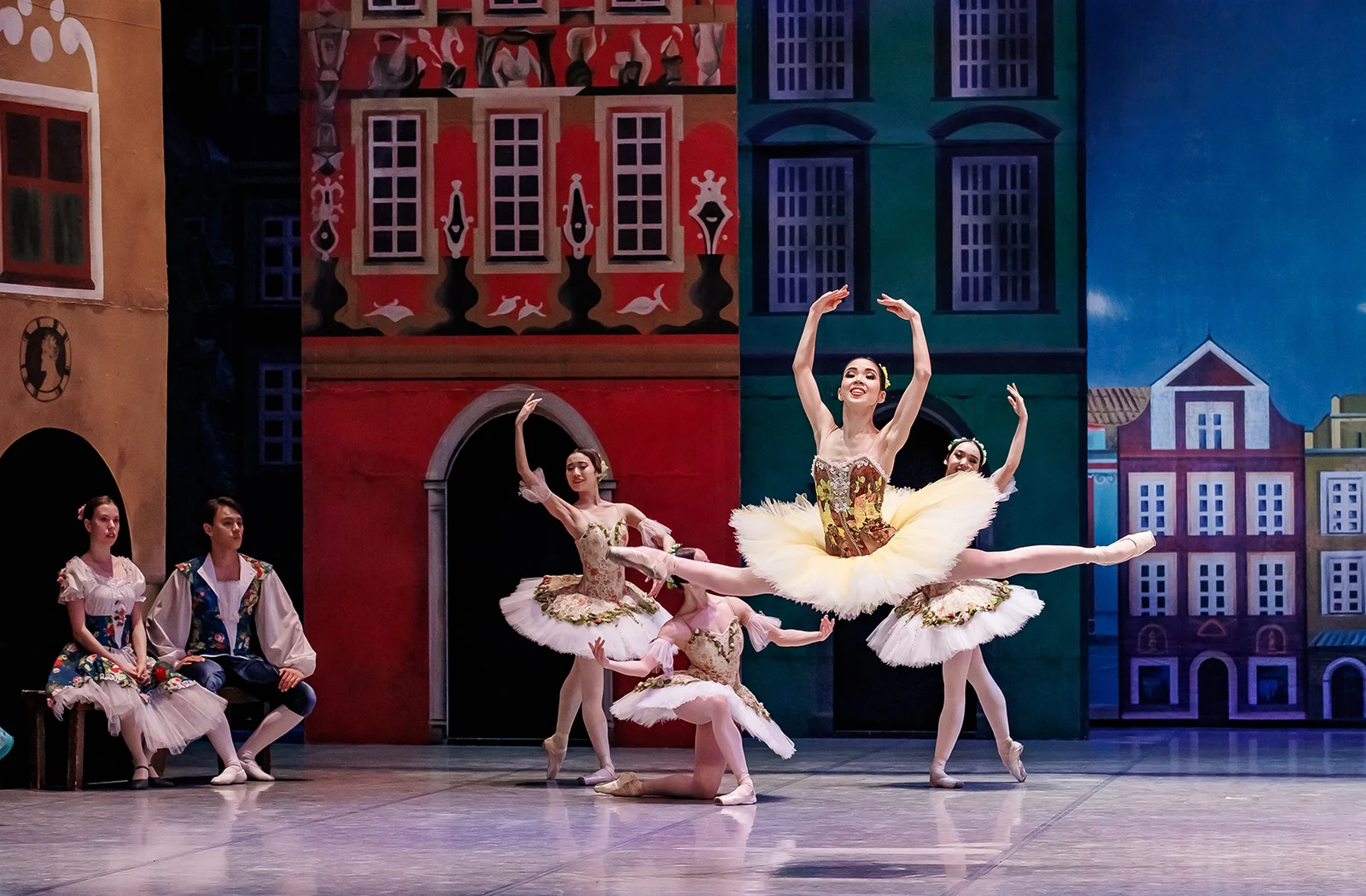
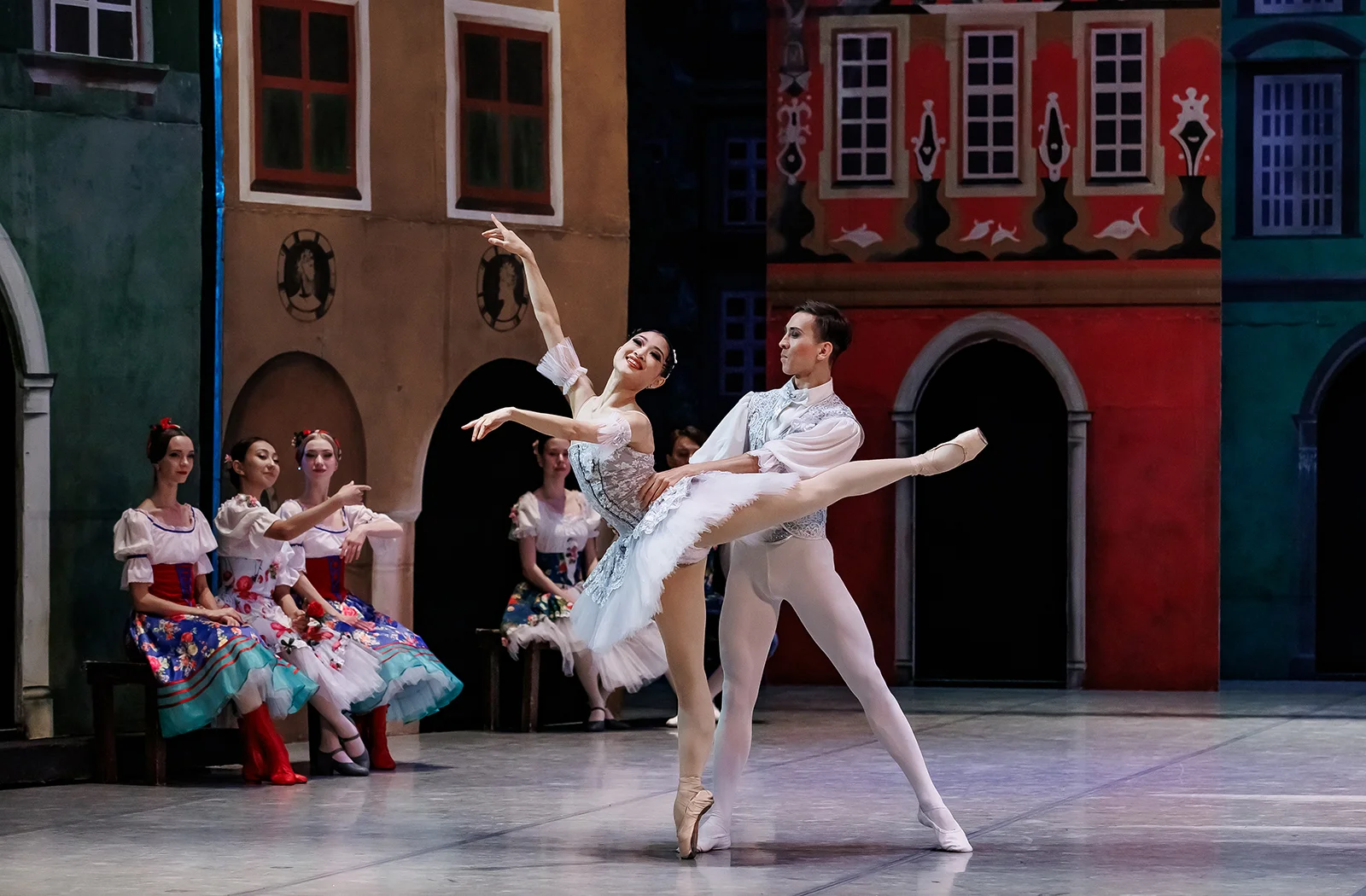
In Gulzhan Tutkibaeva’s production, the ballet acquired vivid new colours, combining classical and neoclassical choreography.
Leo Delibes
Coppelia
ballet in 2 acts
libretto by Ch. Nuitter and A. Saint-Léon
based on short stories by E. T. A. Hoffmann
choreography by Gulzhan Tutkibaeva
Production Team:
Conductor – Yerbolat Akhmedyarov, Honored Worker of the Republic of Kazakhstan
Choreographer – Gulzhan Tutkibaeva, People’s Artist of the Republic of Kazakhstan
Designer – Vyacheslav Okunev, People’s Artist of Russia, laureate of State Prizes
Characters
- Swanhilda
- Franz
- Coppelius
- Coppelia, the doll
- Friends of Swanhilda
- Friends of Franz
- Burgomaster
- Morning
- Day
- Mazurka
- Czardas
Act I
Scene 1
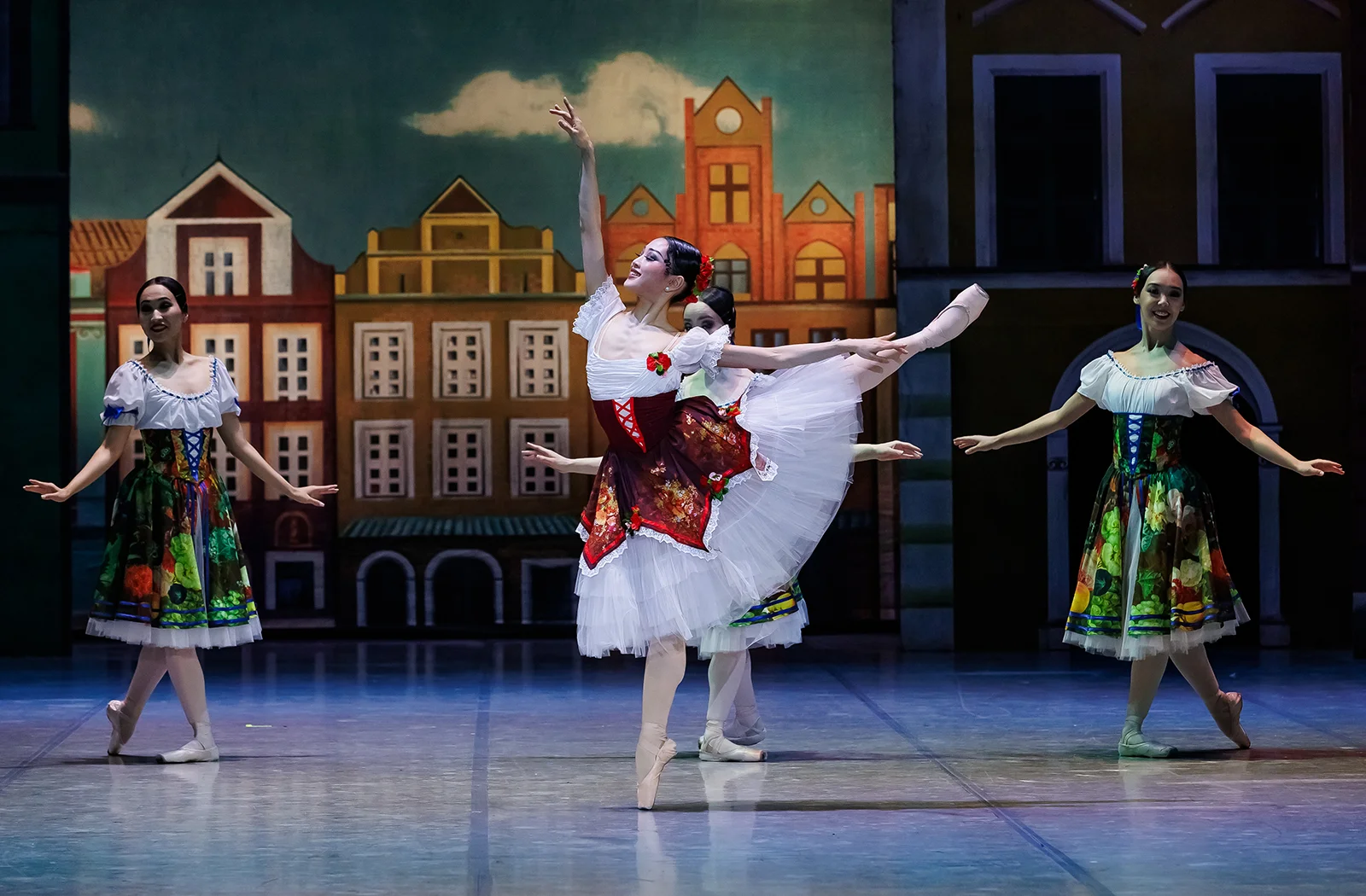
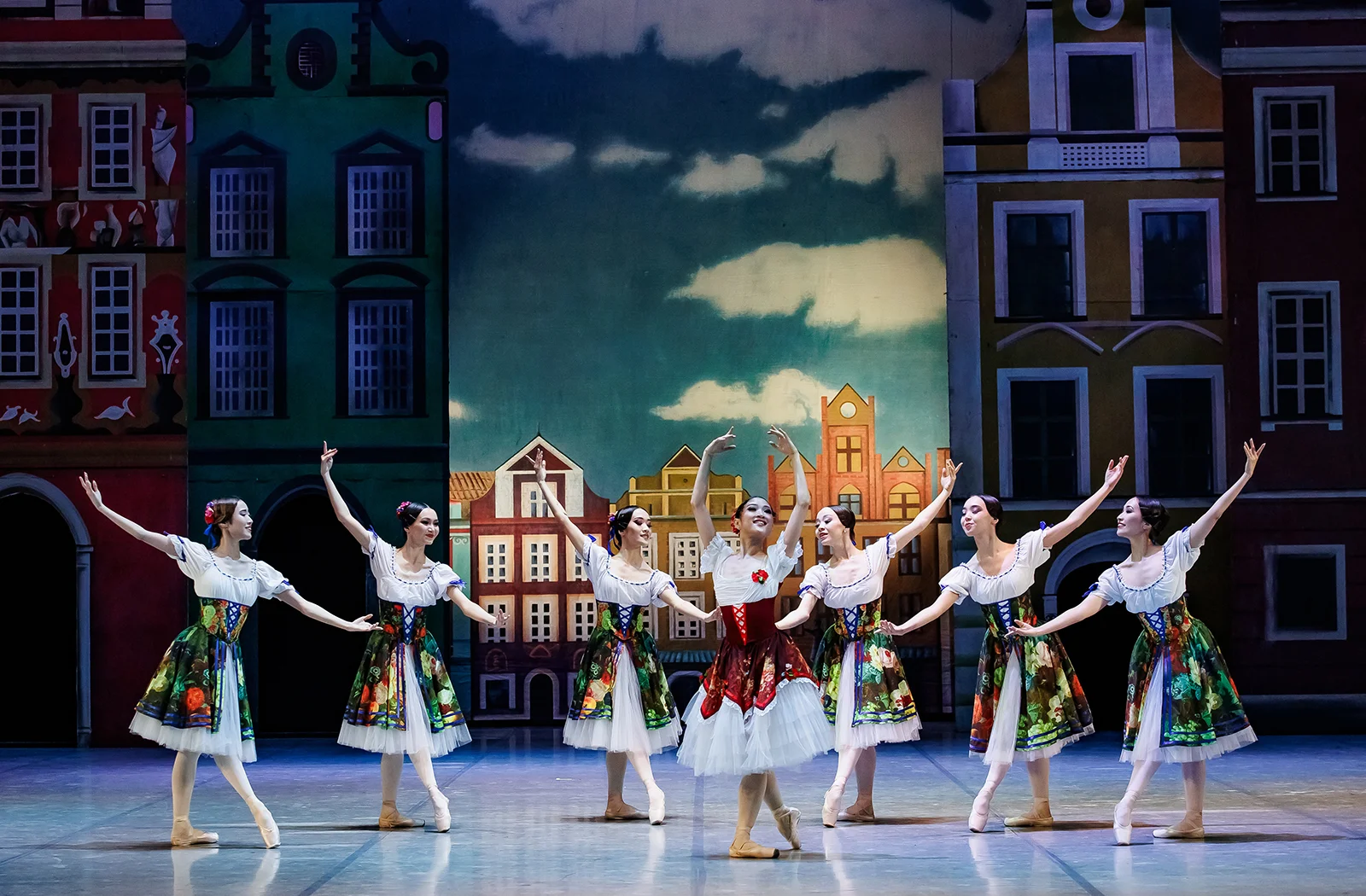
In the town square are the young lovers Swanhilda and Franz.
Suddenly, Coppelius appears — a strange eccentric, an alchemist, the creator of mysterious mechanisms. The townspeople are afraid of him, while the young people often mock him.
Once again, after a malicious prank, Coppelius decides to teach Franz and his friends a lesson. He brings to the square a mysterious stranger, with whom all the young men immediately fall in love.
Swanhilda notices that Franz, too, is fascinated by the unknown beauty who has recently settled in Coppelius’s house. She tries to attract Franz’s attention, but without success.
The lovers quarrel. In a fit of jealousy, Swanhilda starts an argument and decides to take revenge.
The townspeople who have gathered in the square in anticipation of the holiday become witnesses to the lovers’ disagreement.
In indignation, Swanhilda, together with her friends, decides to discover the secret of the mysterious stranger. Her rival’s name is Coppelia.
Noise is heard in Coppelius’s house. A reddish light glimmers through the windows. Several girls move away from the strange house in fear. Coppelius is a madman who is constantly at work. For what purpose? No one knows, and no one much cares.
At night, the town square is empty. Pleased with himself, Coppelius leaves the house to relax in the tavern after a hard day’s work.
Swanhilda and her friends notice on the ground the key that Coppelius has dropped. She persuades her friends to enter the house to find out who this beautiful stranger is.
At the same time, Franz, captivated by Coppelia, also decides to enter Coppelius’s house.
Scene 2
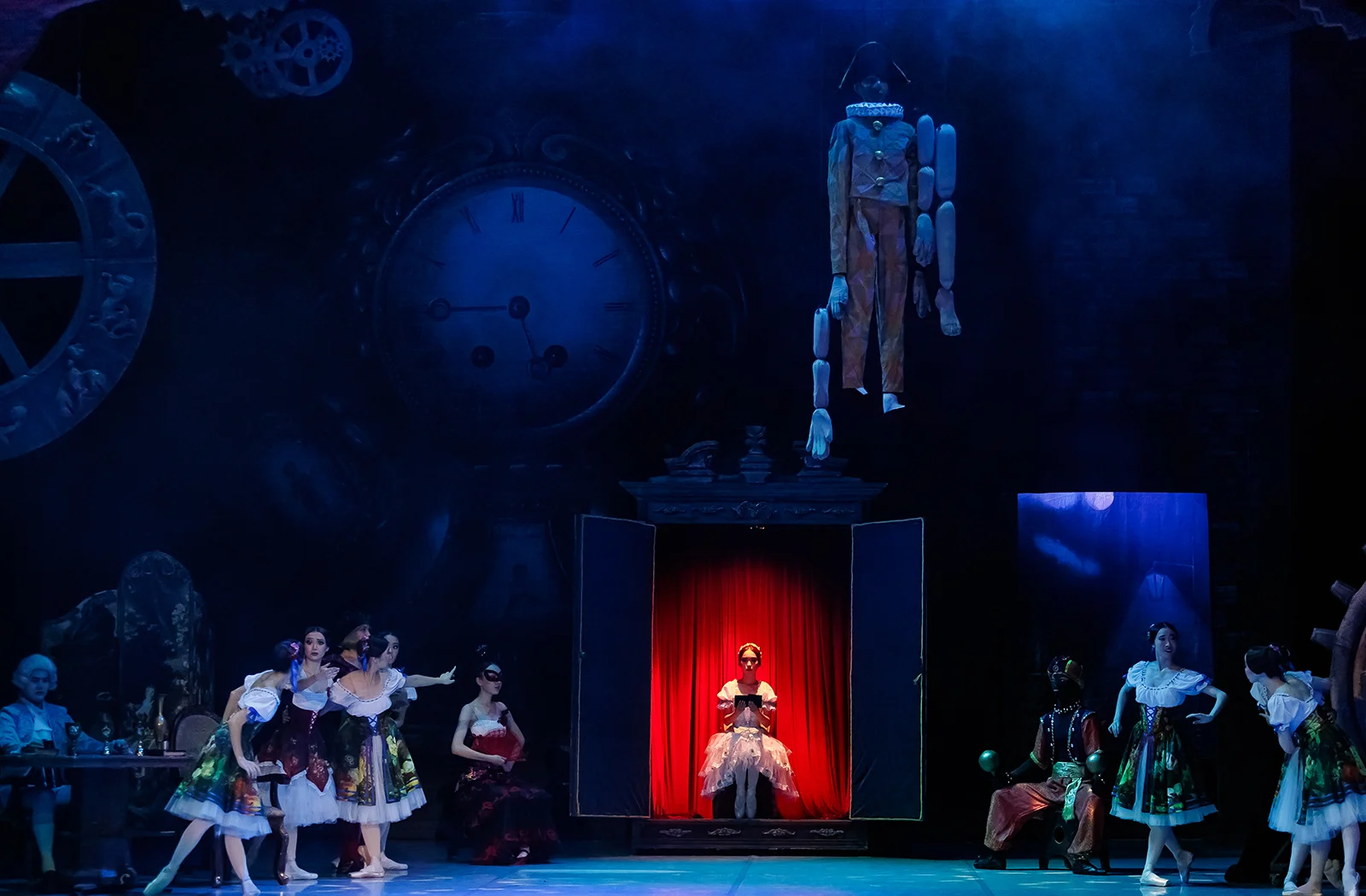
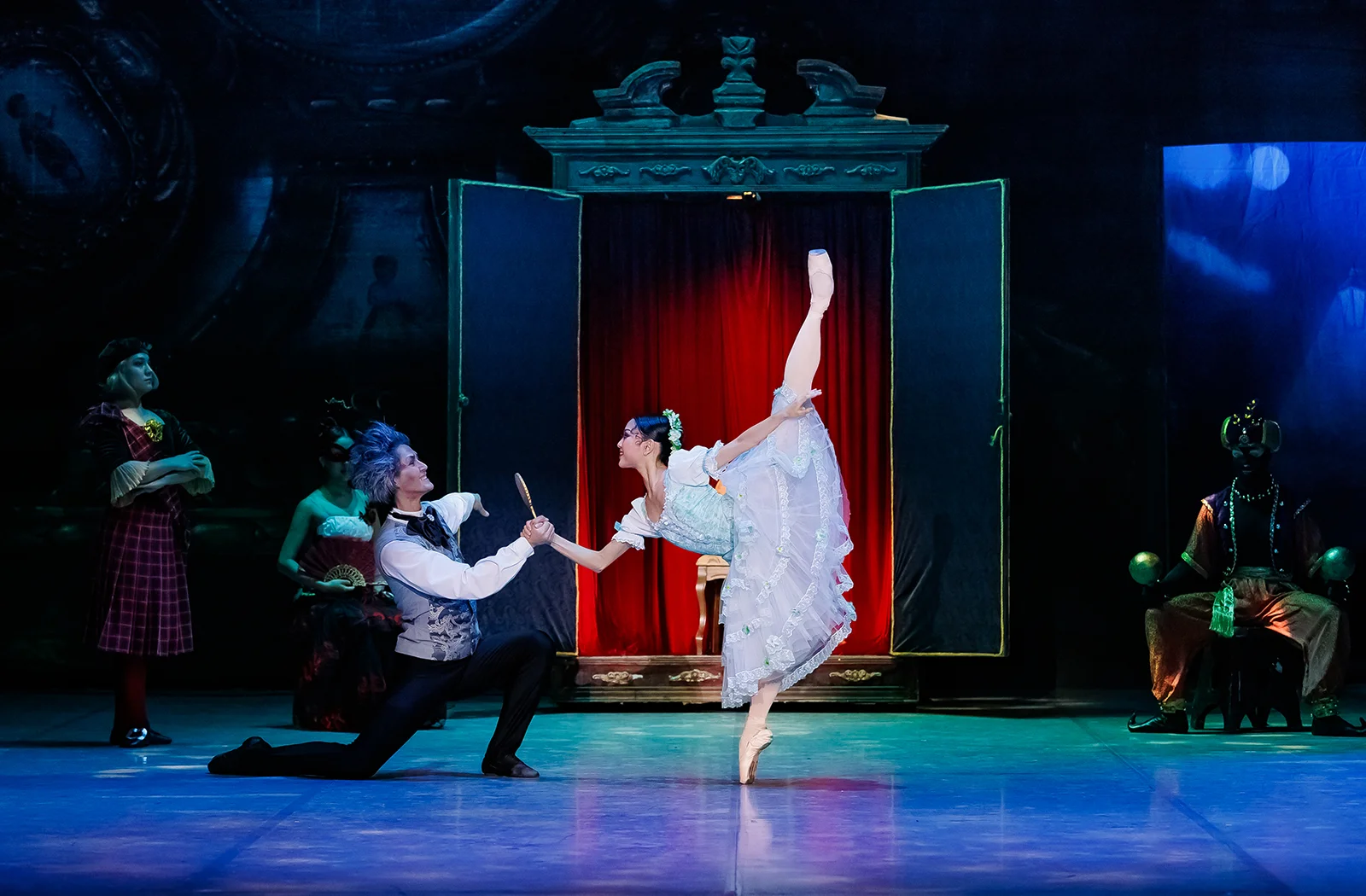
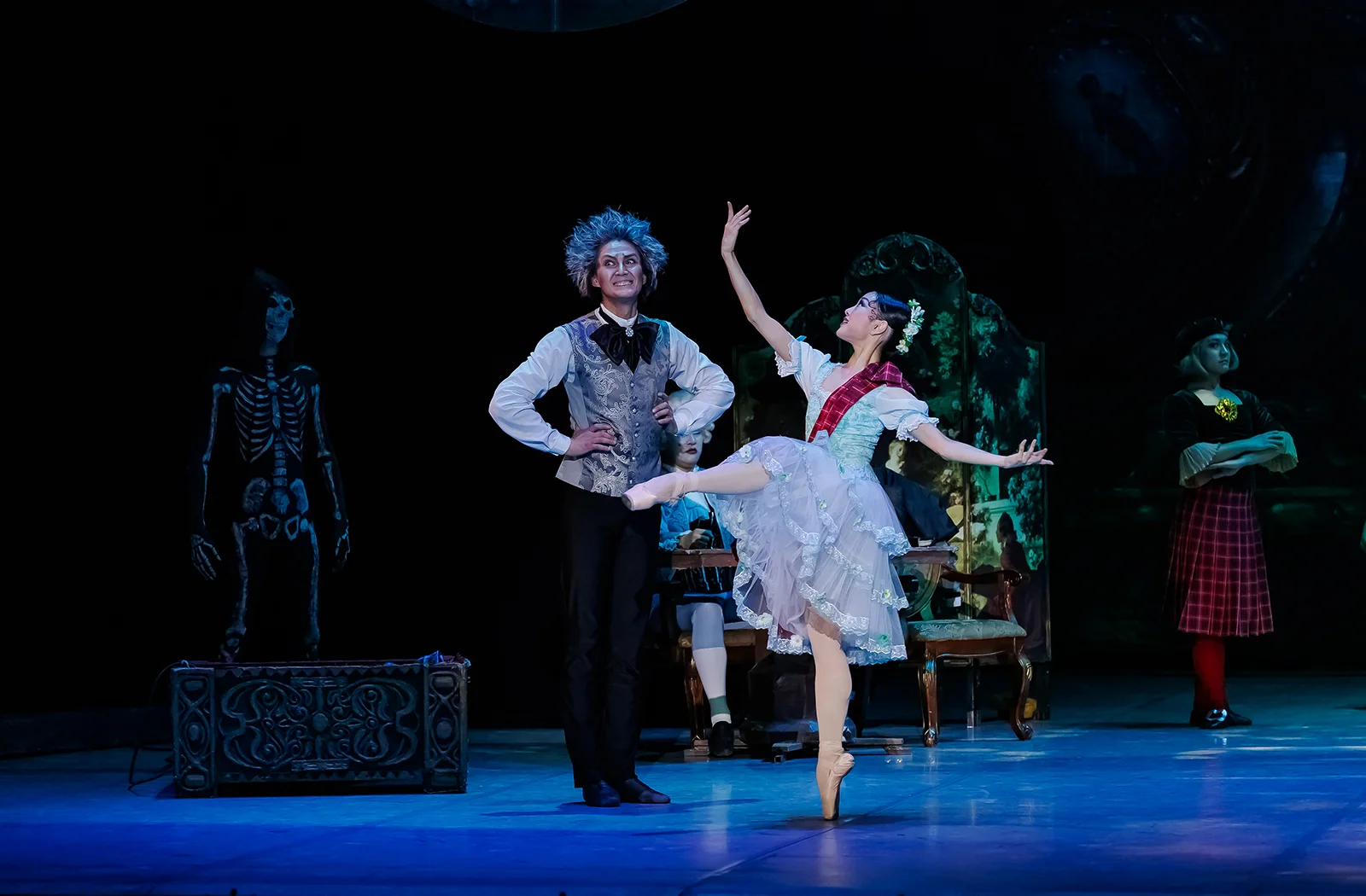
In Coppelius’s workshop there are many books, instruments and mechanical dolls. As the girls inspect the workshop, they notice Coppelia and realize that she is a doll. In play, they press the springs, and the dolls begin to move.
Suddenly, Coppelius appears and finds the uninvited guests. He drives the mischievous girls away.
Only Swanhilda remains in Coppelius’s room, hiding in a cupboard. She changes into Coppelia’s dress.
Unsuspectingly, the master examines his favourite creation — the doll Coppelia — which seems to him untouched.
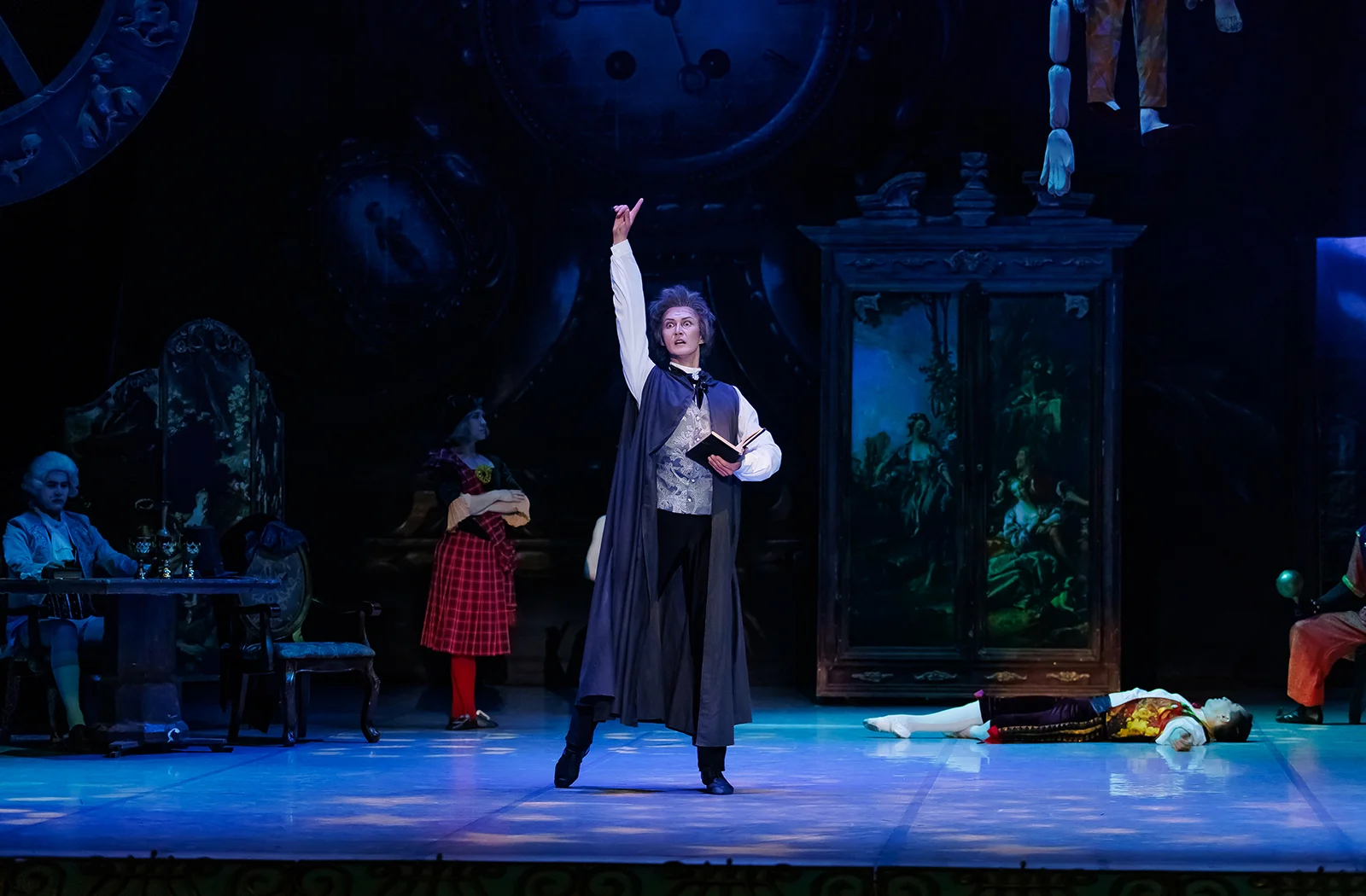
At that moment, Franz climbs in through the window. He approaches Coppelia, but the doll-maker seizes him. Franz confesses his love for Coppelia. Then Coppelius decides to carry out his long-cherished plan — to bring the doll to life. He gives Franz wine mixed with a sleeping potion. With the help of magic, the alchemist Coppelius intends to transfer Franz’s life force to Coppelia.
It seems to work: the doll gradually comes to life, dancing a Spanish dance and a jig. She moves faster and faster, begins to drop tools, and tries to pierce Franz with a sword. With great difficulty, Coppelius forces the doll back into her place. Swanhilda, horrified, understands Coppelius’s plan and tries to wake Franz.
Franz wakes up, and together with Swanhilda he leaves the house. Coppelius realizes that he has become the victim of a prank and collapses in exhaustion among his automatons, which continue to move as though mocking their master’s sorrow.
Act II
Scene 3
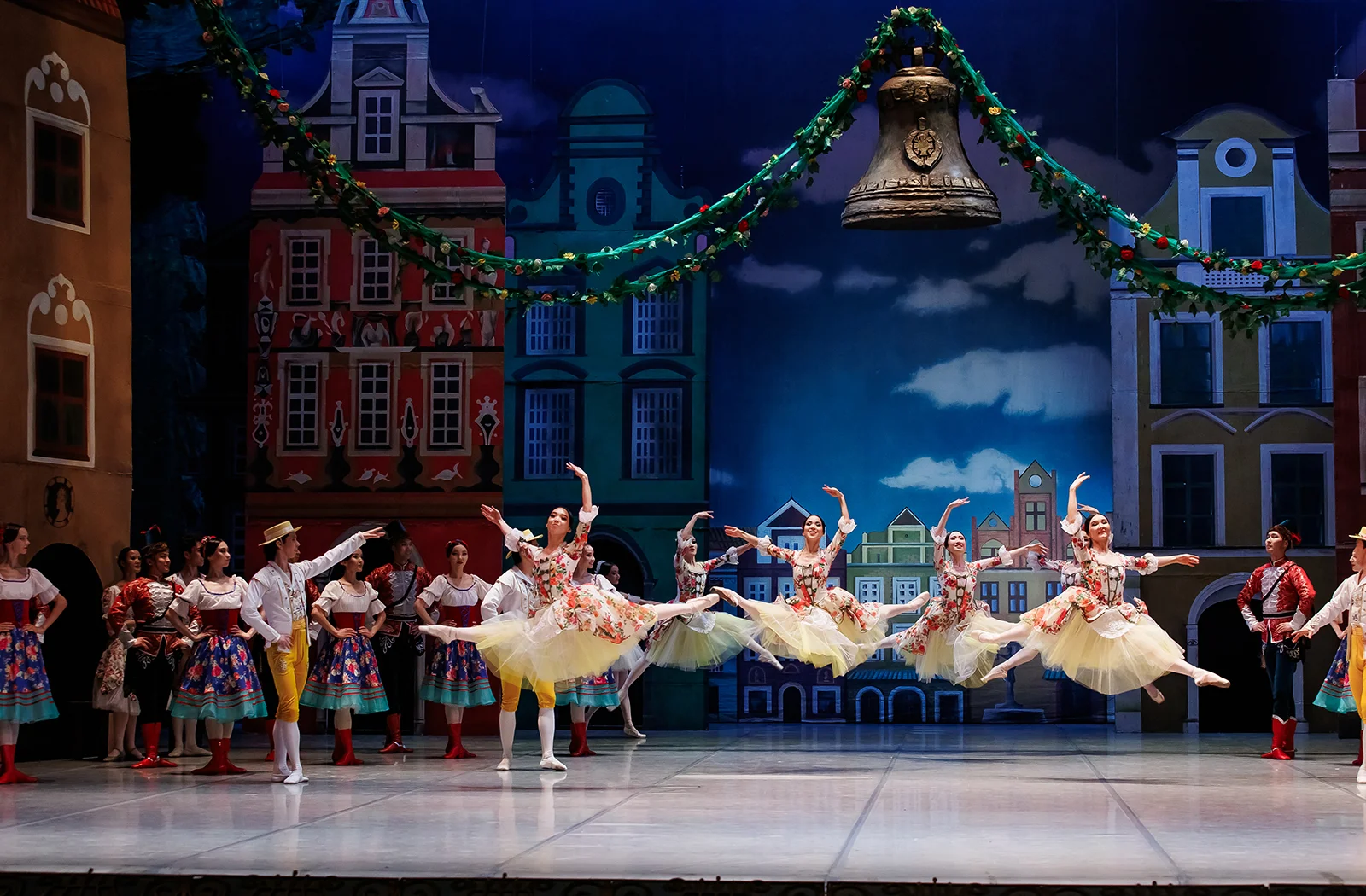
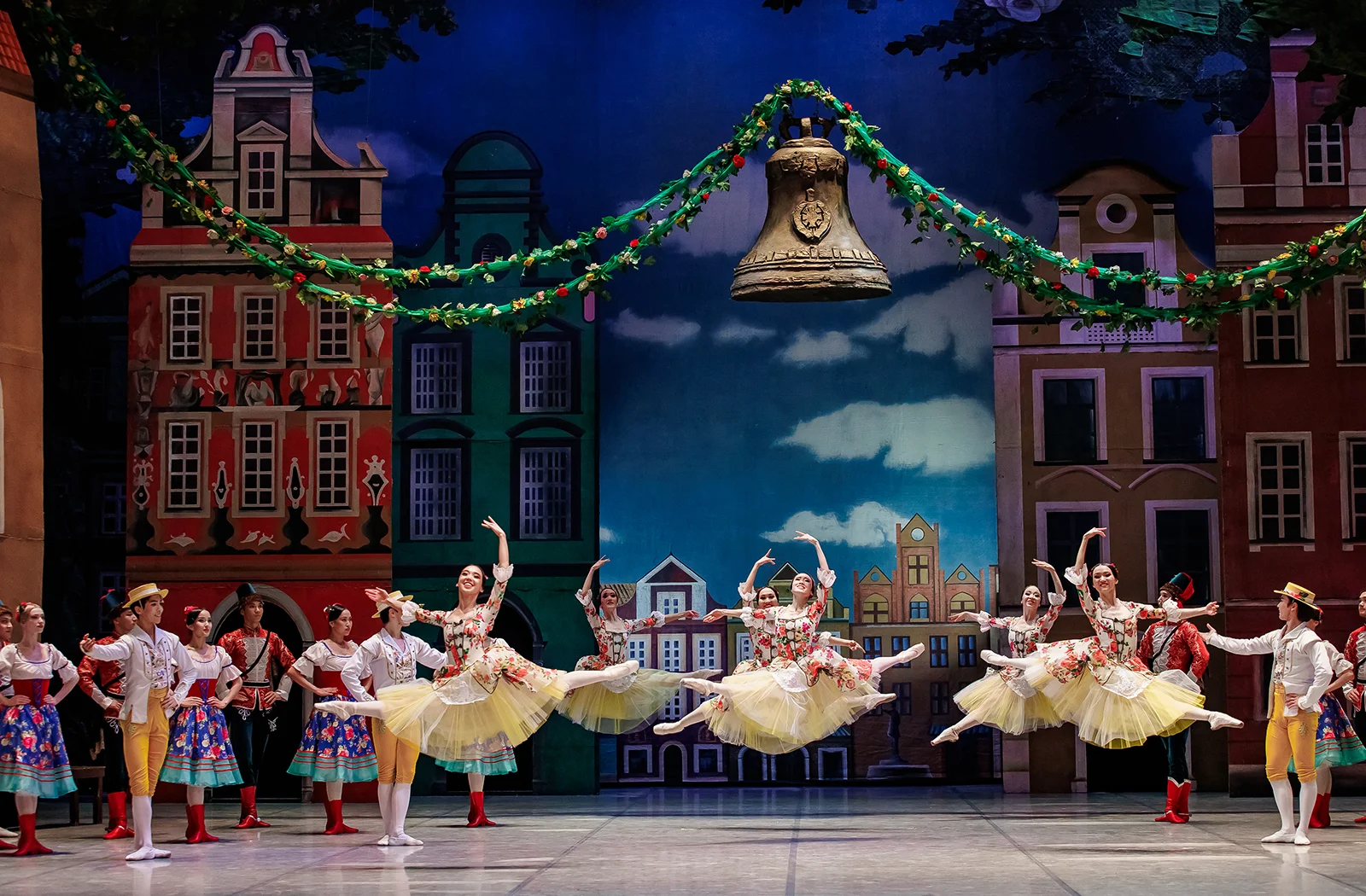
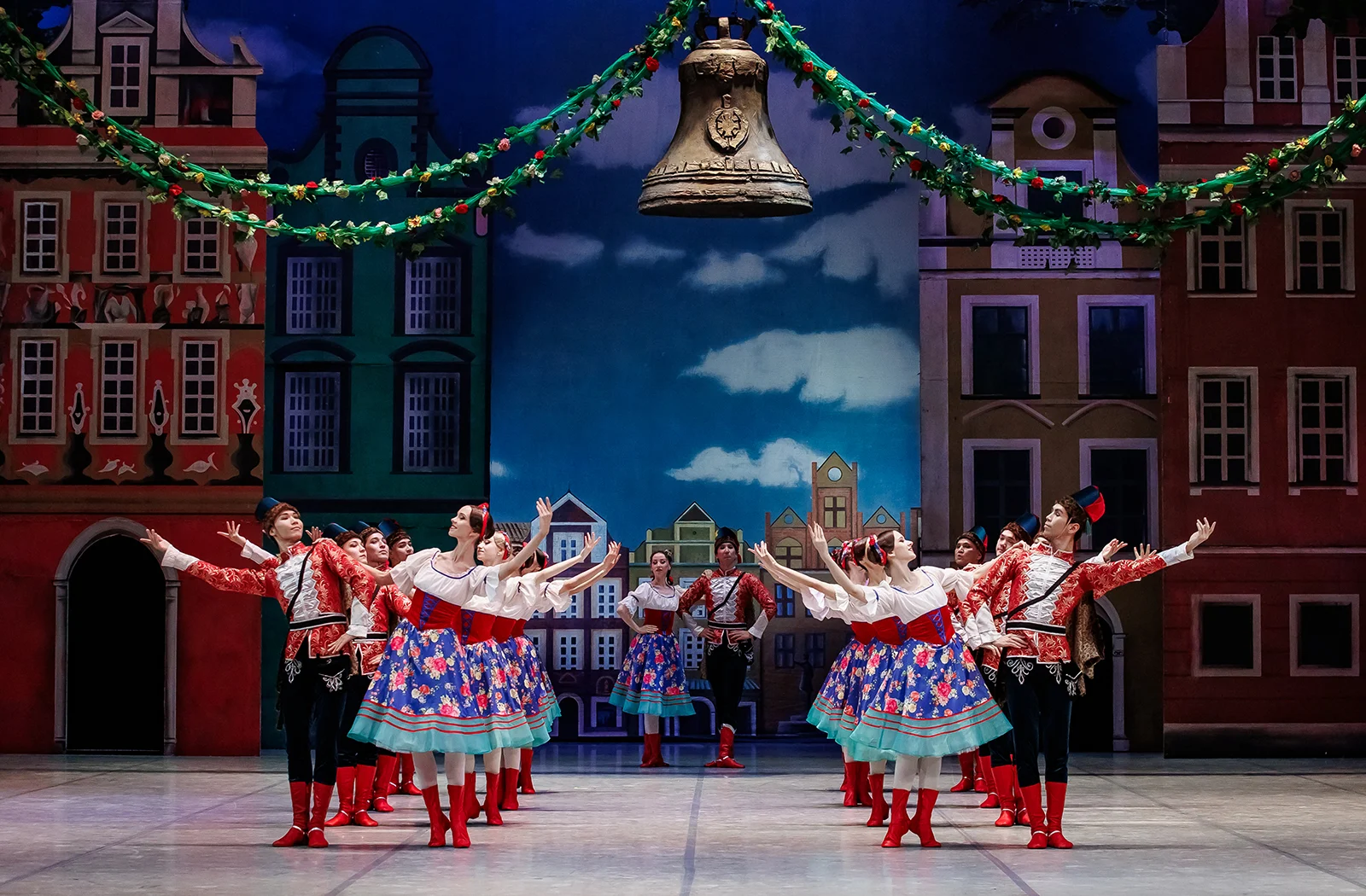
The long-awaited holiday has arrived. As the townspeople await the raising of the new bell, the town square fills with people.
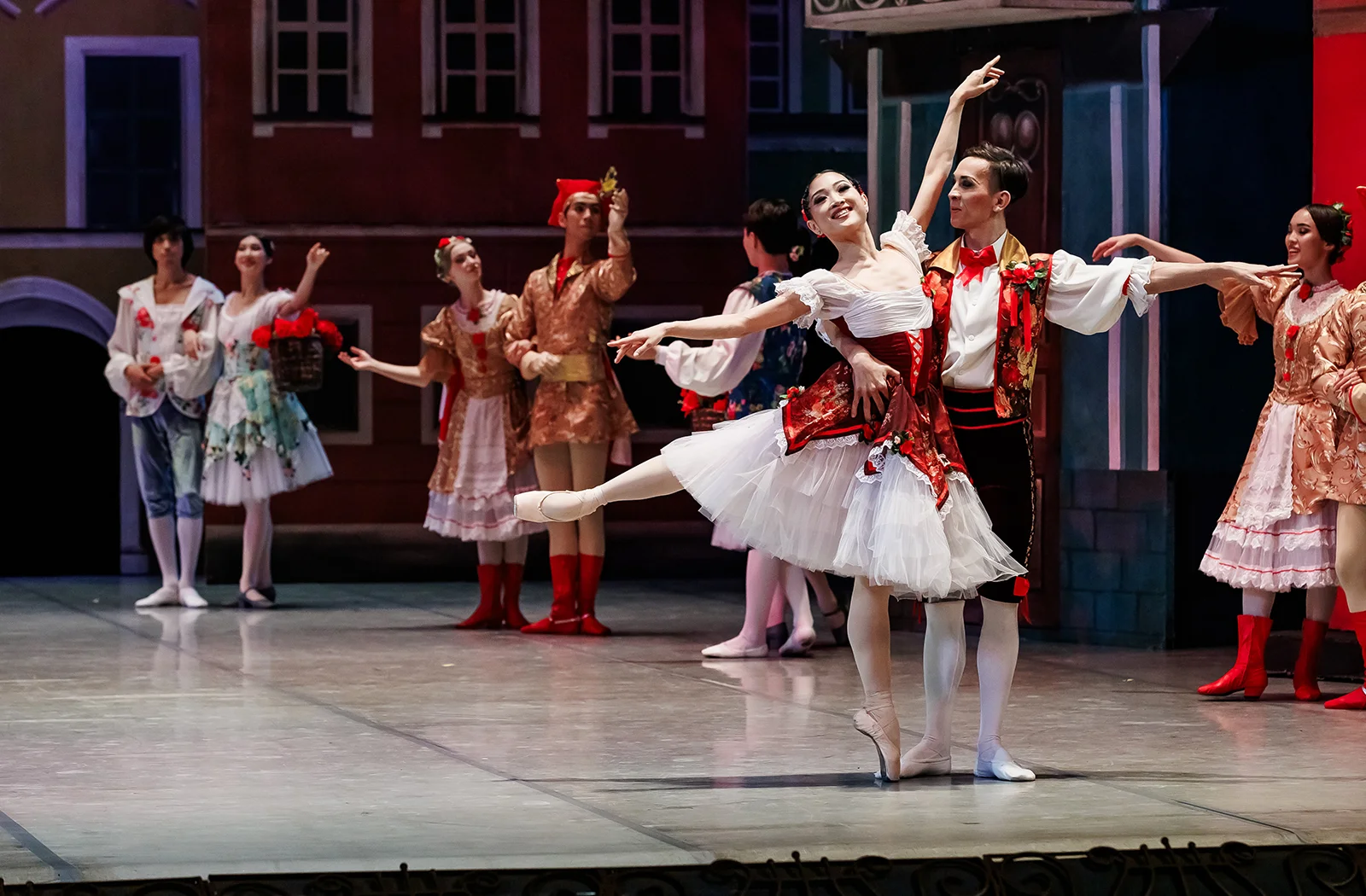
The ceremony is opened by the Burgomaster. At this same celebration, the bride and groom — Franz and Swanhilda — are joyfully greeted.
Friends welcome the happy couple. Everyone rejoices and dances.
Only Coppelius cannot share in the general happiness. In despair, he presses his unfulfilled dream to his breast…
Léo Delibes’s ballet “Coppelia” is a graceful comic tale of love, jealousy, and the mystery of a living doll, where classical music, expressive choreography, and theatrical imagination combine to create a vibrant stage performance. Gulzhan Tutkibaeva’s production at the Abai Kazakh National Academic Ballet Theatre reveals this celebrated masterpiece of the ballet repertoire in a lively, witty, and poetic interpretation.
“Coppelia, or The Girl with Enamel Eyes” is a ballet to the music of the French composer Leo Delibes and belongs to the rare comic genre on the ballet stage. “Coppelia” is a recognized standard of classical ballet and is included in the repertoire of almost all renowned theatres and ballet companies.
Today, the original choreography of the ballet is almost forgotten, yet the work continues to live on, acquiring new colours and new interpretations. The reason for this is the wonderful music of Leo Delibes, who led ballet theatre onto a new path. It ceased to be a mere “servant of choreography” and became an equal component of the performance. The composer’s art was admired by P. I. Tchaikovsky: “What charm, what grace, what melodic, rhythmic and harmonic richness,” wrote the great Russian composer.
The ballet “Coppelia” became a milestone in the composer’s творчество. He began working on it in 1869. In this ballet, the composer skilfully uses leitmotifs to characterize the principal characters, which contributes to the dramatic unity. The music of the ballet is poetic, emotionally expressive, imaginative and пластична. It clearly contrasts the world of living human feelings with the world of soulless mechanical dolls.
In individual dances — the Polish mazurka, Hungarian czardas, Scottish jig and others — the composer draws on the features of national folklore. The image of Swanhilda is especially vivid: capricious, playful, thoughtful and tender. Swanhilda’s Waltz from Act I is the most famous number of the ballet and is often performed in concert in its vocal version.
This ballet is notable for its classical and characteristic dances, as well as for its distinctive pantomime.
The main plot line of this comic ballet, strangely enough, is taken from Hoffmann’s decidedly sombre tales, chiefly “The Sandman”. In Hoffmann, the young man’s infatuation with a doll ends tragically, whereas in the ballet it leads to a happy ending.
“Coppelia” first saw the footlights in 1870 at the Paris Opera. Its creator was Arthur Saint-Léon — a choreographer, virtuoso dancer, connoisseur of dance folklore, composer and violinist. His particular interest in the “dances of the peoples of the world” led to the appearance in the score of such a rich set of folk-based dance melodies.
By the end of the 19th century, the ballet had been staged in New York, London, Brussels, Milan, Copenhagen, Munich, Moscow and St. Petersburg. The 20th and 21st centuries also paid tribute to this ballet, at times offering modern interpretations with a tragic denouement.
The ballet “Coppelia” was staged at the Abai Opera and Ballet Theatre in 1937 by ballet master Yuri Kovalev. Eighty years later, on May 20, 2017, “Coppelia” once again adorned the repertoire of our theatre.
In Gulzhan Tutkibaeva’s production, the ballet acquired vivid new colours, combining classical and neoclassical choreography.
Leo Delibes
Coppelia
ballet in 2 acts
libretto by Ch. Nuitter and A. Saint-Léon
based on short stories by E. T. A. Hoffmann
choreography by Gulzhan Tutkibaeva
Production Team:
Conductor – Yerbolat Akhmedyarov, Honored Worker of the Republic of Kazakhstan
Choreographer – Gulzhan Tutkibaeva, People’s Artist of the Republic of Kazakhstan
Designer – Vyacheslav Okunev, People’s Artist of Russia, laureate of State Prizes
Characters
- Swanhilda
- Franz
- Coppelius
- Coppelia, the doll
- Friends of Swanhilda
- Friends of Franz
- Burgomaster
- Morning
- Day
- Mazurka
- Czardas
Act I
Scene 1
In the town square are the young lovers Swanhilda and Franz.
Suddenly, Coppelius appears — a strange eccentric, an alchemist, the creator of mysterious mechanisms. The townspeople are afraid of him, while the young people often mock him.
Once again, after a malicious prank, Coppelius decides to teach Franz and his friends a lesson. He brings to the square a mysterious stranger, with whom all the young men immediately fall in love.
Swanhilda notices that Franz, too, is fascinated by the unknown beauty who has recently settled in Coppelius’s house. She tries to attract Franz’s attention, but without success.
The lovers quarrel. In a fit of jealousy, Swanhilda starts an argument and decides to take revenge.
The townspeople who have gathered in the square in anticipation of the holiday become witnesses to the lovers’ disagreement.
In indignation, Swanhilda, together with her friends, decides to discover the secret of the mysterious stranger. Her rival’s name is Coppelia.
Noise is heard in Coppelius’s house. A reddish light glimmers through the windows. Several girls move away from the strange house in fear. Coppelius is a madman who is constantly at work. For what purpose? No one knows, and no one much cares.
At night, the town square is empty. Pleased with himself, Coppelius leaves the house to relax in the tavern after a hard day’s work.
Swanhilda and her friends notice on the ground the key that Coppelius has dropped. She persuades her friends to enter the house to find out who this beautiful stranger is.
At the same time, Franz, captivated by Coppelia, also decides to enter Coppelius’s house.
Scene 2
In Coppelius’s workshop there are many books, instruments and mechanical dolls. As the girls inspect the workshop, they notice Coppelia and realize that she is a doll. In play, they press the springs, and the dolls begin to move.
Suddenly, Coppelius appears and finds the uninvited guests. He drives the mischievous girls away.
Only Swanhilda remains in Coppelius’s room, hiding in a cupboard. She changes into Coppelia’s dress.
Unsuspectingly, the master examines his favourite creation — the doll Coppelia — which seems to him untouched.
At that moment, Franz climbs in through the window. He approaches Coppelia, but the doll-maker seizes him. Franz confesses his love for Coppelia. Then Coppelius decides to carry out his long-cherished plan — to bring the doll to life. He gives Franz wine mixed with a sleeping potion. With the help of magic, the alchemist Coppelius intends to transfer Franz’s life force to Coppelia.
It seems to work: the doll gradually comes to life, dancing a Spanish dance and a jig. She moves faster and faster, begins to drop tools, and tries to pierce Franz with a sword. With great difficulty, Coppelius forces the doll back into her place. Swanhilda, horrified, understands Coppelius’s plan and tries to wake Franz.
Franz wakes up, and together with Swanhilda he leaves the house. Coppelius realizes that he has become the victim of a prank and collapses in exhaustion among his automatons, which continue to move as though mocking their master’s sorrow.
Act II
Scene 3
The long-awaited holiday has arrived. As the townspeople await the raising of the new bell, the town square fills with people.
The ceremony is opened by the Burgomaster. At this same celebration, the bride and groom — Franz and Swanhilda — are joyfully greeted.
Friends welcome the happy couple. Everyone rejoices and dances.
Only Coppelius cannot share in the general happiness. In despair, he presses his unfulfilled dream to his breast…
Cast and Performers
(April 24, 2026, 19:00)
- Svanilda Aiman Yegisbayeva
- Franz Rafael Urazov
- Coppelius Amir Zheksenbek
- Coppelia, Doll Ao Iwasaki
- Burgomaster Dauren Zhenis
- Czardas Gulnaziya Piltan, Eldar Abilov
- Svanilda’s friends Dina Auelbek, Ao Iwasaki, Dinara Kudabayeva, Akzhunis Tolegen, Nuray Nursafina, Milana Rakhimbekova
- Franz’s friends Akyl Zhuas, Dias Kubashev, Daryn Tairbekov, Daniyar Ryskul
- Innkeeper Aziz Yesenbayev
- Variations: Morning Akbota Bekbolatova
- Variations: Day Adiya Manabassova
-
Symphony Orchestra, Ballet Company and Chorus of the Kazakh National Opera and Ballet Theatre named after Abay
- Conductor – Mukhtar Kaldayakov
Gallery
Gallery