Opera
Il Trovatore April 30, 2026, 19:00
Description
Verdi’s opera “Il Trovatore” is a story of love, jealousy, and revenge, in which a fatal secret from the past inexorably leads the characters to a tragic end. The fast-paced action, strong characters, intense drama, and music of immense emotional power make this production truly captivating and deeply moving.
G. Verdi
Il trovatore (The Troubadour)
Opera in 3 acts and 8 scenes
Libretto by S. Cammarano based on the tragedy “El trovador” by A. G. Gutiérrez
At the Abay Opera House, the premiere took place on 31.01.2006
Production Team:
Director – Irkin Gabitov (Saint Petersburg)
Set Designer – Vladimir Okunev (Saint Petersburg)
Production Designer – Olga Shaishmelashvili (Saint Petersburg)
Lighting Designer – Damir Ismagilov (Moscow)
Chief Chorusmaster – Aliya Temirbekova, Honored Worker of the Republic of Kazakhstan
Characters
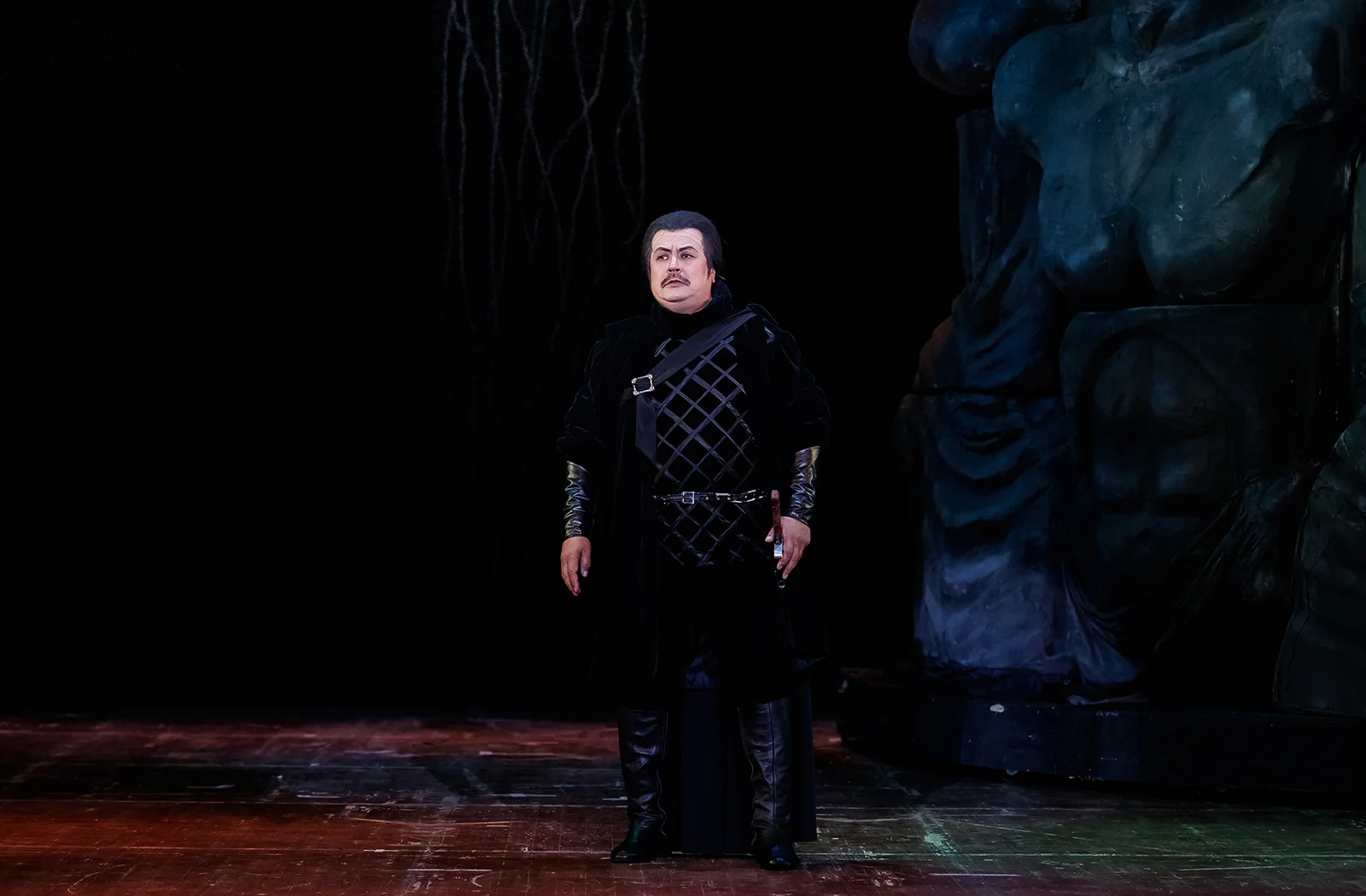
- Count di Luna
- Leonora, lady-in-waiting to the Princess of Aragon
- Manrico, troubadour and chieftain under the Prince of Biscay
- Azucena, a Biscayan gypsy woman
- Ferrando, captain of the Count’s guard
- Ines, Leonora’s confidante
- Ruiz, Manrico’s friend
- An old gypsy
- A messenger
The events take place in Spain at the beginning of the 15th century
Act One
Scene 1
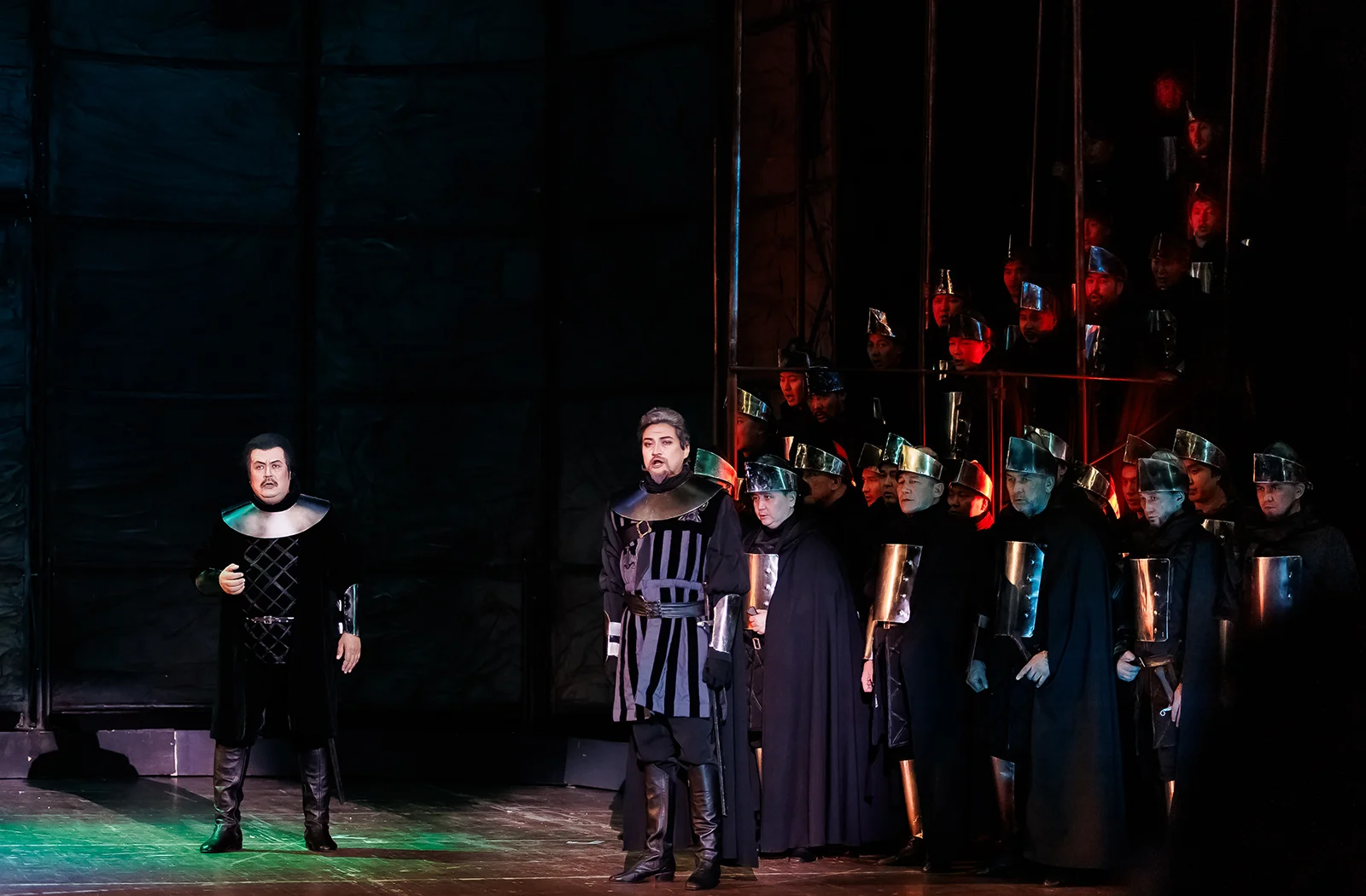
A square in front of the Palace of Aljaferia. Ferrando, the captain of the guard, and the Count’s men are keeping watch at the gates. Ferrando tells Count di Luna’s soldiers a story. The old Count had two sons. One day, twenty years ago, a wet nurse caught a gypsy at the youngest son’s crib; she must have cast the evil eye upon him: the baby started withering away. The old gypsy woman was captured and burned. But her daughter, Azucena, kidnapped the baby in revenge. In the remains of the fire that had burned the gypsy woman, a baby’s bones were found. The hunt for the young gypsy began, and the spirit of the old gypsy, according to legend, soared up in the shape of an owl and now terrifies everyone it meets. Ferrando’s superstitious listeners are terrified.
Scene 2
Moonlit night in the shadowy palace garden. Leonora tells her confidante, Ines, that she is in love with a mysterious knight. She had crowned him with laurels after his victory in a tournament, but he went to war and never came back.
Since then, he has appeared in her dreams. And all of a sudden… last night, he appeared under her window and sang her a serenade. Ines warns Leonora against this dangerous passion, but in vain: Leonora’s heart belongs to the mysterious troubadour.
Leonora hears the troubadour’s song. She hurries to the stairs and embraces Count di Luna by mistake. At this moment, the troubadour appears in the moonlight. Trembling with jealousy, the Count challenges him to a duel. The knight opens his visor, and the Count recognizes his old enemy — Manrico. Leonora steps between them, trying to prevent bloodshed. She begs the Count to spare the knight. When the wounded Manrico falls, Leonora faints.
Scene 3
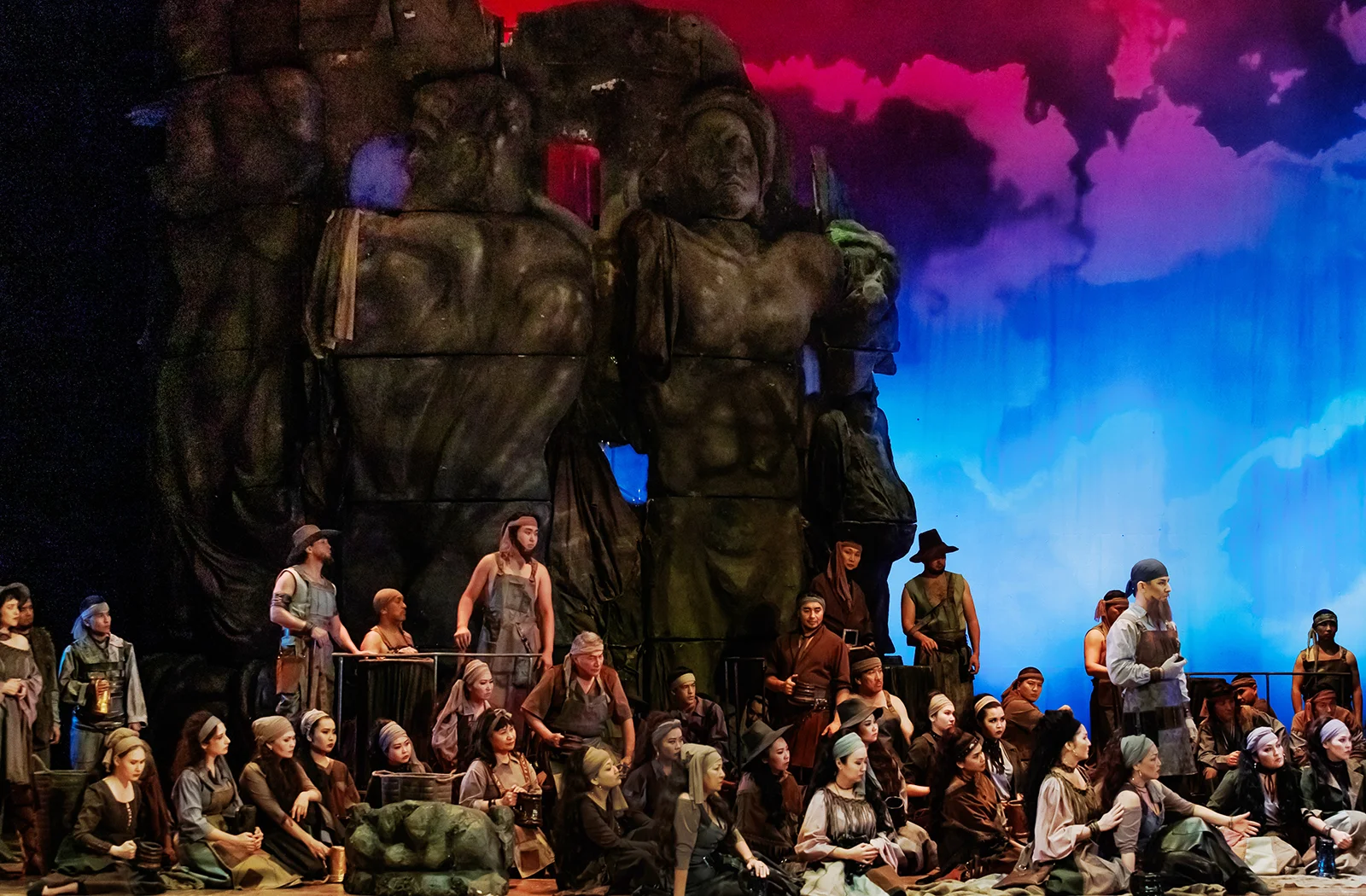
A valley at the foot of Mount Biscay. Daybreak. At the gypsy camp, Azucena tells the story of the terrible day when she witnessed her mother burn to death. Meanwhile, the gypsies leave in search of sustenance.
Left alone with her son, Azucena tells Manrico her story. She recounts how she stole Count di Luna’s youngest son with the intention of throwing him into the fire, but by mistake threw her own son in instead. Thus, Manrico is the brother of his enemy, Count di Luna. Manrico is astounded; in dismay, he tells her of his recent duel with the Count. Manrico had thrown the Count to the ground, but a mysterious force stayed his hand and saved the Count’s life. Now mother and son swear that there will be no mercy for him. A horn is heard: a messenger from the Prince of Biscay has brought an order for Manrico to protect Castle Castellor from the troops of Count di Luna. The knight learns that Leonora, believing him dead, intends to retire to a cloister. Despite Azucena’s protests, Manrico rushes to the aid of his beloved.
Act Two
Scene 4
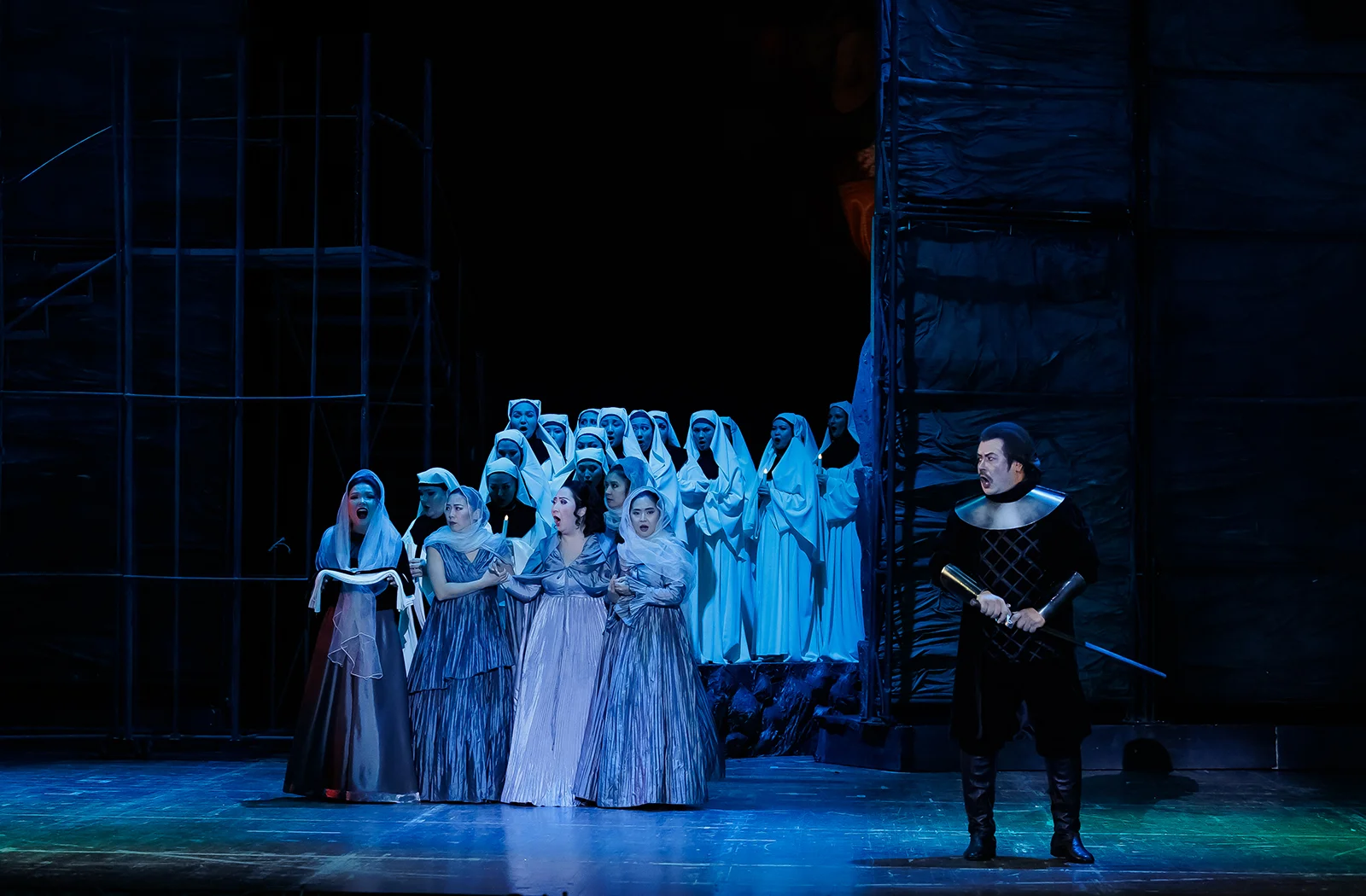
A monastery in Castellor. Night. Wrapped in cloaks, the Count and a few of his confidants are going to kidnap Leonora, who is preparing to take monastic vows. A bell tolls, announcing the beginning of the rite. The Count anxiously looks toward the place where Leonora should appear. When the nuns appear, Count di Luna stands in Leonora’s way, demanding that she follow him to the altar and marry him.
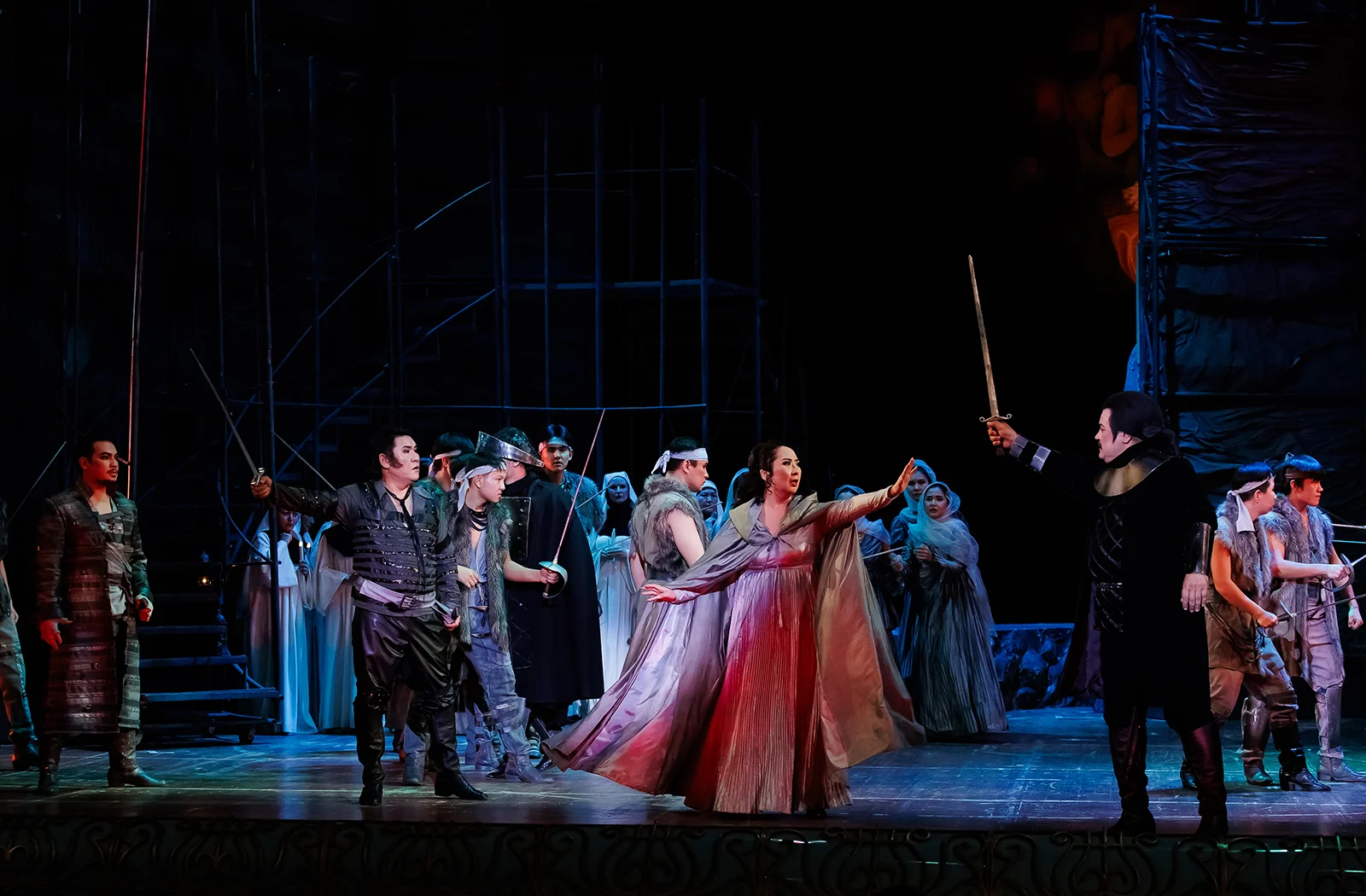
It seems to Leonora that there is no escape… But suddenly, to her great joy, Manrico appears. His men — Ruiz and his warriors — soon join him. A fight breaks out between the two parties. Count di Luna is disarmed and driven back. Manrico takes Leonora away.
Scene 5
Count di Luna’s military camp. A noise. Soldiers have seized Azucena. She refuses to reveal her identity to the Count. But old Ferrando recognizes her as the woman who threw the Count’s younger brother into the fire. Azucena desperately calls for Manrico’s help. The Count now has two reasons to hate the old woman: she killed his brother, and she is the mother of his enemy. He swears vengeance and orders that the gypsy be taken away.
Scene 6
Manrico is at the palace, preparing for two important events: the siege of Count di Luna’s castle and his wedding to Leonora. Ruiz runs in, out of breath. He reports that the Count’s soldiers have seized Azucena and are lighting a fire in which she is to be burned. Manrico summons his men for an immediate attack.
Act Three
Scene 7
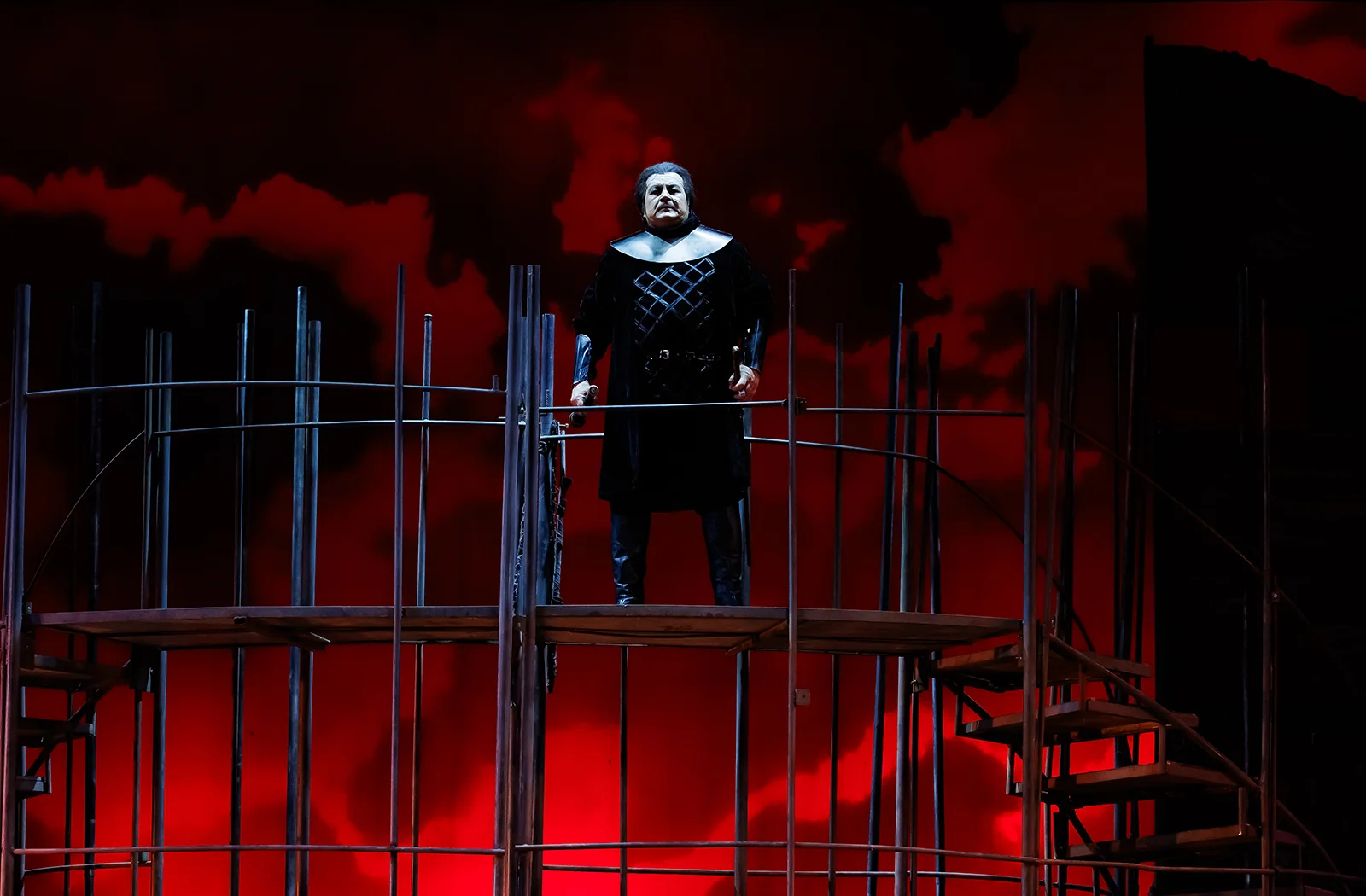
A dark night. Two figures approach the Aljaferia prison tower: Leonora and Ruiz. Leonora is desperately mourning the fate of Manrico, who has been taken captive in the fight and is soon to be executed.
The Count appears, and Leonora begs him to spare the life of her beloved, even offering to sacrifice herself in exchange.
The Count happily agrees to the bargain.
Leonora demands that the dungeon doors be opened. After a moment, during which Leonora drinks poison, the Count tells her that Manrico has been freed. Leonora rejoices: she has saved Manrico; he will live. The Count rejoices as well. But Leonora will never fall into the hands of the man she despises…
Scene 8
A dark dungeon. The flicker of a lamp. Azucena is on the verge of death. Manrico is carefully tending to her. He sings of the mountains, where they shall return once more.
Leonora appears; she tries to persuade Manrico to flee. He is enraged, suspecting that Leonora has agreed to be with the Count in order to save him. At this moment, the poison begins to take effect, and Manrico realizes the truth.
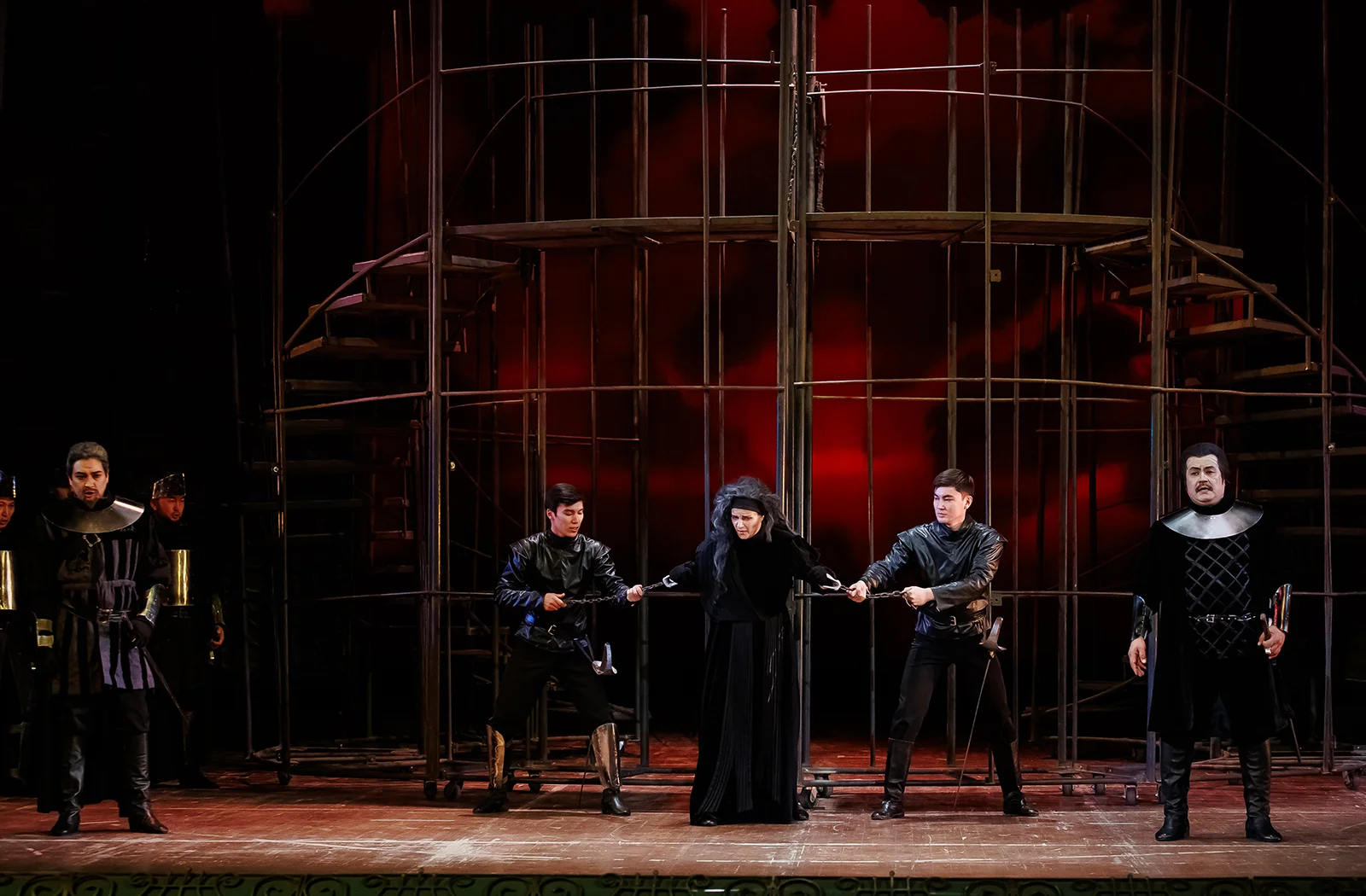
Leonora dies. The Count enters; he is astounded to see Leonora dead in Manrico’s arms — he understands that the woman he loved has given up her life to avoid being with him. Furious, he orders Manrico to be executed and pushes Azucena toward the window so that she can witness her son’s death. Azucena triumphantly hurls a terrible confession in his face: “He was your brother!” Azucena has avenged her mother.
Verdi’s opera “Il Trovatore” is a story of love, jealousy, and revenge, in which a fatal secret from the past inexorably leads the characters to a tragic end. The fast-paced action, strong characters, intense drama, and music of immense emotional power make this production truly captivating and deeply moving.
G. Verdi
Il trovatore (The Troubadour)
Opera in 3 acts and 8 scenes
Libretto by S. Cammarano based on the tragedy “El trovador” by A. G. Gutiérrez
At the Abay Opera House, the premiere took place on 31.01.2006
Production Team:
Director – Irkin Gabitov (Saint Petersburg)
Set Designer – Vladimir Okunev (Saint Petersburg)
Production Designer – Olga Shaishmelashvili (Saint Petersburg)
Lighting Designer – Damir Ismagilov (Moscow)
Chief Chorusmaster – Aliya Temirbekova, Honored Worker of the Republic of Kazakhstan
Characters
- Count di Luna
- Leonora, lady-in-waiting to the Princess of Aragon
- Manrico, troubadour and chieftain under the Prince of Biscay
- Azucena, a Biscayan gypsy woman
- Ferrando, captain of the Count’s guard
- Ines, Leonora’s confidante
- Ruiz, Manrico’s friend
- An old gypsy
- A messenger
The events take place in Spain at the beginning of the 15th century
Act One
Scene 1
A square in front of the Palace of Aljaferia. Ferrando, the captain of the guard, and the Count’s men are keeping watch at the gates. Ferrando tells Count di Luna’s soldiers a story. The old Count had two sons. One day, twenty years ago, a wet nurse caught a gypsy at the youngest son’s crib; she must have cast the evil eye upon him: the baby started withering away. The old gypsy woman was captured and burned. But her daughter, Azucena, kidnapped the baby in revenge. In the remains of the fire that had burned the gypsy woman, a baby’s bones were found. The hunt for the young gypsy began, and the spirit of the old gypsy, according to legend, soared up in the shape of an owl and now terrifies everyone it meets. Ferrando’s superstitious listeners are terrified.
Scene 2
Moonlit night in the shadowy palace garden. Leonora tells her confidante, Ines, that she is in love with a mysterious knight. She had crowned him with laurels after his victory in a tournament, but he went to war and never came back.
Since then, he has appeared in her dreams. And all of a sudden… last night, he appeared under her window and sang her a serenade. Ines warns Leonora against this dangerous passion, but in vain: Leonora’s heart belongs to the mysterious troubadour.
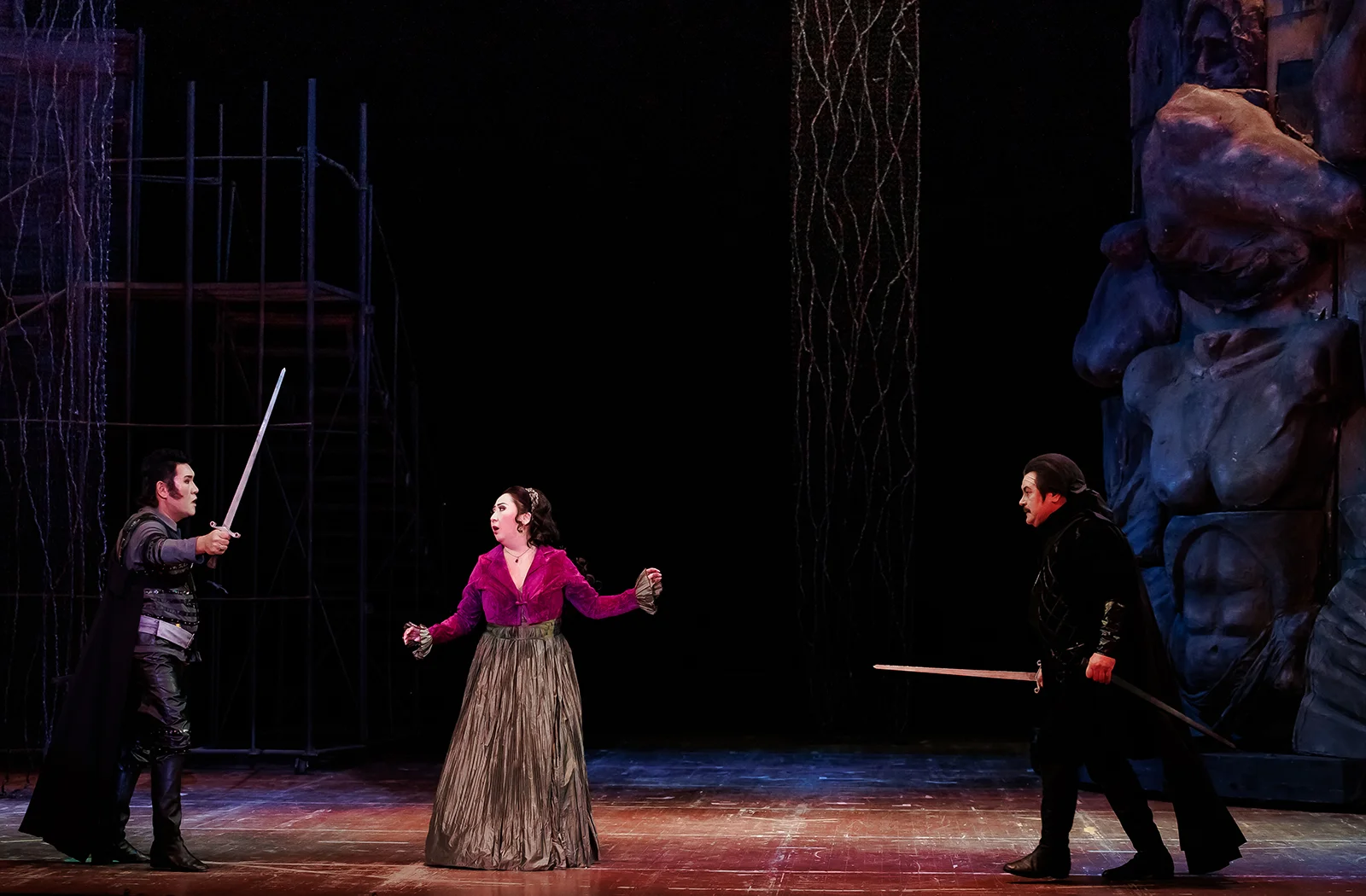
Leonora hears the troubadour’s song. She hurries to the stairs and embraces Count di Luna by mistake. At this moment, the troubadour appears in the moonlight. Trembling with jealousy, the Count challenges him to a duel. The knight opens his visor, and the Count recognizes his old enemy — Manrico. Leonora steps between them, trying to prevent bloodshed. She begs the Count to spare the knight. When the wounded Manrico falls, Leonora faints.
Scene 3
A valley at the foot of Mount Biscay. Daybreak. At the gypsy camp, Azucena tells the story of the terrible day when she witnessed her mother burn to death. Meanwhile, the gypsies leave in search of sustenance.
Left alone with her son, Azucena tells Manrico her story. She recounts how she stole Count di Luna’s youngest son with the intention of throwing him into the fire, but by mistake threw her own son in instead. Thus, Manrico is the brother of his enemy, Count di Luna. Manrico is astounded; in dismay, he tells her of his recent duel with the Count. Manrico had thrown the Count to the ground, but a mysterious force stayed his hand and saved the Count’s life. Now mother and son swear that there will be no mercy for him. A horn is heard: a messenger from the Prince of Biscay has brought an order for Manrico to protect Castle Castellor from the troops of Count di Luna. The knight learns that Leonora, believing him dead, intends to retire to a cloister. Despite Azucena’s protests, Manrico rushes to the aid of his beloved.
Act Two
Scene 4
A monastery in Castellor. Night. Wrapped in cloaks, the Count and a few of his confidants are going to kidnap Leonora, who is preparing to take monastic vows. A bell tolls, announcing the beginning of the rite. The Count anxiously looks toward the place where Leonora should appear. When the nuns appear, Count di Luna stands in Leonora’s way, demanding that she follow him to the altar and marry him.
It seems to Leonora that there is no escape… But suddenly, to her great joy, Manrico appears. His men — Ruiz and his warriors — soon join him. A fight breaks out between the two parties. Count di Luna is disarmed and driven back. Manrico takes Leonora away.
Scene 5
Count di Luna’s military camp. A noise. Soldiers have seized Azucena. She refuses to reveal her identity to the Count. But old Ferrando recognizes her as the woman who threw the Count’s younger brother into the fire. Azucena desperately calls for Manrico’s help. The Count now has two reasons to hate the old woman: she killed his brother, and she is the mother of his enemy. He swears vengeance and orders that the gypsy be taken away.
Scene 6
Manrico is at the palace, preparing for two important events: the siege of Count di Luna’s castle and his wedding to Leonora. Ruiz runs in, out of breath. He reports that the Count’s soldiers have seized Azucena and are lighting a fire in which she is to be burned. Manrico summons his men for an immediate attack.
Act Three
Scene 7
A dark night. Two figures approach the Aljaferia prison tower: Leonora and Ruiz. Leonora is desperately mourning the fate of Manrico, who has been taken captive in the fight and is soon to be executed.
The Count appears, and Leonora begs him to spare the life of her beloved, even offering to sacrifice herself in exchange.
The Count happily agrees to the bargain.
Leonora demands that the dungeon doors be opened. After a moment, during which Leonora drinks poison, the Count tells her that Manrico has been freed. Leonora rejoices: she has saved Manrico; he will live. The Count rejoices as well. But Leonora will never fall into the hands of the man she despises…
Scene 8
A dark dungeon. The flicker of a lamp. Azucena is on the verge of death. Manrico is carefully tending to her. He sings of the mountains, where they shall return once more.
Leonora appears; she tries to persuade Manrico to flee. He is enraged, suspecting that Leonora has agreed to be with the Count in order to save him. At this moment, the poison begins to take effect, and Manrico realizes the truth.
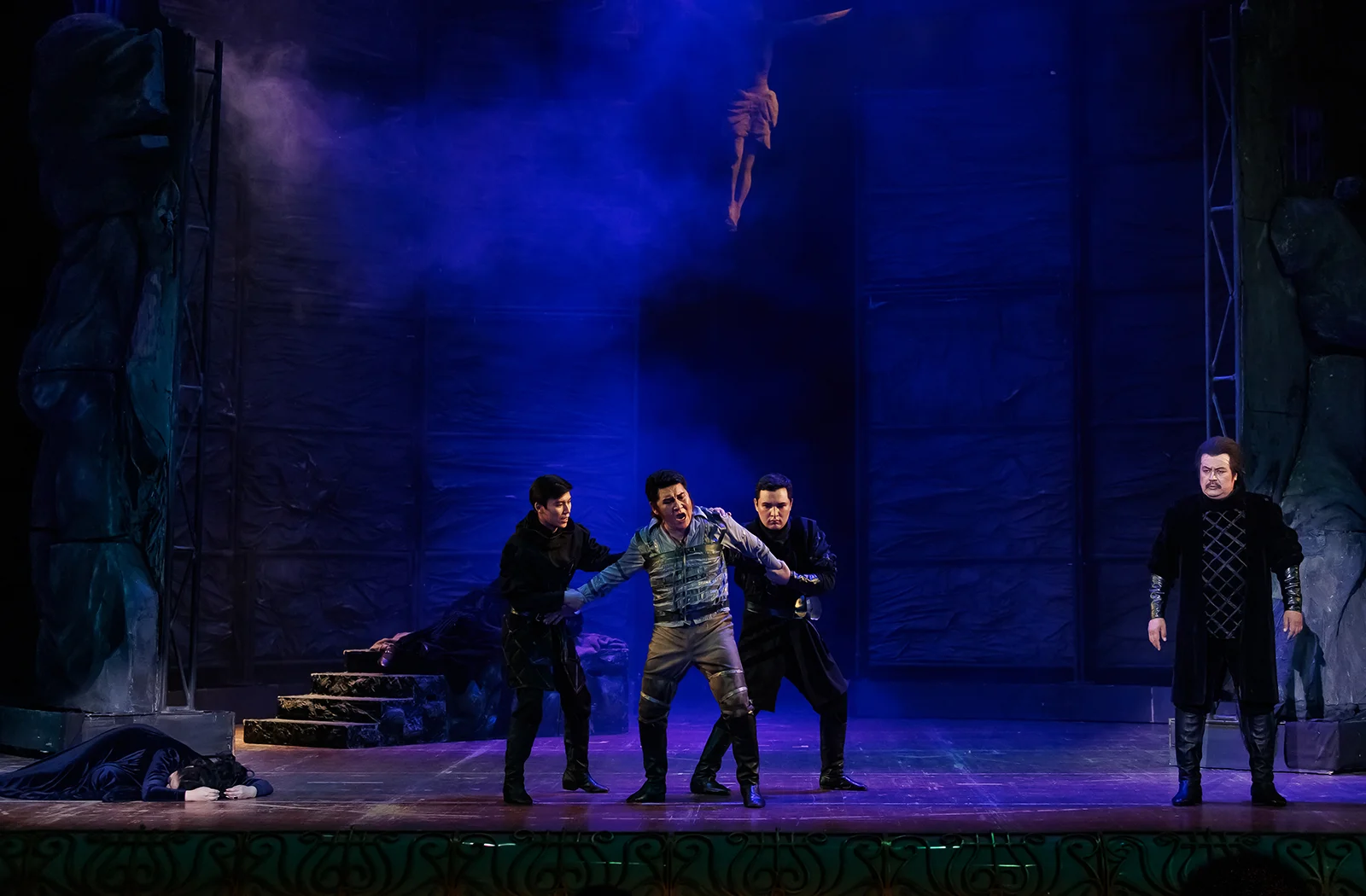
Leonora dies. The Count enters; he is astounded to see Leonora dead in Manrico’s arms — he understands that the woman he loved has given up her life to avoid being with him. Furious, he orders Manrico to be executed and pushes Azucena toward the window so that she can witness her son’s death. Azucena triumphantly hurls a terrible confession in his face: “He was your brother!” Azucena has avenged her mother.
Cast and Performers
(April 30, 2026, 19:00)
- Count di Luna Emil Sakavov
- Leonora Gulzat Dauirbayeva, Honored Worker of the Republic of Kazakhstan
- Manrico, the troubadour Farid Aliyev, Honored Artist of the Republic of Azerbaijan
- Azuchena, a gypsy Laura Hake Bustamante, soloist of the Primorsky Stage of the Mariinsky Theatre (Vladivostok)
- Ferrando, captain of the count’s guards Tair Tazhi
- Inessa, Leonora’s confidante Amina Rakhimzhanova, first performance
- Ruitz, Manrico’s friend Askar Rysbek, first performance
- Old Gypsy Bekzat Abitov, first performance
- The messenger Askar Rysbek, first performance
-
Symphony Orchestra and Chorus of the Kazakh National Opera and Ballet Theatre named after Abay
- Chief Conductor – Nurzhan Baibusinov, Honored Worker of the Republic of Kazakhstan
Gallery
Gallery