Opera
Rigoletto February 14, 2026, 18:00
Description
Archived
“Rigoletto” is Verdi’s great opera about fate, revenge, and the destructive power of passion.
At the heart of the opera is Victor Hugo’s drama The King Amuses Himself, which was banned by French censorship immediately after its premiere for undermining the authority of royal power. Hugo’s dramaturgy attracted the composer with its passion, romantic contrasts and intense dramatic momentum. Most of all, however, Verdi was drawn to the possibility of creating a psychological drama with truthful, multifaceted musical characterizations.
At the beginning of 1850, the composer developed a detailed plan for the opera, which was originally titled The Curse. However, due to censorship, Verdi and his librettist Francesco Maria Piave transferred the setting from France to Italy, while the real historical figures — King Francis I and his jester Triboulet — became the Duke of Mantua and Rigoletto. Verdi worked with great inspiration and wrote the opera in only 40 days. The composer considered the plot of Rigoletto the finest of all those he had set to music: “There are powerful situations, variety, brilliance and pathos.”
In March 1851, the premiere took place on the stage of the Venetian theatre La Fenice and was met with great success, which grew from performance to performance. After the premiere, the composer himself said: “I am satisfied with myself and I think I will never write anything better.” It is one of the greatest musical works in the history of world culture; many consider Rigoletto one of the finest operas ever created.
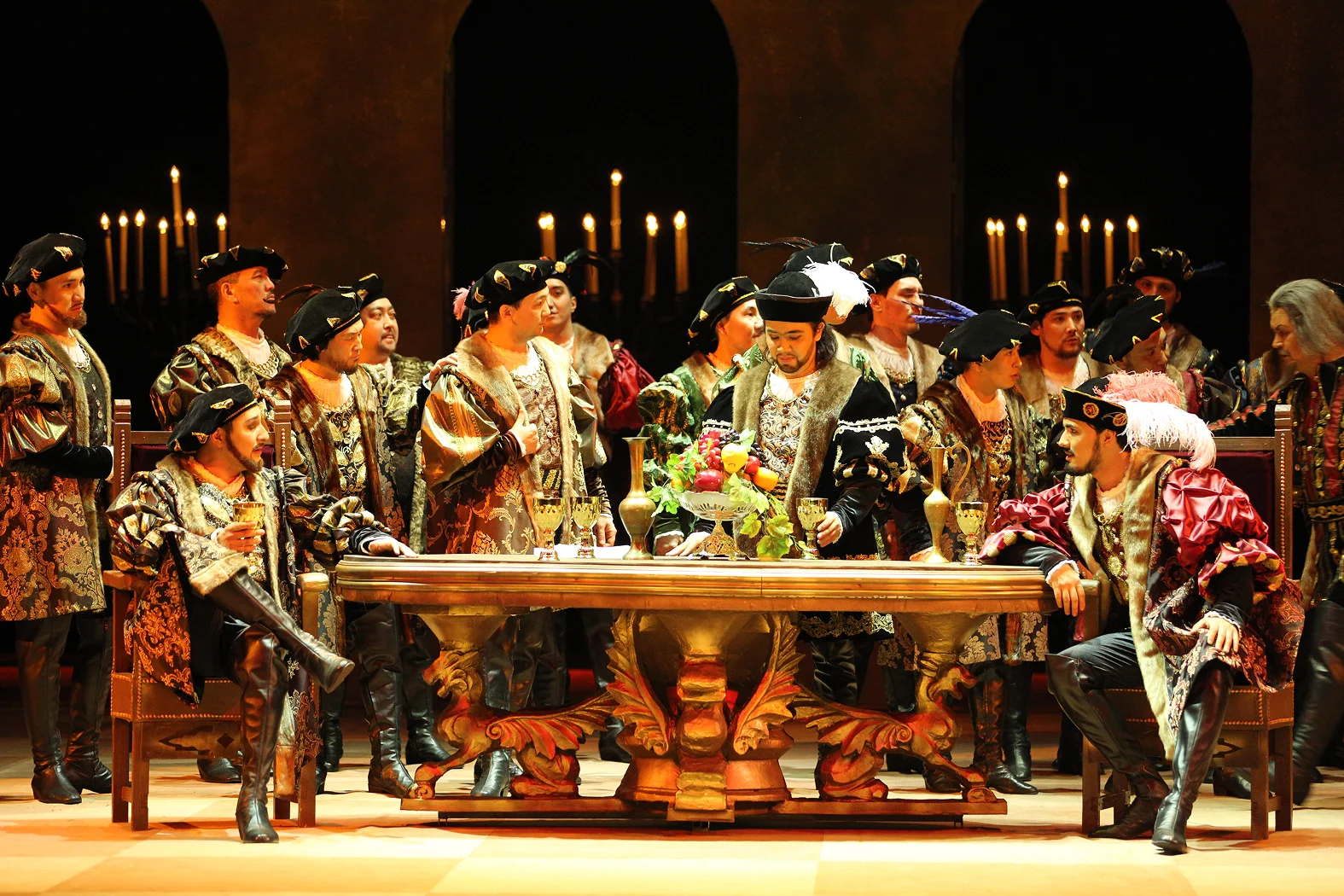
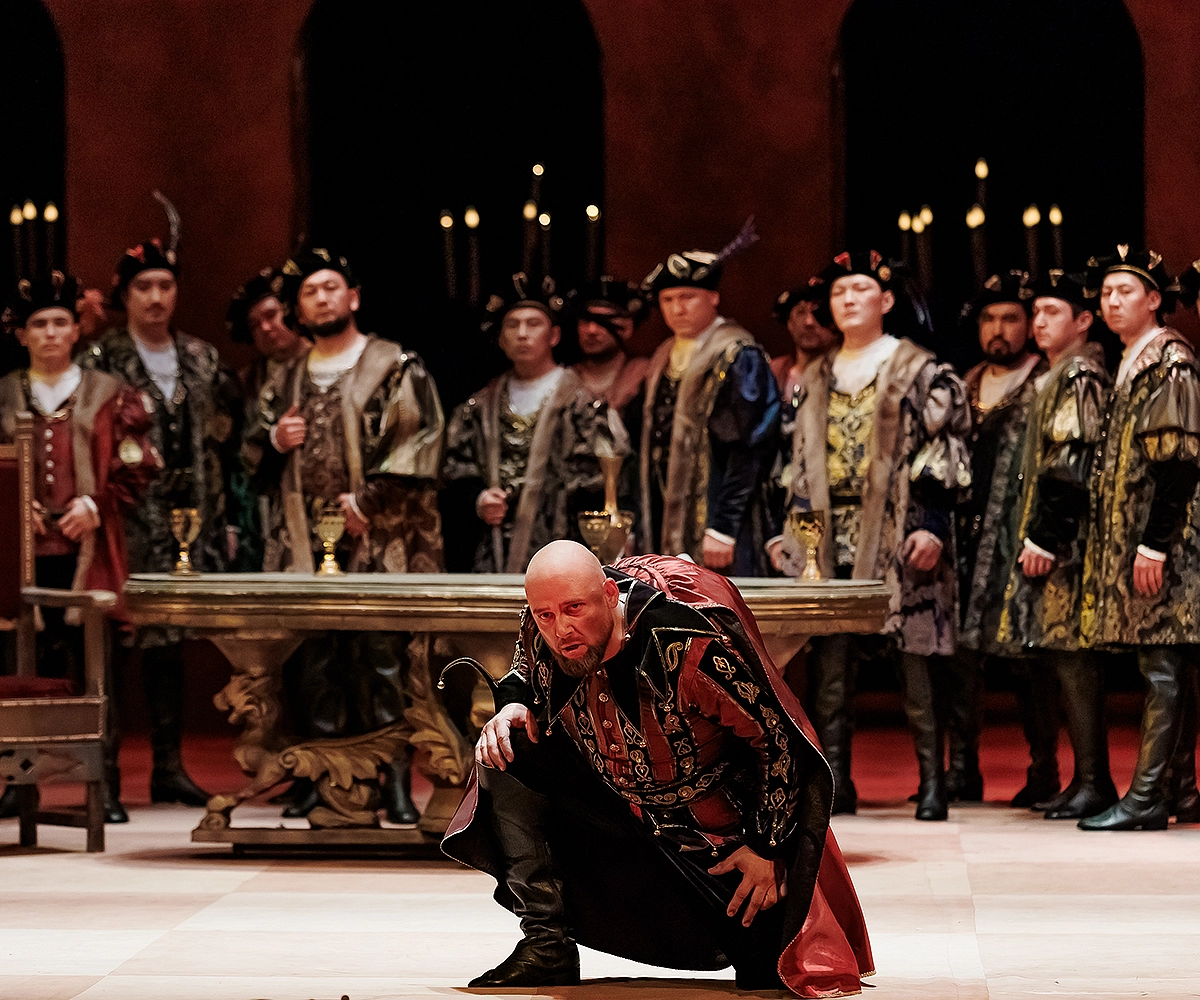
At our theatre, G. Verdi’s opera Rigoletto was performed for many years in a production by director Boris Ryabikin and People’s Artist of Kazakhstan Gulfairuz Ismailova, and later in a staging by Baigali Dosymzhanov, a legend of the opera stage of Kazakhstan and People’s Artist of Kazakhstan, with sets by Orynbasar Zhambyrshiev, Honored Worker of the Republic of Kazakhstan, and choreography by Zaurbek Raibayev, People’s Artist of the Republic of Kazakhstan.
G. Verdi
Rigoletto
opera in 3 acts
libretto by F. M. Piave based on V. Hugo’s drama The King Amuses Himself
The premiere at the Abay Opera House took place in 1978
New production — 18.03.2017
Production Team:
Stage Conductor – Vittorio Parisi (Italy)
Stage Director – Lyailim Imangazina, Honored Worker of the Republic of Kazakhstan
Production Designer – Vyacheslav Okunev, People’s Artist of Russia, laureate of the State Prizes of the Republic of Kazakhstan and the Russian Federation
Chief Choirmaster – Aliya Temirbekova, Honored Worker of the Republic of Kazakhstan
Characters
- Il Duca di Mantova
- Rigoletto, court jester
- Gilda, Rigoletto’s daughter
- Sparafucile, bandit
- Maddalena, his sister
- Giovanna, Gilda’s maid
- Count Monterone
- Cavalier Marullo
- Borsa Matteo, courtier
- Count Ceprano
- Countess Ceprano, his wife
- Court officer
- Page
Act 1
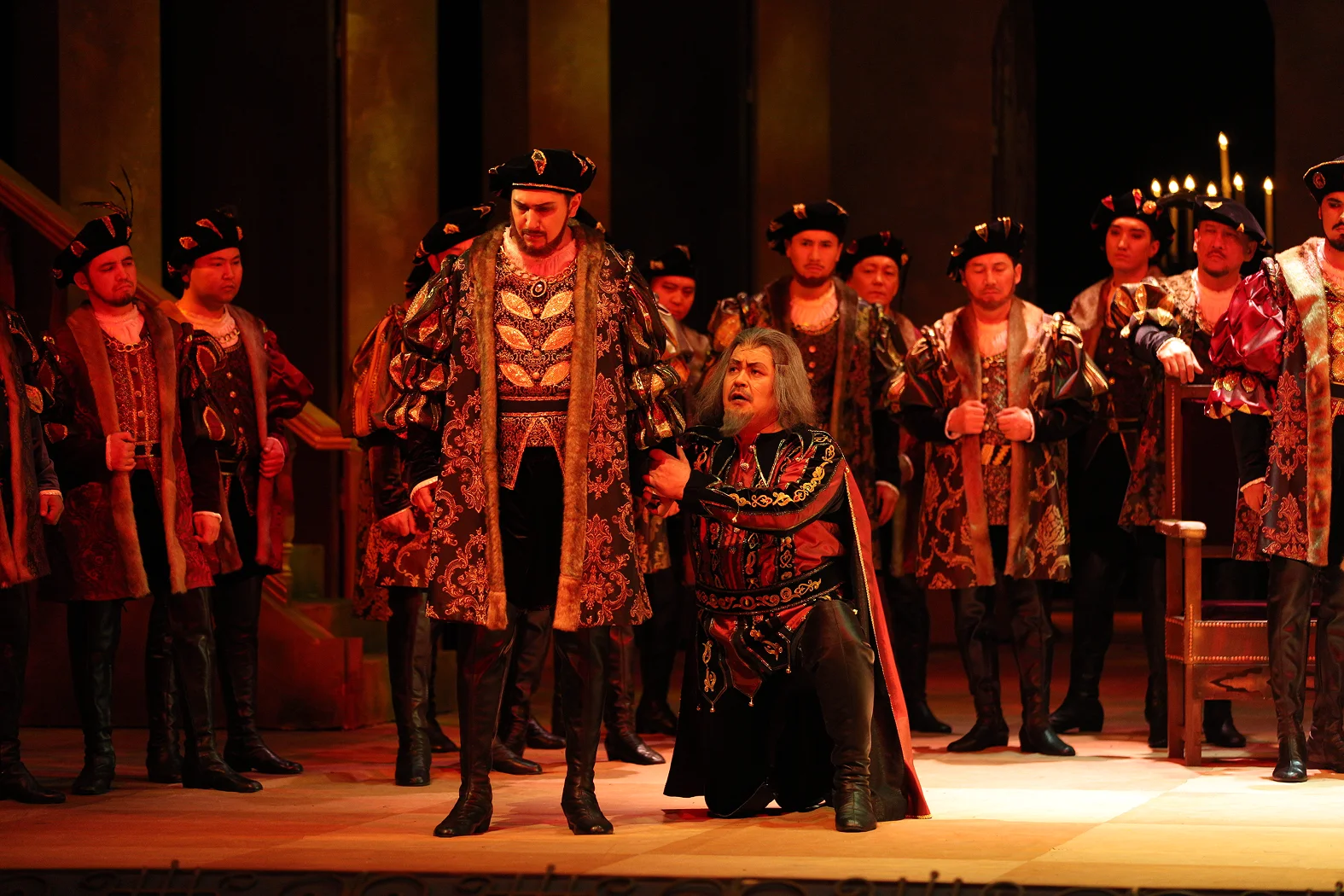
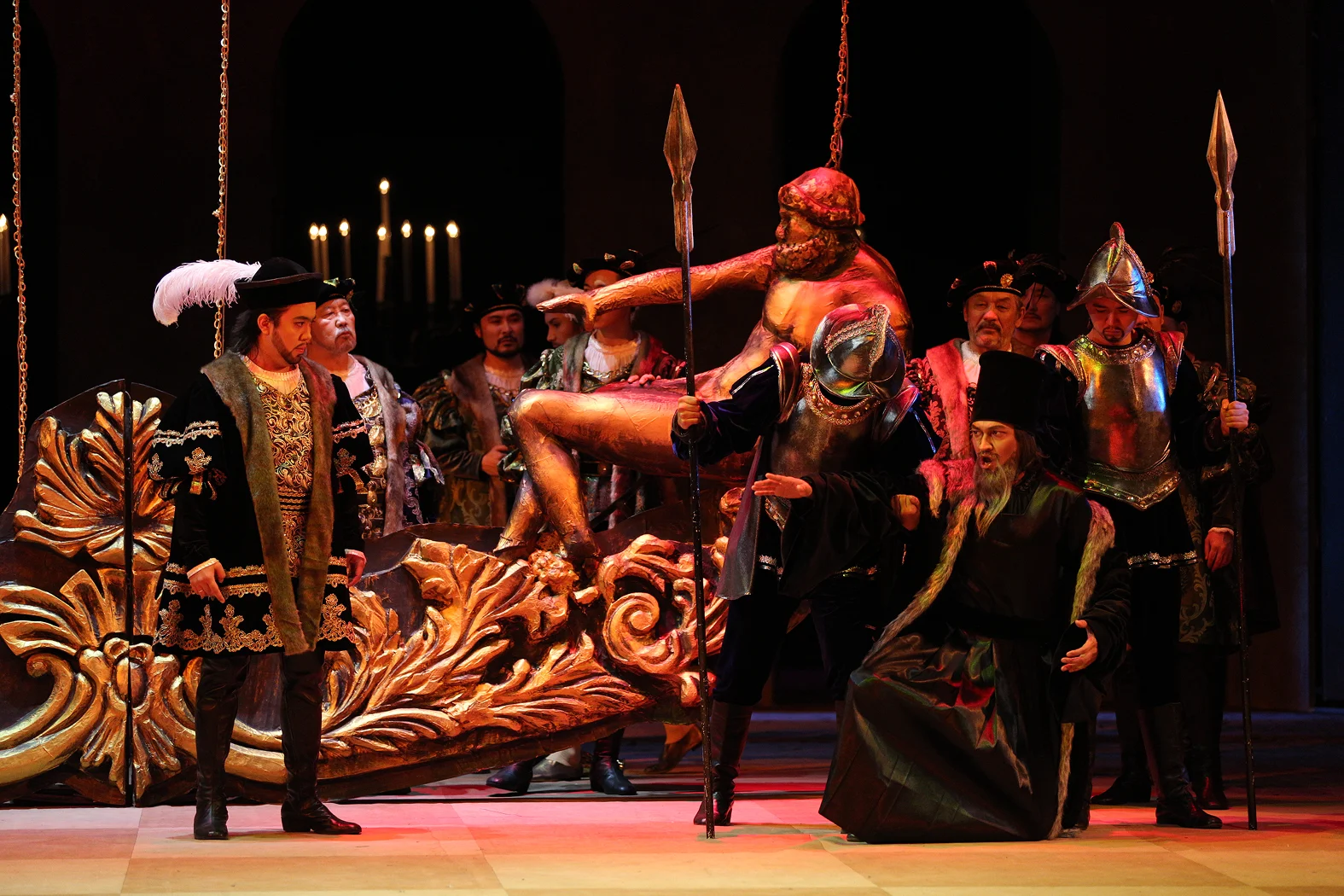
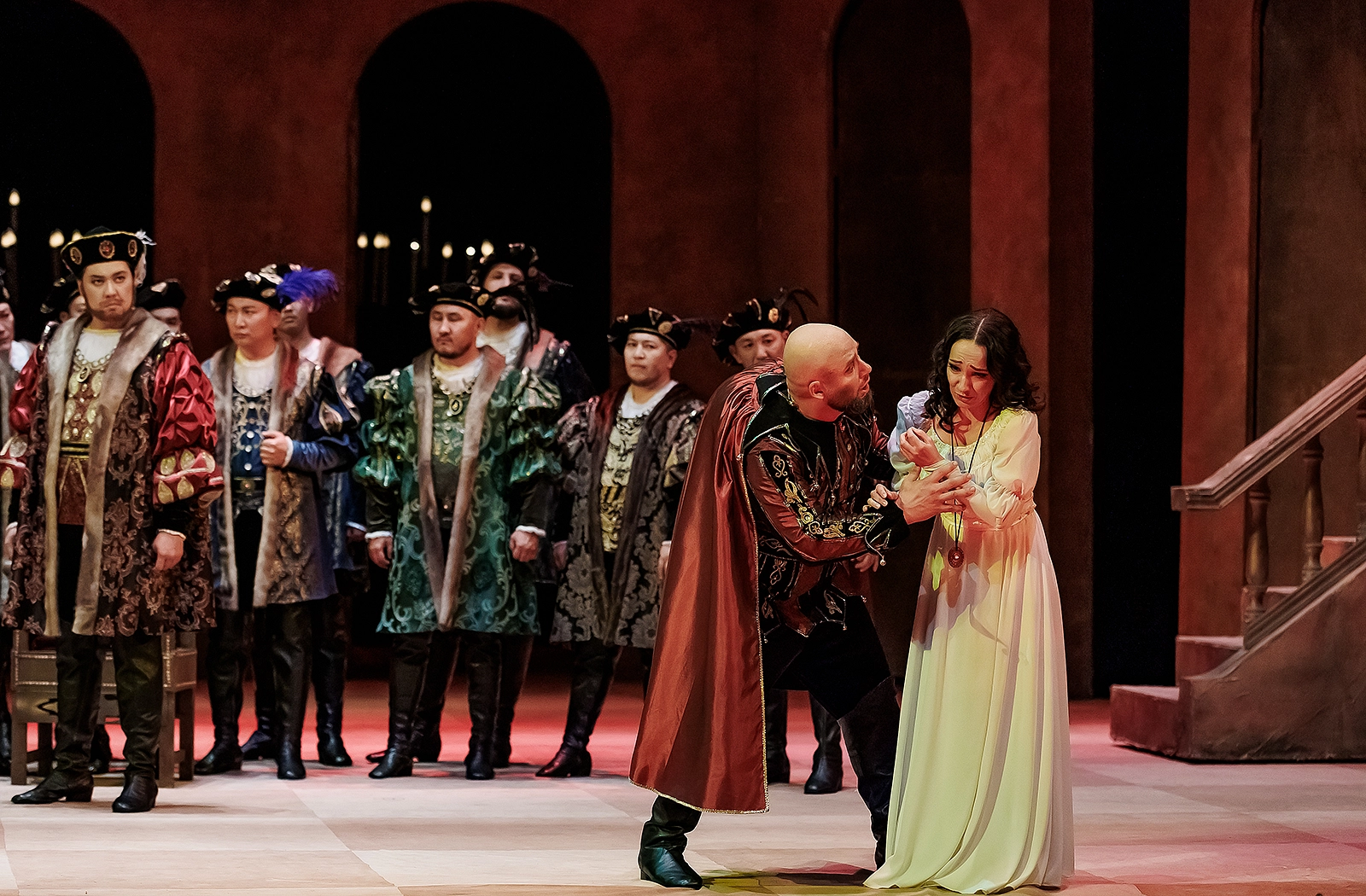
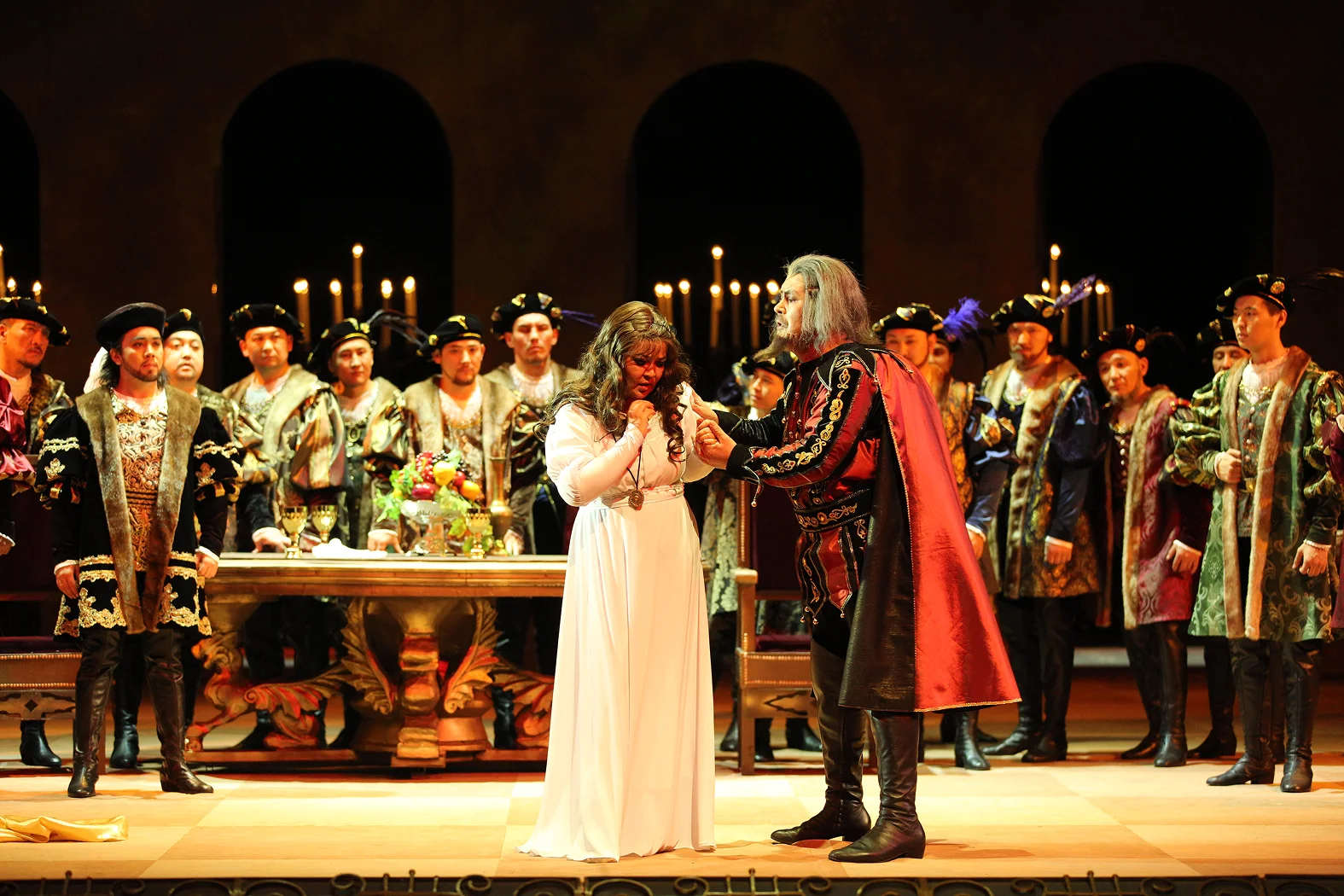
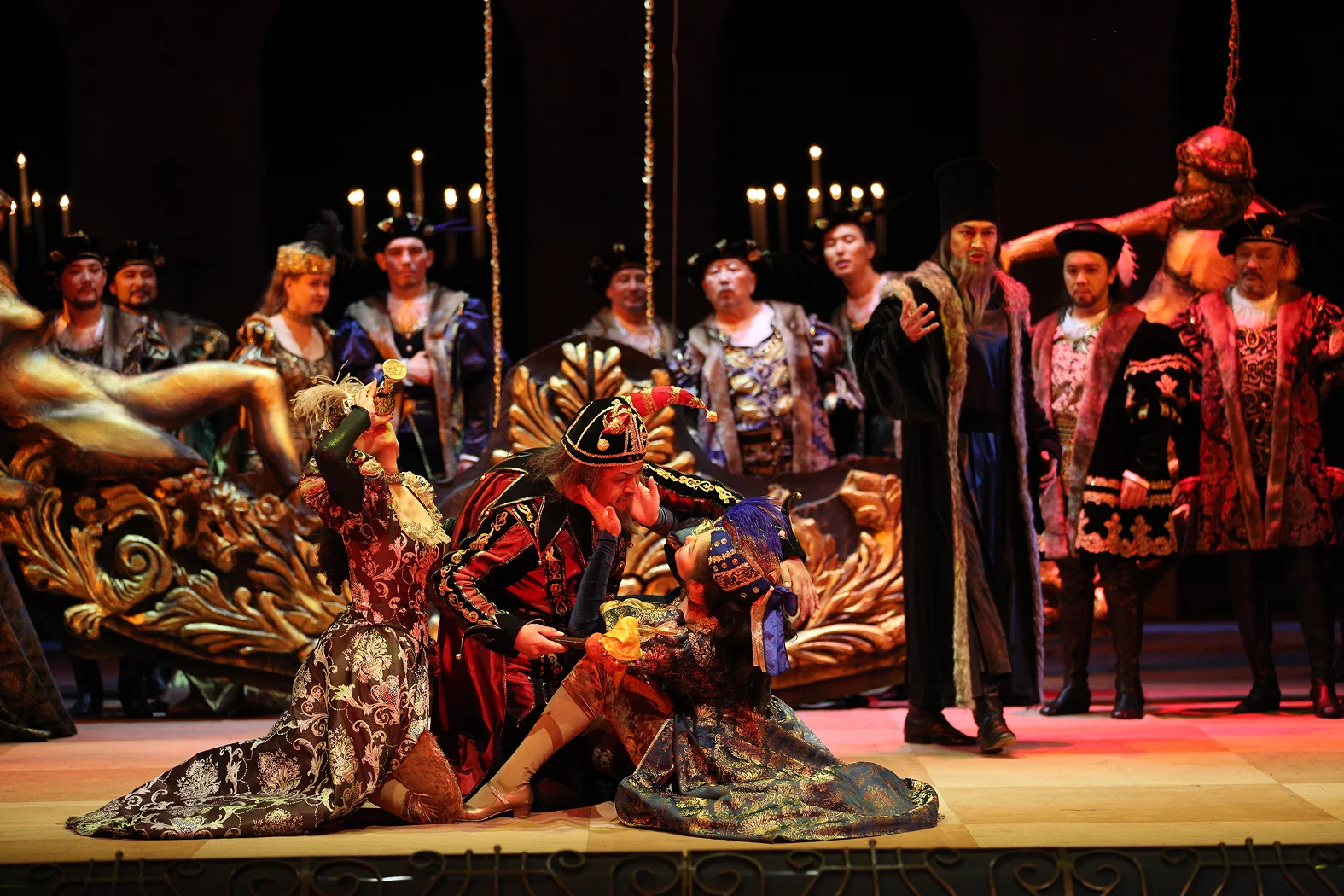
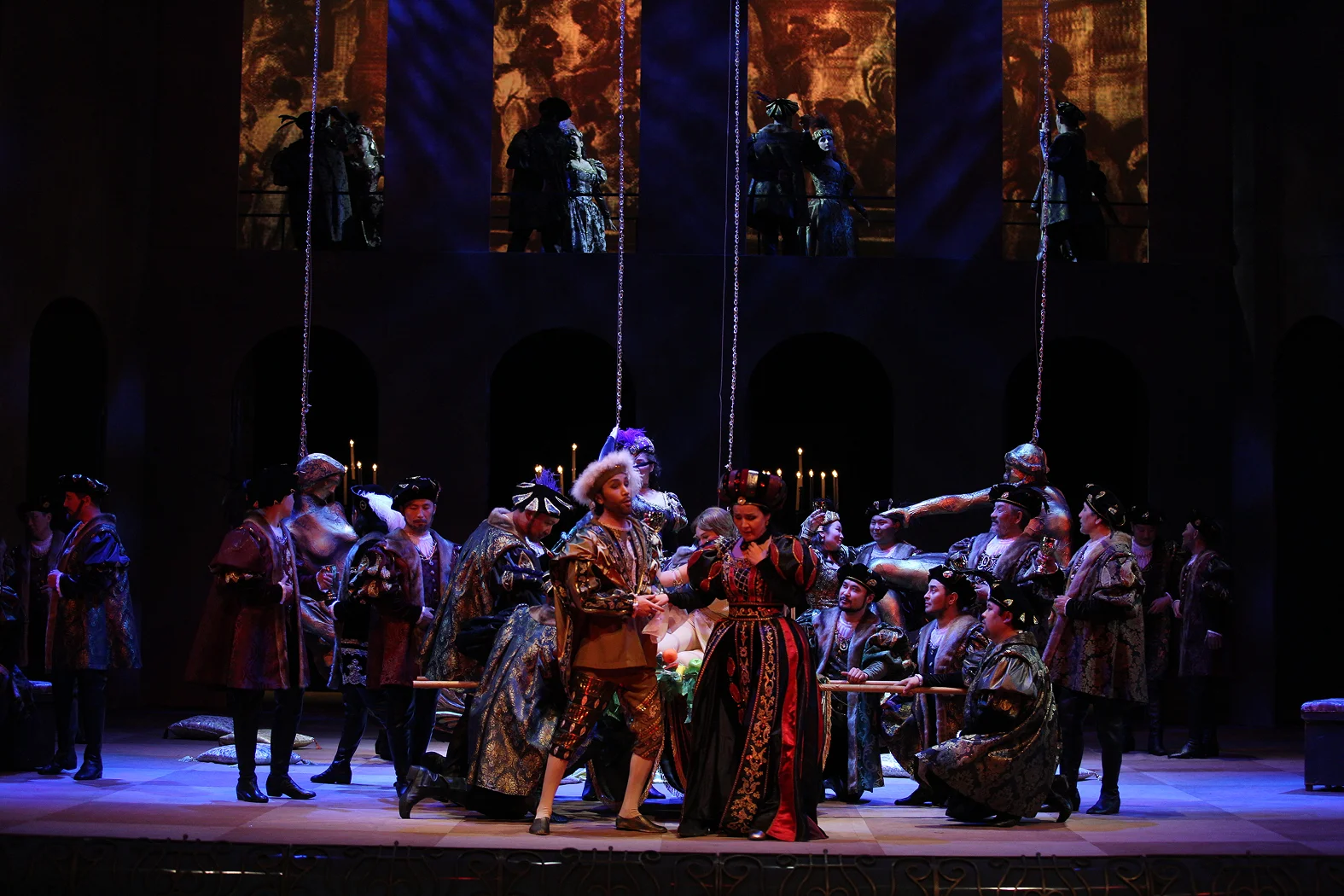
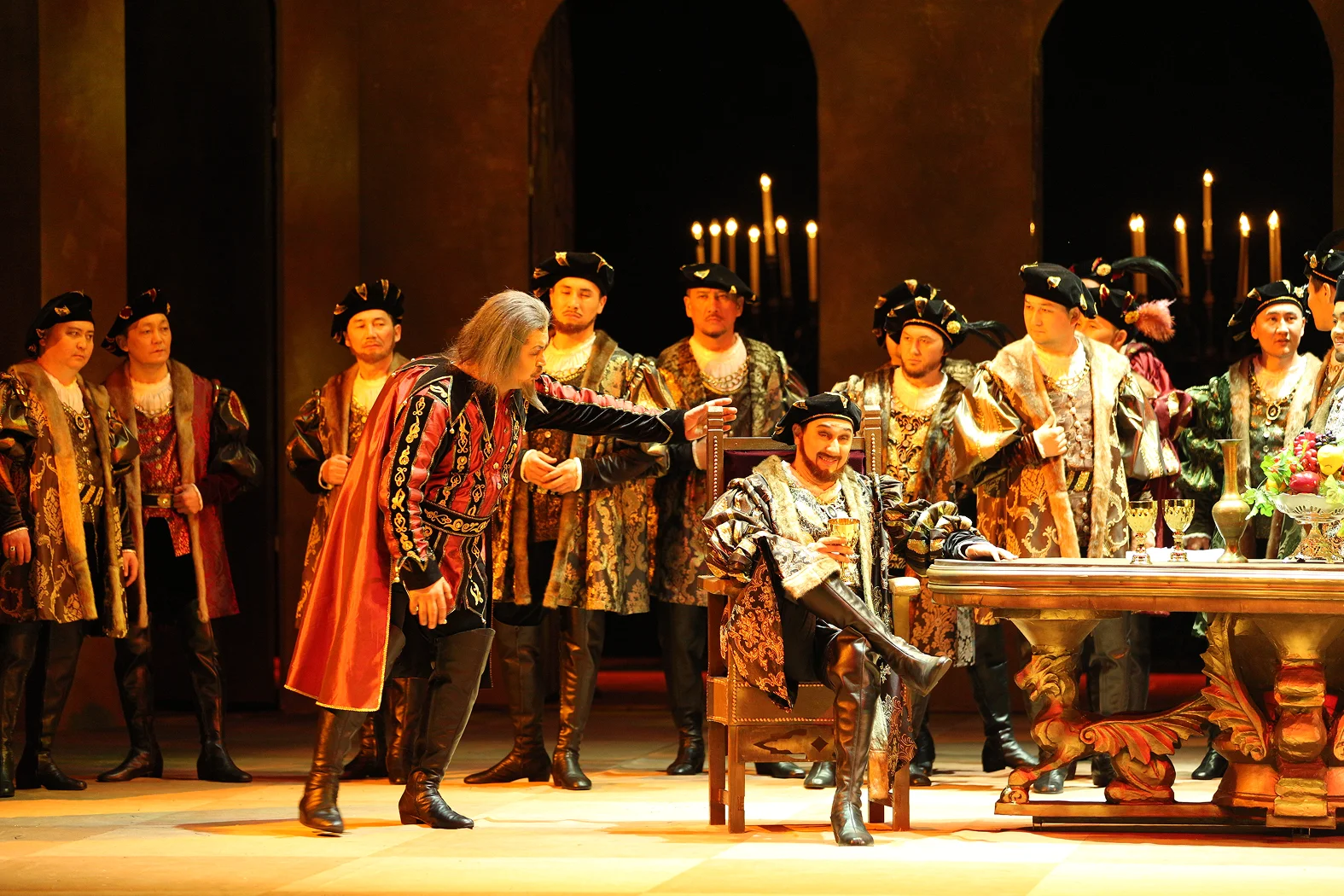
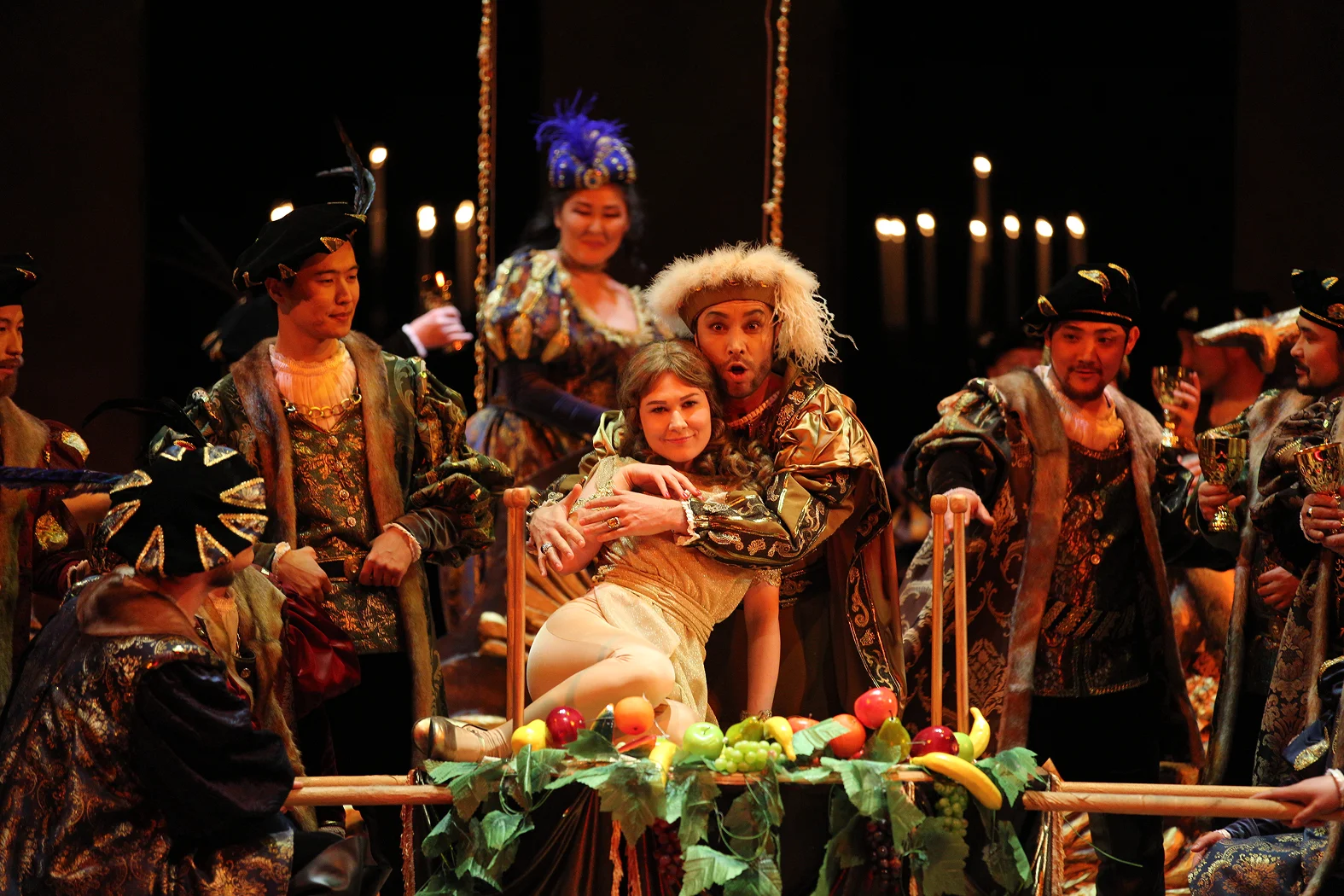
A ball is taking place in the palace of the Duke of Mantua. Amid the general merriment, the court jester Rigoletto incites the Duke to abduct Count Ceprano’s wife that very evening. Angered by yet another of his insolent jests, the courtiers decide to teach the jester a lesson and suggest to the Count that they abduct Rigoletto’s beloved, whom he is said to be hiding in his house. Suddenly the revelry is interrupted by the appearance of Count Monterone: the old man curses them all for the dishonour of his daughter, who has fallen victim to the Duke’s amorous pursuits. The Duke merely orders the unfortunate father to be taken into custody. The jester’s mockery exhausts Monterone’s patience, and he curses Rigoletto.
Act 2
Rigoletto returns home. On the way, he meets the hired assassin Sparafucile, who offers him his services.
At last Rigoletto is home. Here, with the maid Giovanna, lives his daughter Gilda. Knowing the customs of the ducal court, her father carefully keeps her hidden from the eyes of others, and she is even afraid to confess that she is in love with a young man.
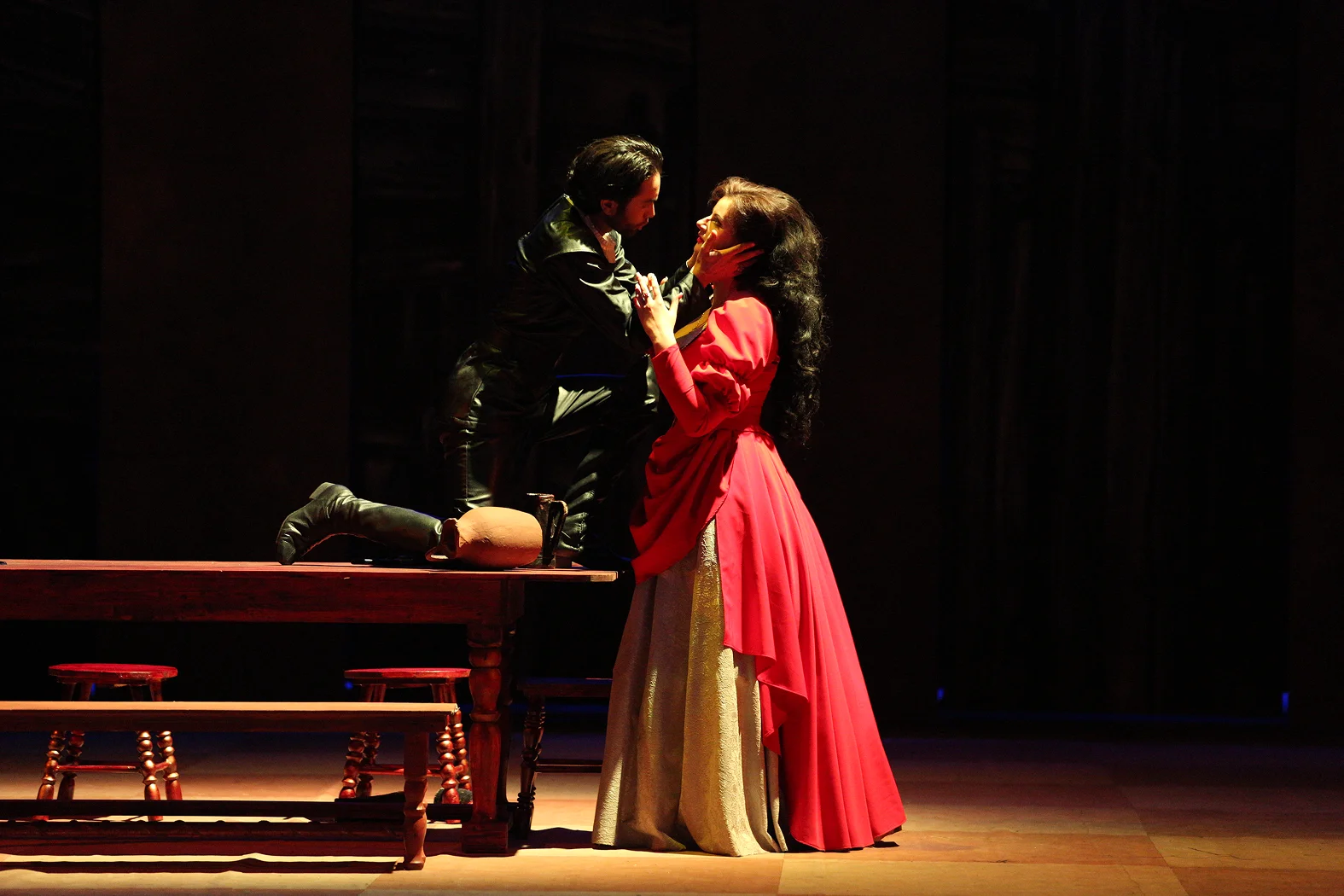
After seeing her father off, Gilda unexpectedly finds that very young man before her. It is the Duke. Pretending to be an ordinary student, he passionately declares his love for her, but the noise in the street forces him to bid the girl farewell.
Count Ceprano appears near Rigoletto’s house with his friends. They intend to abduct the jester’s mysterious beauty, when suddenly Rigoletto himself returns. To dispel his suspicions, the courtiers convince the jester that they are preparing to abduct the wife of Count Ceprano, whose castle is nearby. Rigoletto agrees to take part in the scheme, and his eyes are blindfolded… When everyone disappears, he realizes the truth in horror.
Act 3
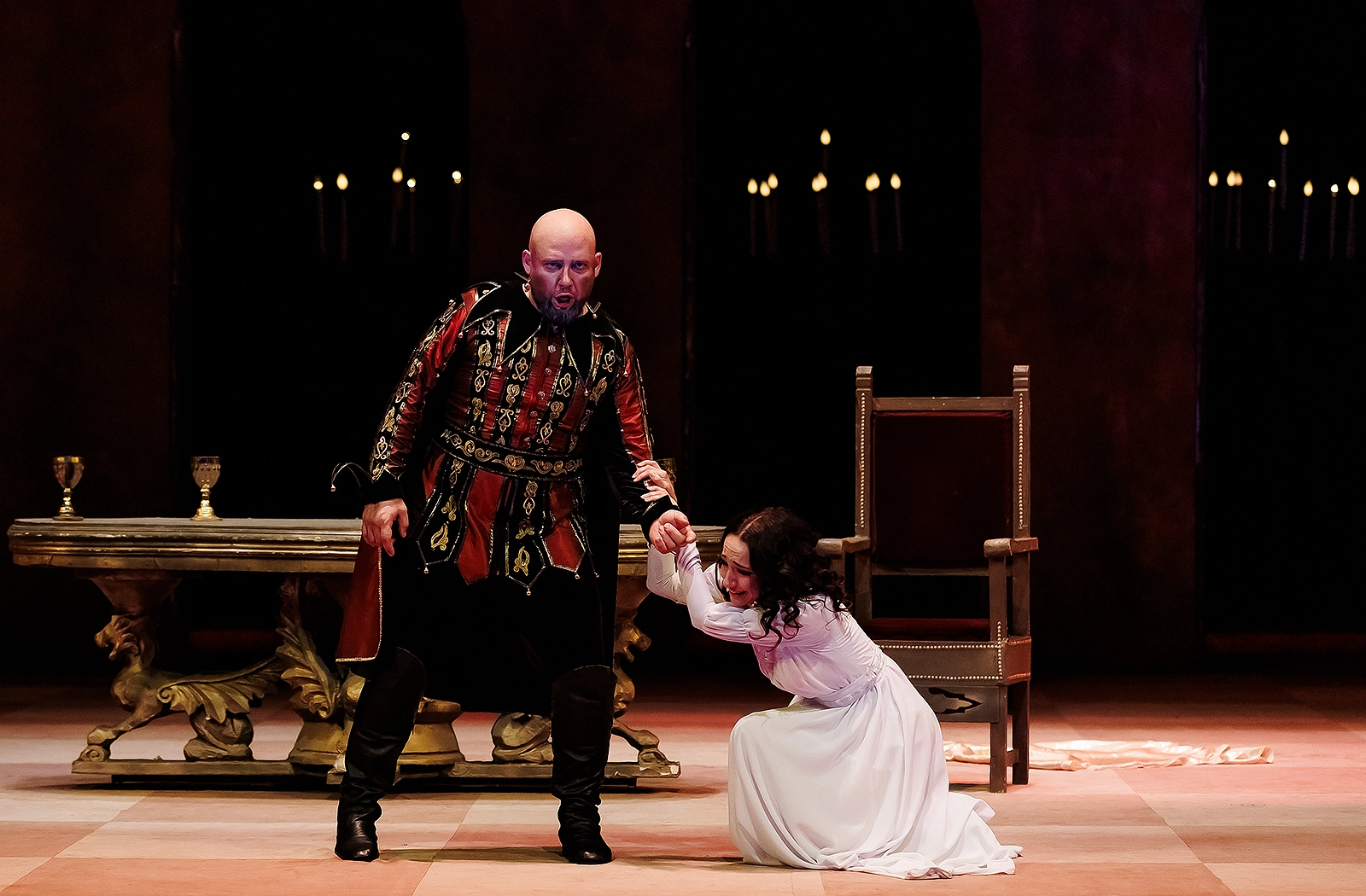
The Duke is distressed: the girl who has captivated him has been abducted. Wishing to amuse him, the courtiers tell the Duke how they stole the jester’s beloved, and, realizing who she is, the Duke hastens to see the captive. A grief-stricken Rigoletto appears in the palace: he begs them to return his daughter. When Gilda runs out in tears from the Duke’s bedroom, Rigoletto vows to avenge the dishonour of his daughter.
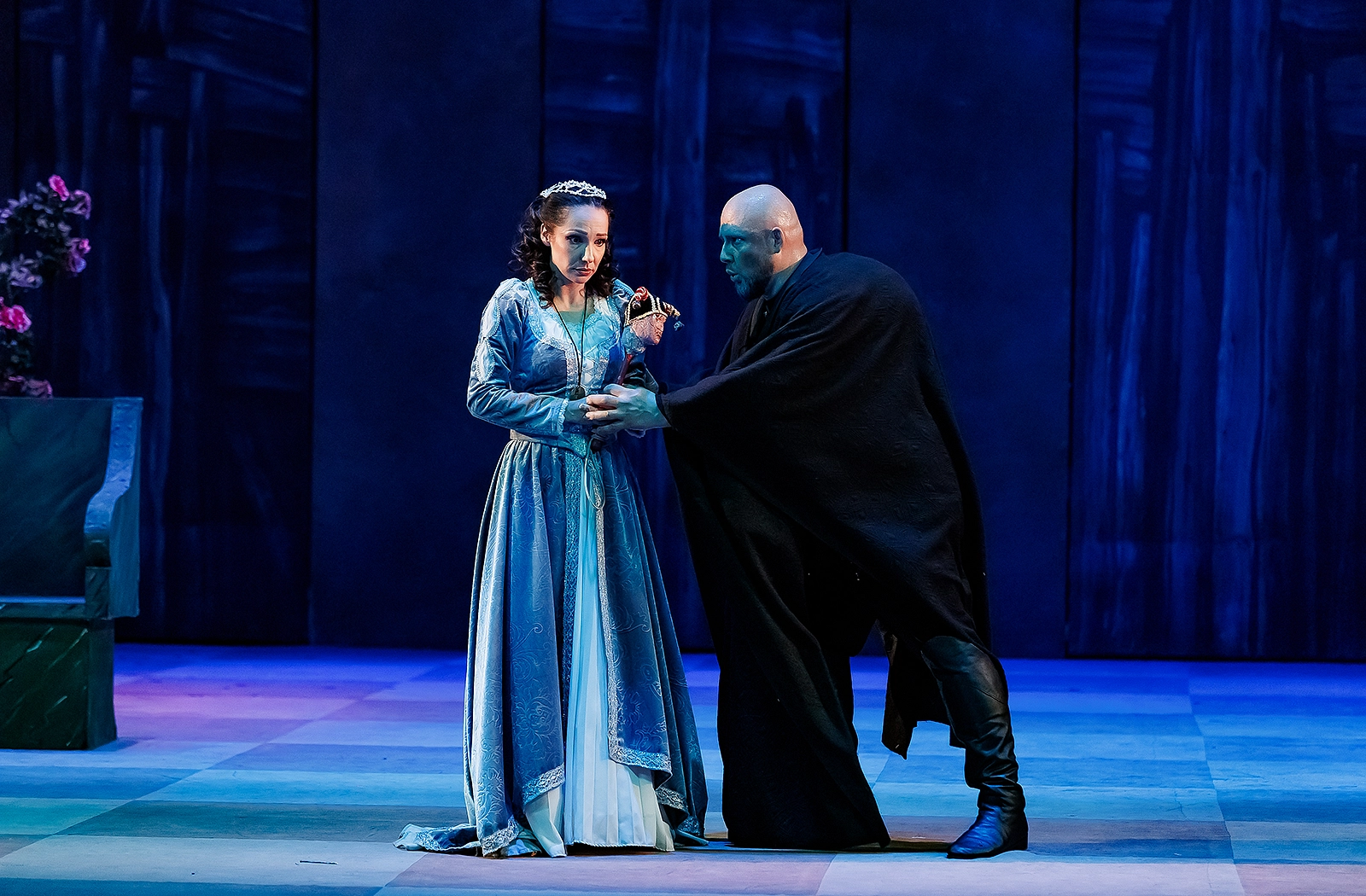
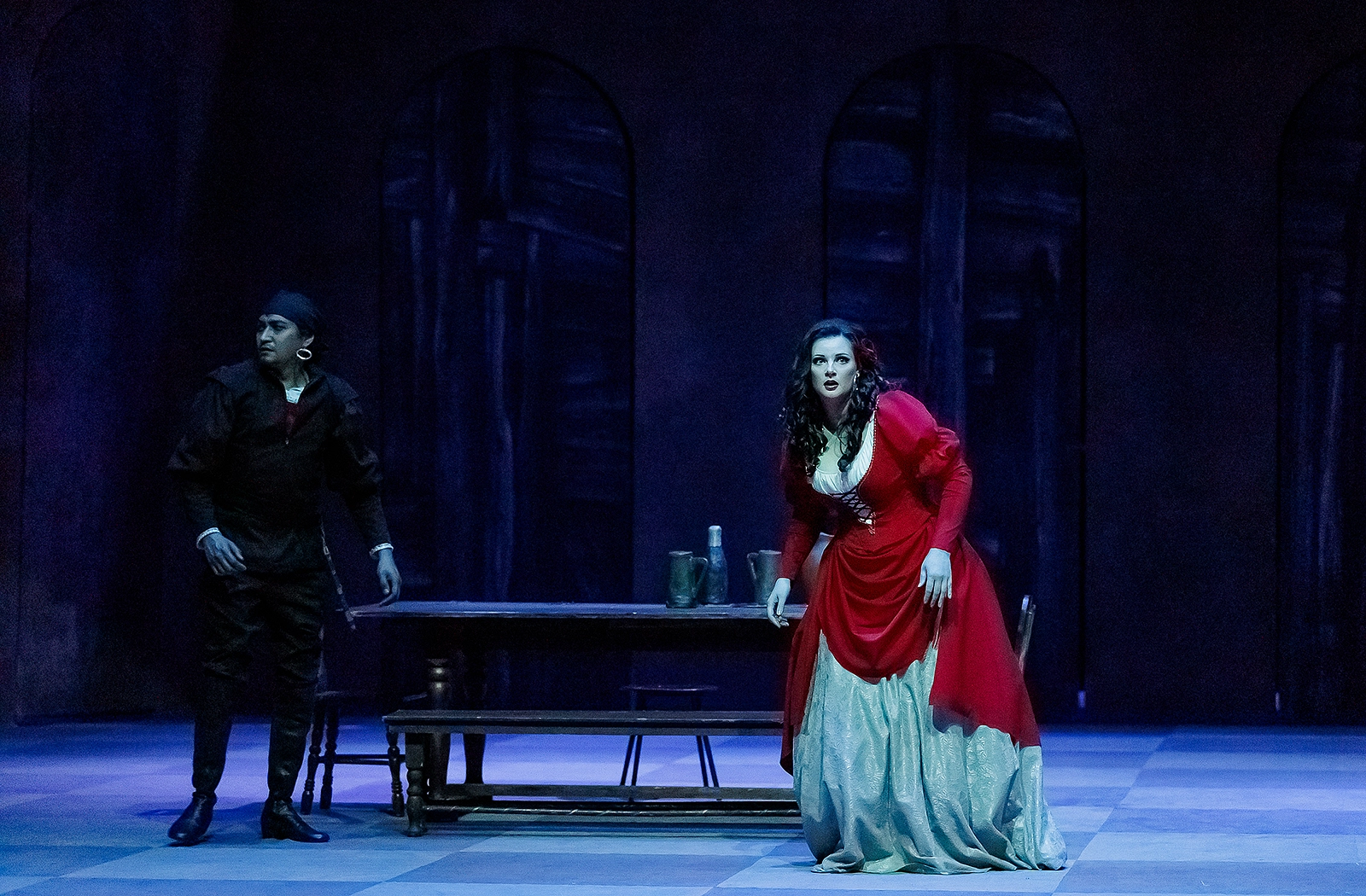
Night. In the den of the hired assassin Sparafucile, the disguised Duke comes to meet his sister Maddalena. Rigoletto brings Gilda there as well, to convince her of the Duke’s infidelity. Gilda is in despair: her father sends her to Verona; that very night she must leave Mantua dressed as a man.
Rigoletto makes an agreement with the bandit to murder the Duke. To savour his revenge, he will throw the body into the river himself. Maddalena begs her brother to spare the man she loves, and he agrees to kill, in his place, the first person who enters the hut.
Gilda, already dressed in men’s clothing and having returned to see the Duke one last time, accidentally overhears this agreement and decides to save the Duke at the cost of her own life…
Already exulting in revenge, Rigoletto takes the sack containing the body from Sparafucile and suddenly hears the Duke’s familiar song. Opening the sack, he discovers his dying daughter.
Archived
“Rigoletto” is Verdi’s great opera about fate, revenge, and the destructive power of passion.
At the heart of the opera is Victor Hugo’s drama The King Amuses Himself, which was banned by French censorship immediately after its premiere for undermining the authority of royal power. Hugo’s dramaturgy attracted the composer with its passion, romantic contrasts and intense dramatic momentum. Most of all, however, Verdi was drawn to the possibility of creating a psychological drama with truthful, multifaceted musical characterizations.
At the beginning of 1850, the composer developed a detailed plan for the opera, which was originally titled The Curse. However, due to censorship, Verdi and his librettist Francesco Maria Piave transferred the setting from France to Italy, while the real historical figures — King Francis I and his jester Triboulet — became the Duke of Mantua and Rigoletto. Verdi worked with great inspiration and wrote the opera in only 40 days. The composer considered the plot of Rigoletto the finest of all those he had set to music: “There are powerful situations, variety, brilliance and pathos.”
In March 1851, the premiere took place on the stage of the Venetian theatre La Fenice and was met with great success, which grew from performance to performance. After the premiere, the composer himself said: “I am satisfied with myself and I think I will never write anything better.” It is one of the greatest musical works in the history of world culture; many consider Rigoletto one of the finest operas ever created.
At our theatre, G. Verdi’s opera Rigoletto was performed for many years in a production by director Boris Ryabikin and People’s Artist of Kazakhstan Gulfairuz Ismailova, and later in a staging by Baigali Dosymzhanov, a legend of the opera stage of Kazakhstan and People’s Artist of Kazakhstan, with sets by Orynbasar Zhambyrshiev, Honored Worker of the Republic of Kazakhstan, and choreography by Zaurbek Raibayev, People’s Artist of the Republic of Kazakhstan.
G. Verdi
Rigoletto
opera in 3 acts
libretto by F. M. Piave based on V. Hugo’s drama The King Amuses Himself
The premiere at the Abay Opera House took place in 1978
New production — 18.03.2017
Production Team:
Stage Conductor – Vittorio Parisi (Italy)
Stage Director – Lyailim Imangazina, Honored Worker of the Republic of Kazakhstan
Production Designer – Vyacheslav Okunev, People’s Artist of Russia, laureate of the State Prizes of the Republic of Kazakhstan and the Russian Federation
Chief Choirmaster – Aliya Temirbekova, Honored Worker of the Republic of Kazakhstan
Characters
- Il Duca di Mantova
- Rigoletto, court jester
- Gilda, Rigoletto’s daughter
- Sparafucile, bandit
- Maddalena, his sister
- Giovanna, Gilda’s maid
- Count Monterone
- Cavalier Marullo
- Borsa Matteo, courtier
- Count Ceprano
- Countess Ceprano, his wife
- Court officer
- Page
Act 1
A ball is taking place in the palace of the Duke of Mantua. Amid the general merriment, the court jester Rigoletto incites the Duke to abduct Count Ceprano’s wife that very evening. Angered by yet another of his insolent jests, the courtiers decide to teach the jester a lesson and suggest to the Count that they abduct Rigoletto’s beloved, whom he is said to be hiding in his house. Suddenly the revelry is interrupted by the appearance of Count Monterone: the old man curses them all for the dishonour of his daughter, who has fallen victim to the Duke’s amorous pursuits. The Duke merely orders the unfortunate father to be taken into custody. The jester’s mockery exhausts Monterone’s patience, and he curses Rigoletto.
Act 2
Rigoletto returns home. On the way, he meets the hired assassin Sparafucile, who offers him his services.
At last Rigoletto is home. Here, with the maid Giovanna, lives his daughter Gilda. Knowing the customs of the ducal court, her father carefully keeps her hidden from the eyes of others, and she is even afraid to confess that she is in love with a young man.
After seeing her father off, Gilda unexpectedly finds that very young man before her. It is the Duke. Pretending to be an ordinary student, he passionately declares his love for her, but the noise in the street forces him to bid the girl farewell.
Count Ceprano appears near Rigoletto’s house with his friends. They intend to abduct the jester’s mysterious beauty, when suddenly Rigoletto himself returns. To dispel his suspicions, the courtiers convince the jester that they are preparing to abduct the wife of Count Ceprano, whose castle is nearby. Rigoletto agrees to take part in the scheme, and his eyes are blindfolded… When everyone disappears, he realizes the truth in horror.
Act 3
The Duke is distressed: the girl who has captivated him has been abducted. Wishing to amuse him, the courtiers tell the Duke how they stole the jester’s beloved, and, realizing who she is, the Duke hastens to see the captive. A grief-stricken Rigoletto appears in the palace: he begs them to return his daughter. When Gilda runs out in tears from the Duke’s bedroom, Rigoletto vows to avenge the dishonour of his daughter.
Night. In the den of the hired assassin Sparafucile, the disguised Duke comes to meet his sister Maddalena. Rigoletto brings Gilda there as well, to convince her of the Duke’s infidelity. Gilda is in despair: her father sends her to Verona; that very night she must leave Mantua dressed as a man.
Rigoletto makes an agreement with the bandit to murder the Duke. To savour his revenge, he will throw the body into the river himself. Maddalena begs her brother to spare the man she loves, and he agrees to kill, in his place, the first person who enters the hut.
Gilda, already dressed in men’s clothing and having returned to see the Duke one last time, accidentally overhears this agreement and decides to save the Duke at the cost of her own life…
Already exulting in revenge, Rigoletto takes the sack containing the body from Sparafucile and suddenly hears the Duke’s familiar song. Opening the sack, he discovers his dying daughter.
Cast and Performers
(February 14, 2026, 18:00)
- Медора Алия Манабасова
- Гюльнара Динара Есентаева
- Конрад, предводитель корсаров Нельсон Пенья
- Али Данияр Рыскул (первое исполнение)
- Исаак Ланкедем, работорговец Рафаэль Уразов
- Бирбанто Сырым Аюпов
- Сеид, паша Даурен Женис
- Трио Акбота Бекболатова, Динара Кудабаева, Нурай Нурсафина (первое исполнение)
- Офицер Амир Жексенбек
- Корсары, невольницы, стража, артисты балета
- Симфонический оркестр и балетная труппа Казахского национального театра оперы и балета имени Абая
- Дирижёр Куаныш Исмаилов
Gallery
Gallery