Ballet
Le Corsaire February 15, 2026, 18:00
Description
Archived
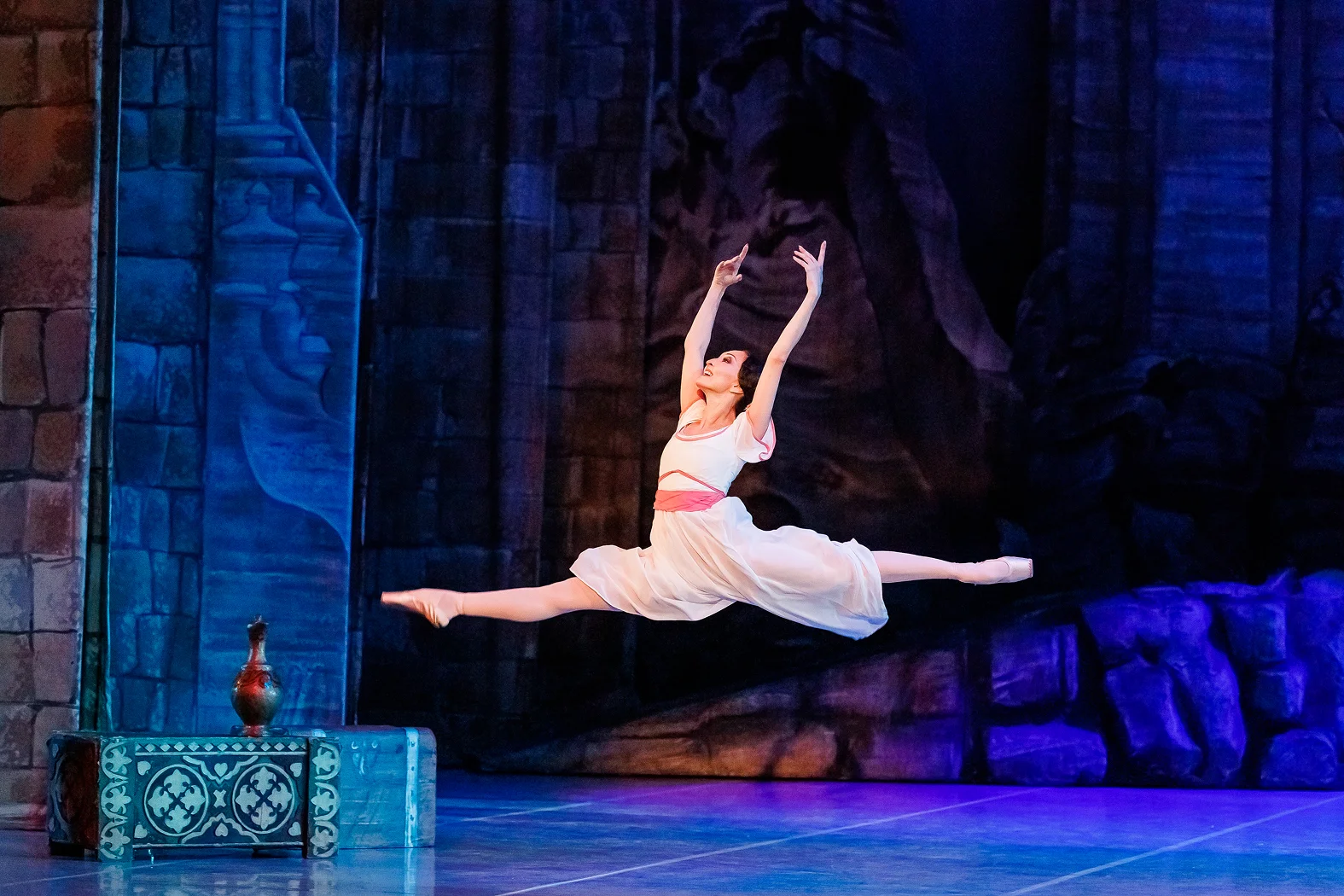
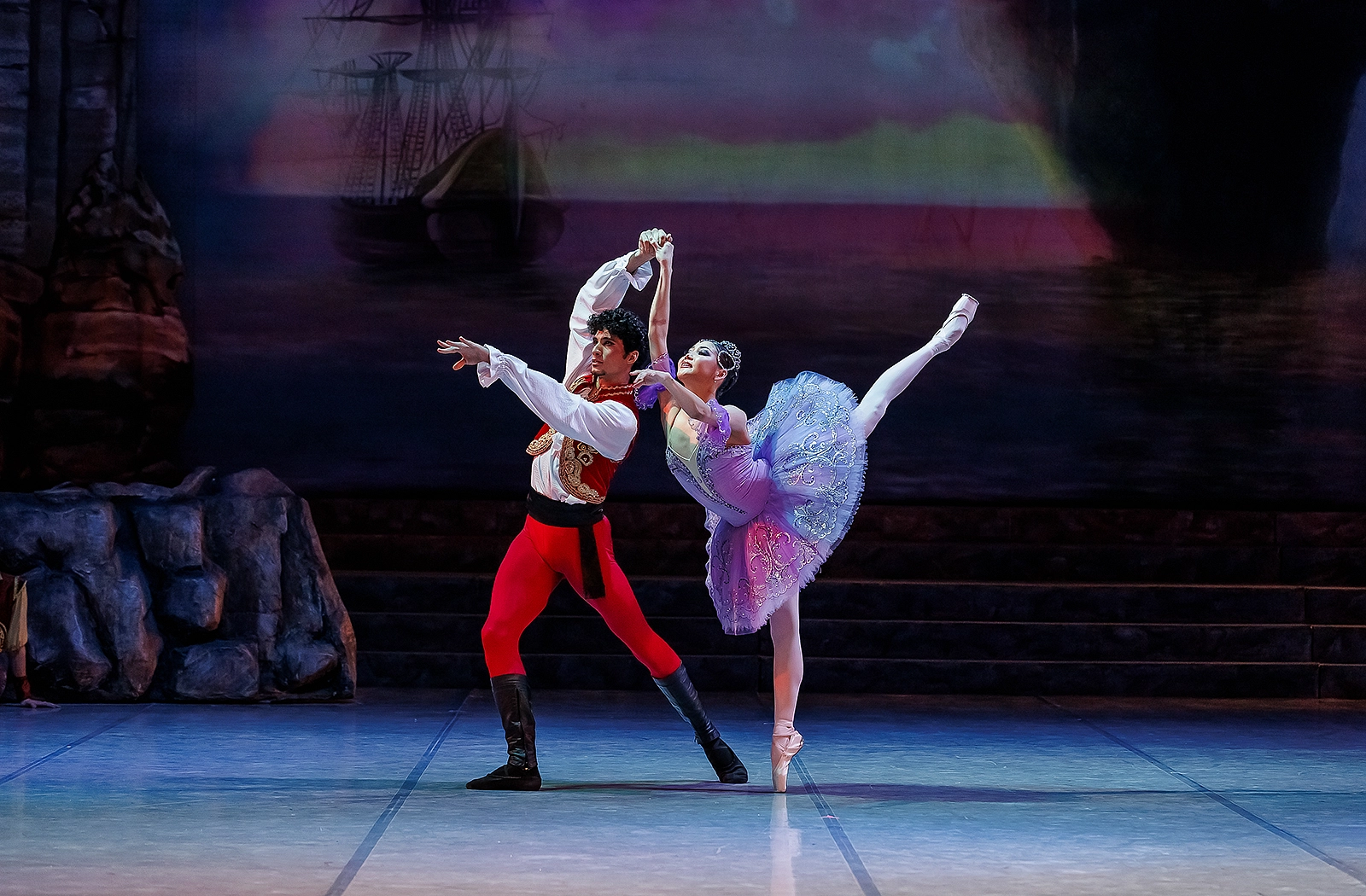
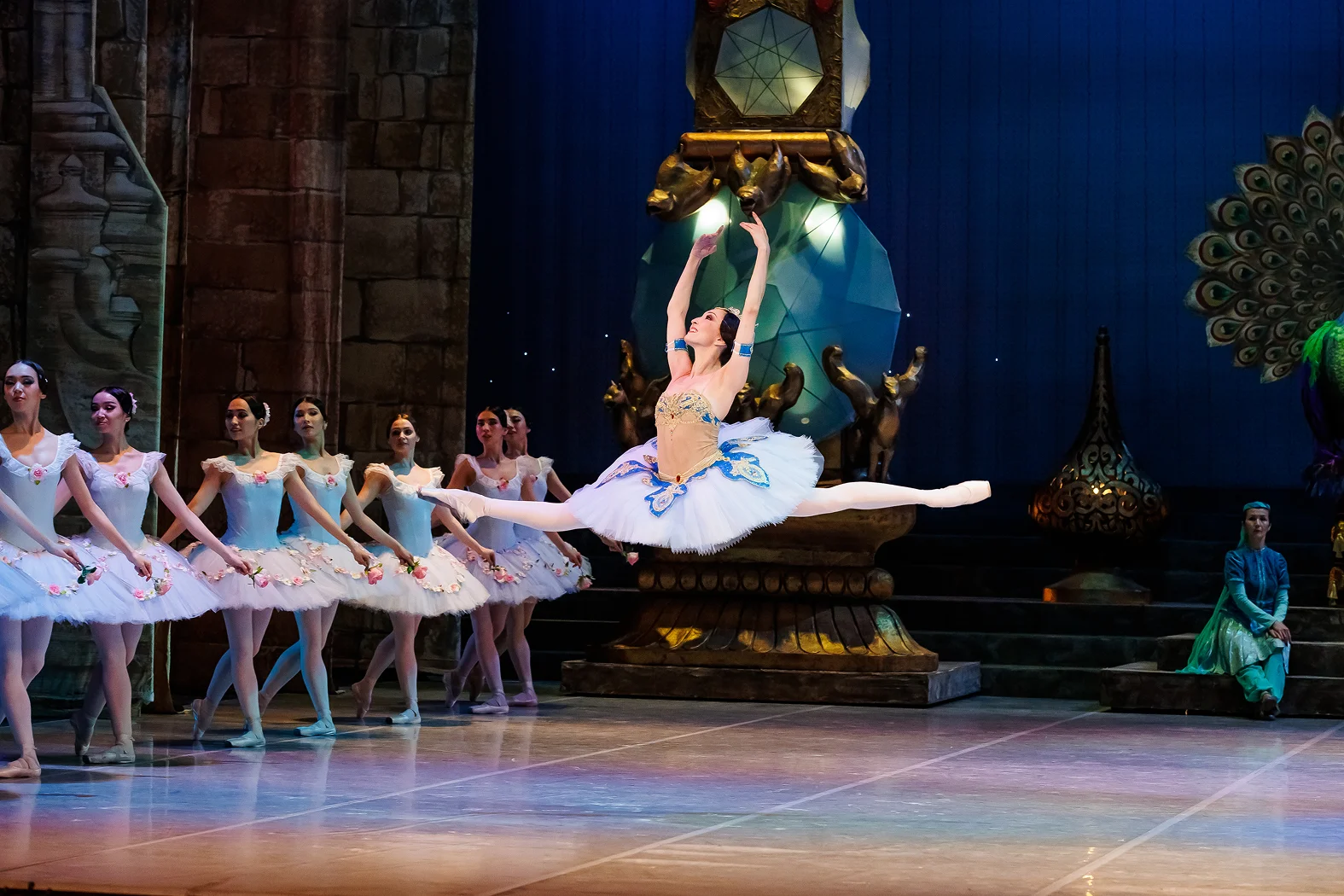
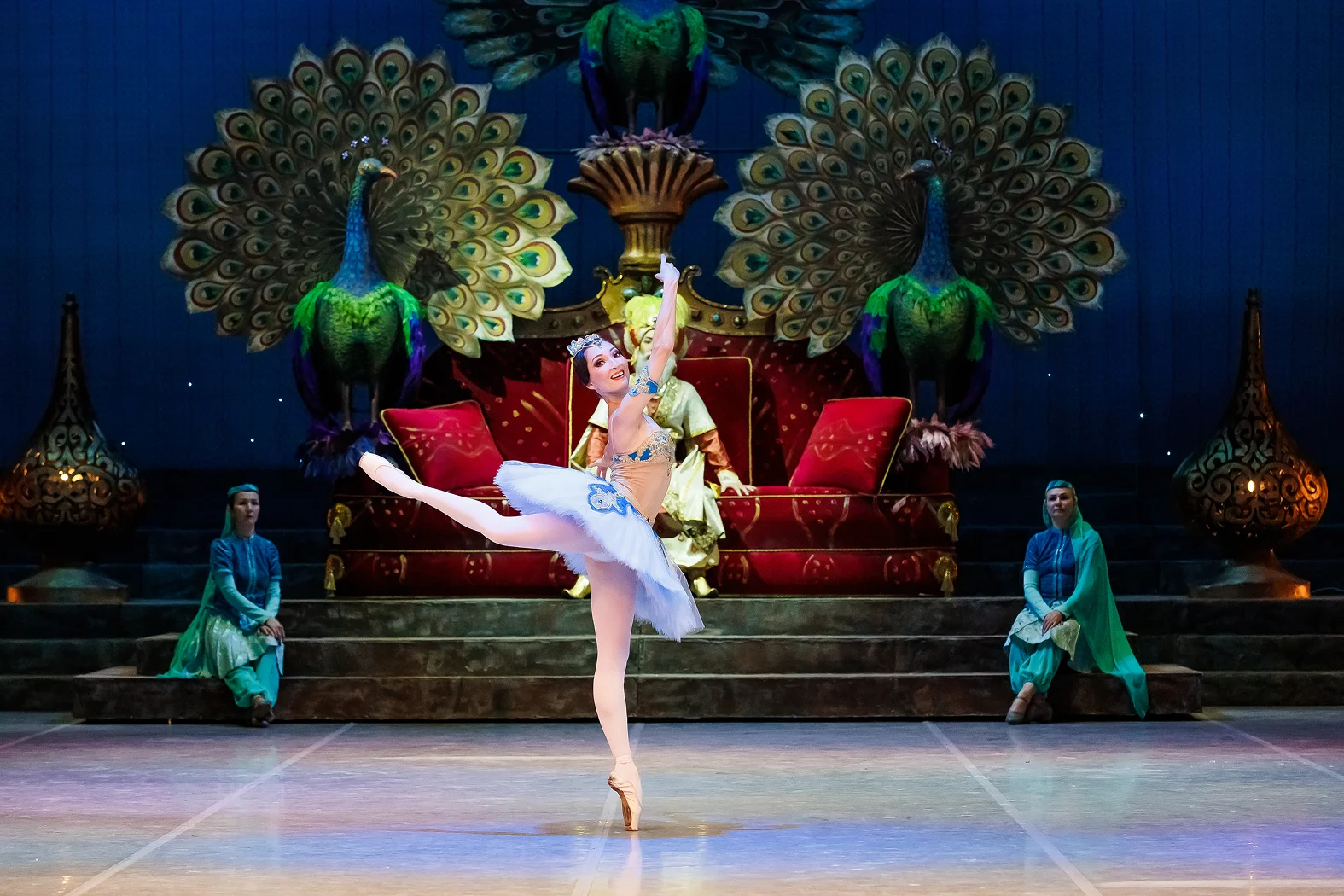
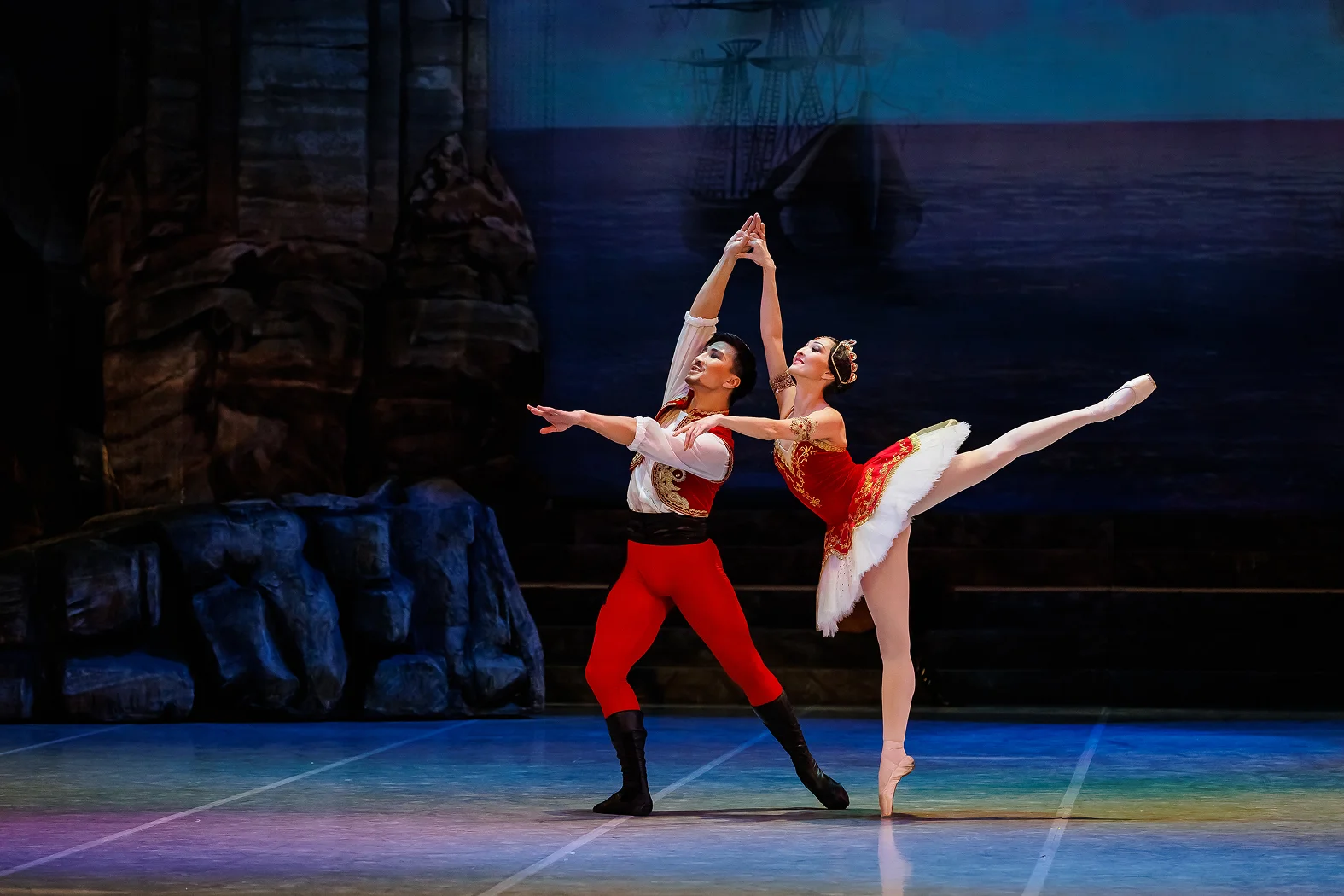
Le Corsaire is a vivid romantic ballet about love and freedom in a world of sea adventures.
The ballet Le Corsaire has been considered a brilliant pearl in the treasury of world musical classics for more than a century and a half. Alongside another celebrated masterpiece by Adolphe Adam, the ballet Giselle, it belongs to the golden fund of the world ballet repertoire. The libretto is based on Byron’s poem of the same name. Before Adam, Byron’s poem had also been brought to the musical stage by other composers; in particular, G. Verdi composed an opera of the same name in 1848. Ballets were also staged. The first known ballet production under the same title was presented at La Scala in Milan in 1826, choreographed by the Italian ballet master Giovanni Galzerani, but none of these ballets has survived to the present day.
The premiere of the ballet took place on 23 January 1856 at the Paris Opera, and two years later, on 12 January 1858, Le Corsaire was staged for the first time in St. Petersburg by the renowned choreographer Jules-Joseph Perrot. Perrot himself performed the role of Seid Pasha, while Marius Petipa performed the role of Conrad “with great energy”.
The librettists of 19th-century ballet performances, Jules-Henri Vernoy de Saint-Georges and Joseph Mazilier, created a vivid picture from the life of corsairs. Since the first production, the choreography has changed and musical numbers have been added, yet the plot has remained the same from 1856 to the present day. Le Corsaire, which appeared in the very middle of the 19th century, bears the bright imprint of Romantic aesthetics.
Adam is considered one of the finest melodists among 19th-century composers. His ballets Giselle and Le Corsaire occupy an honoured place in the repertoire of major ballet companies around the world. At the Abay Kazakh State Academic Opera and Ballet Theatre, Le Corsaire was first staged in 1993 by the Novosibirsk ballet master Vladimir Vladimirov. The leading ballet soloists shone in the principal roles: Kuralai Sarkytbaeva, Murat Tukeev, Dmitry Sushkov, Ulan Badenov, Serik Turabaev, Yerzhan Doskaraev and Zhumat Kartamysov. The role of Medora was performed by the theatre’s prima ballerina Gulzhan Tutkibayeva.
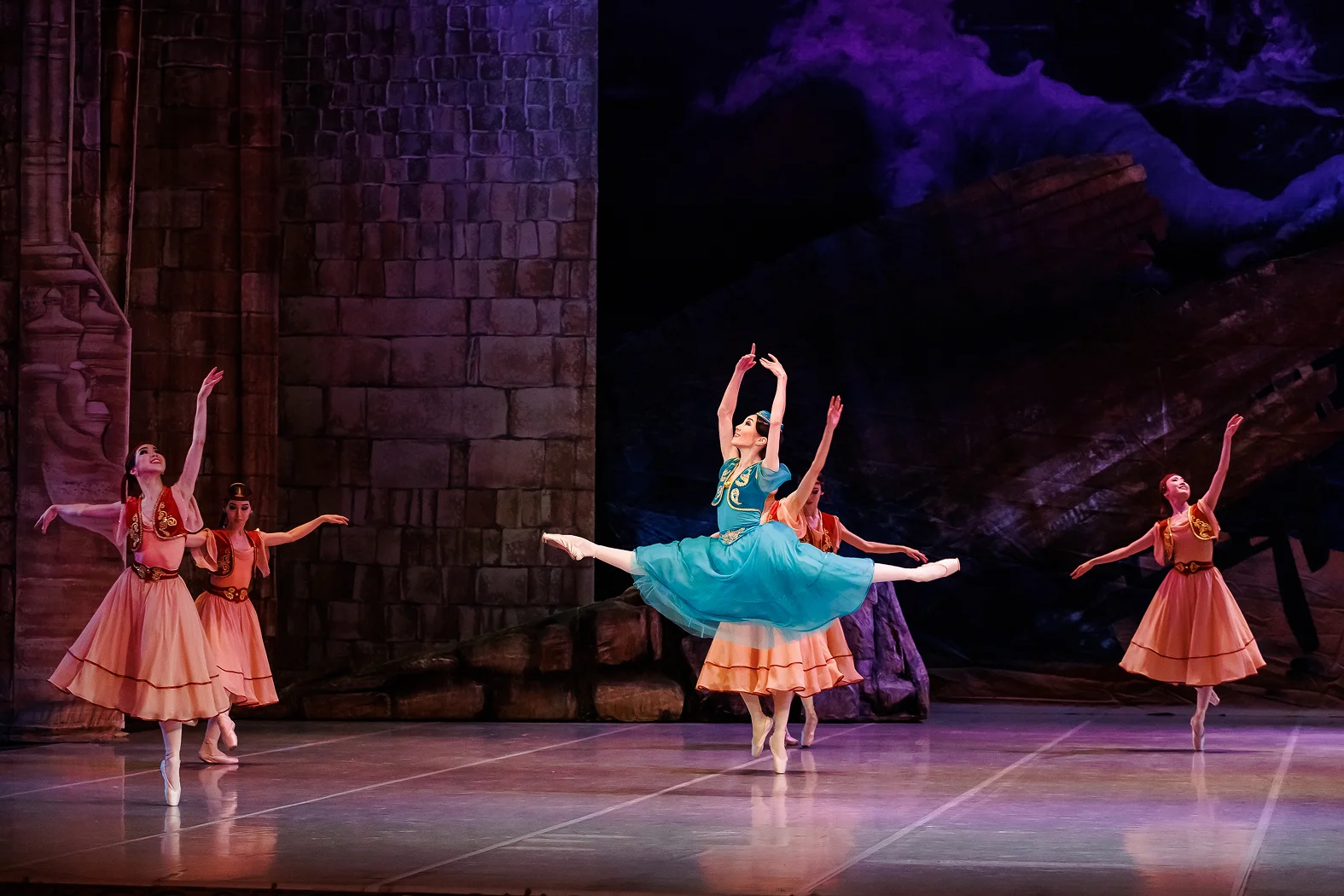
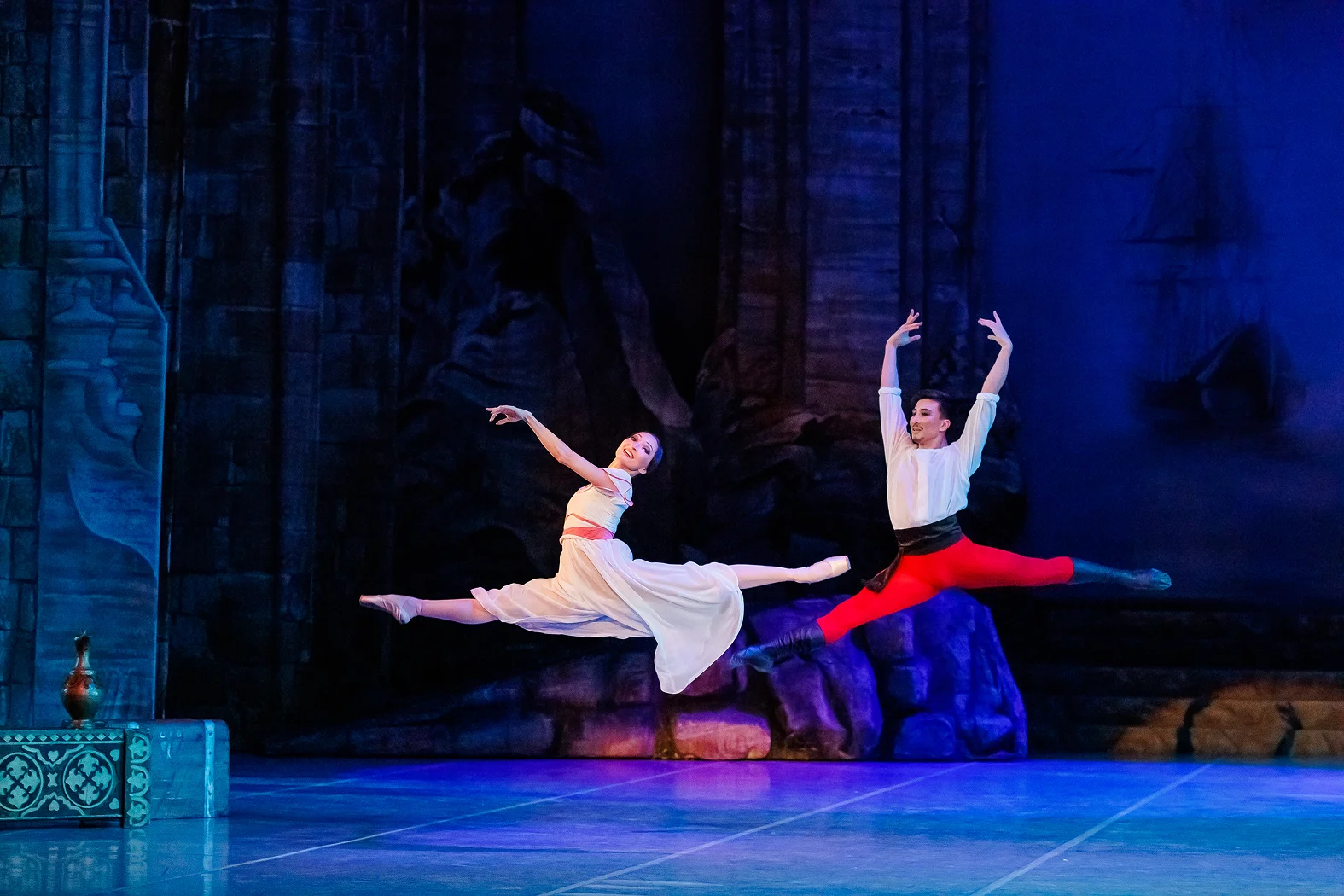
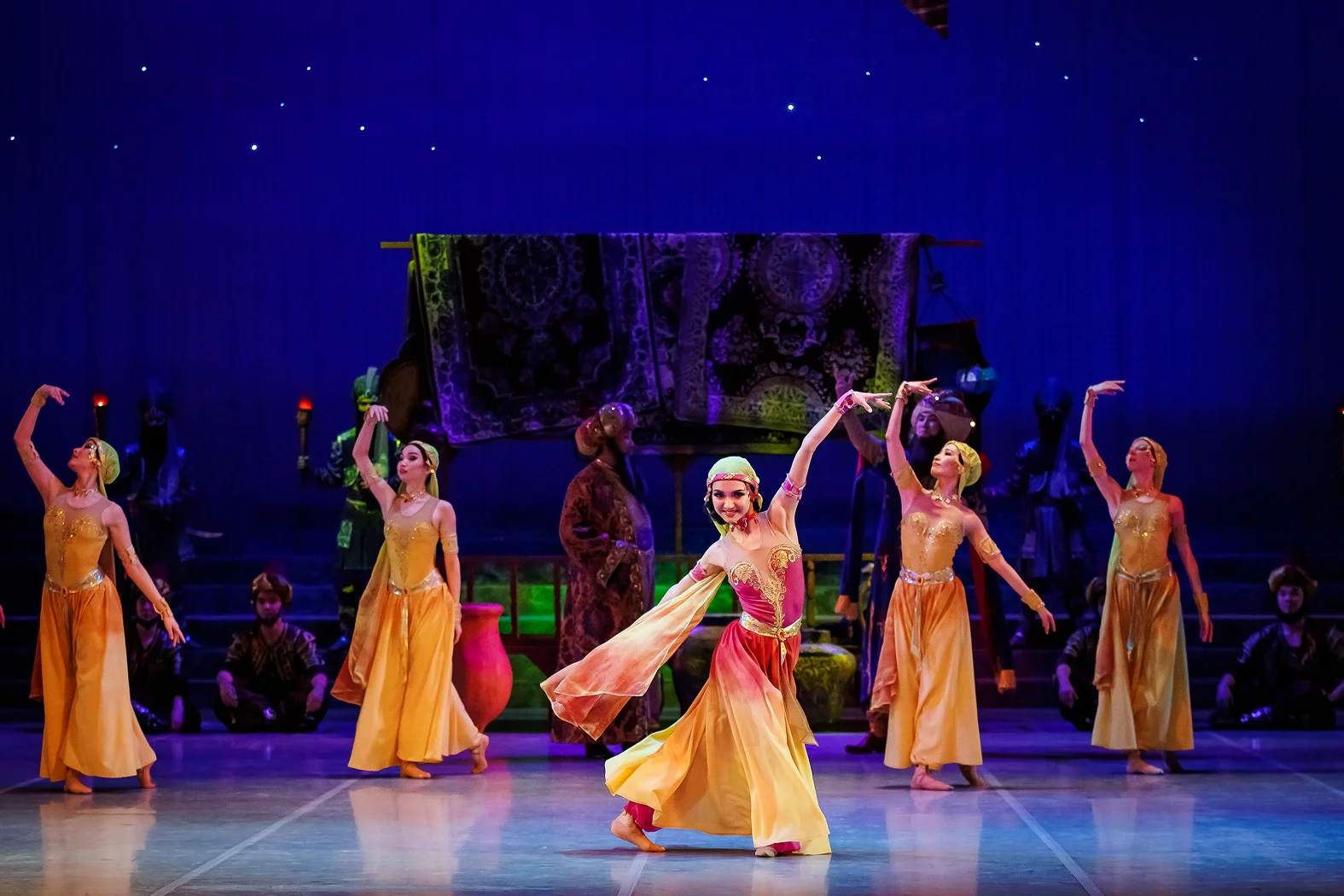
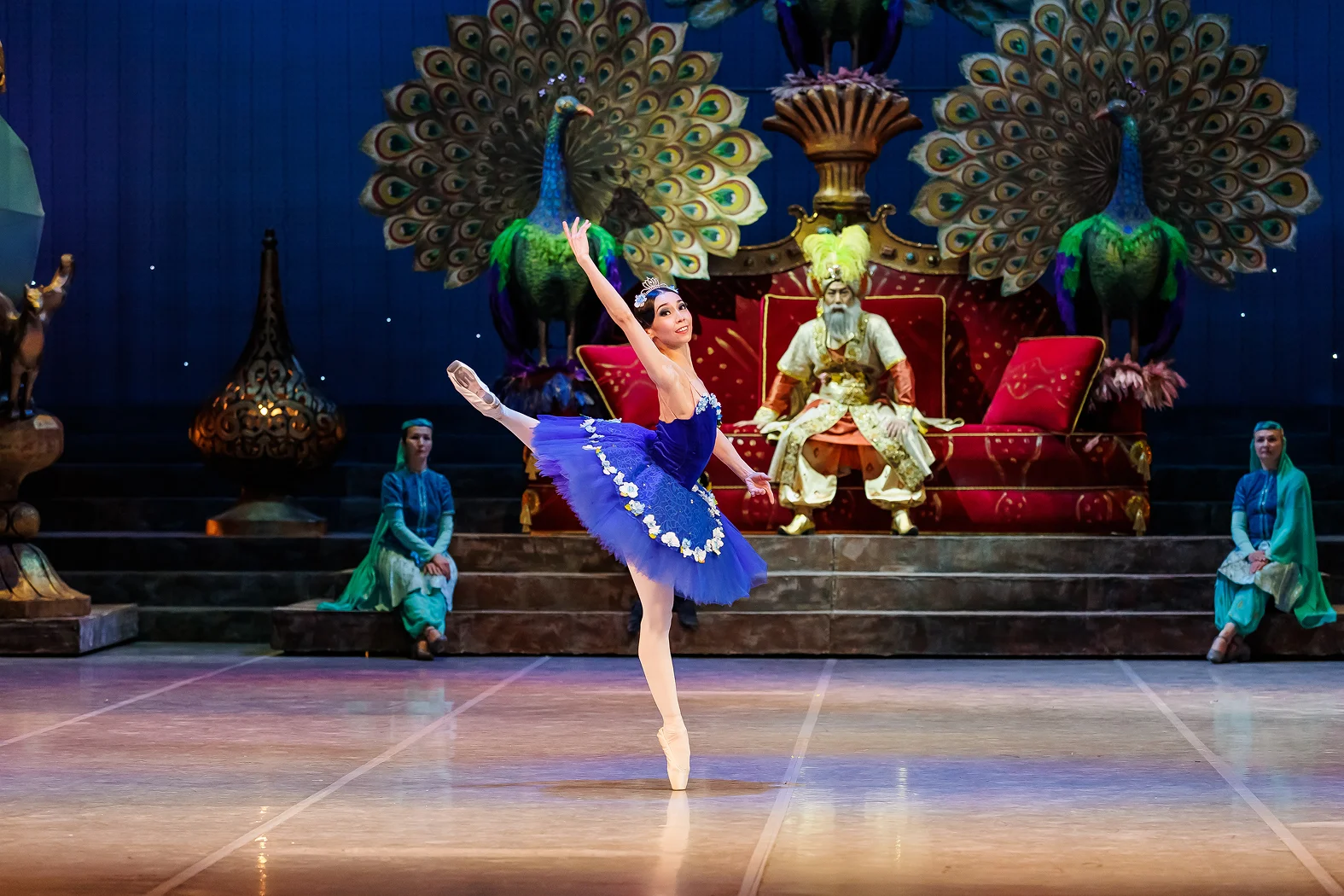
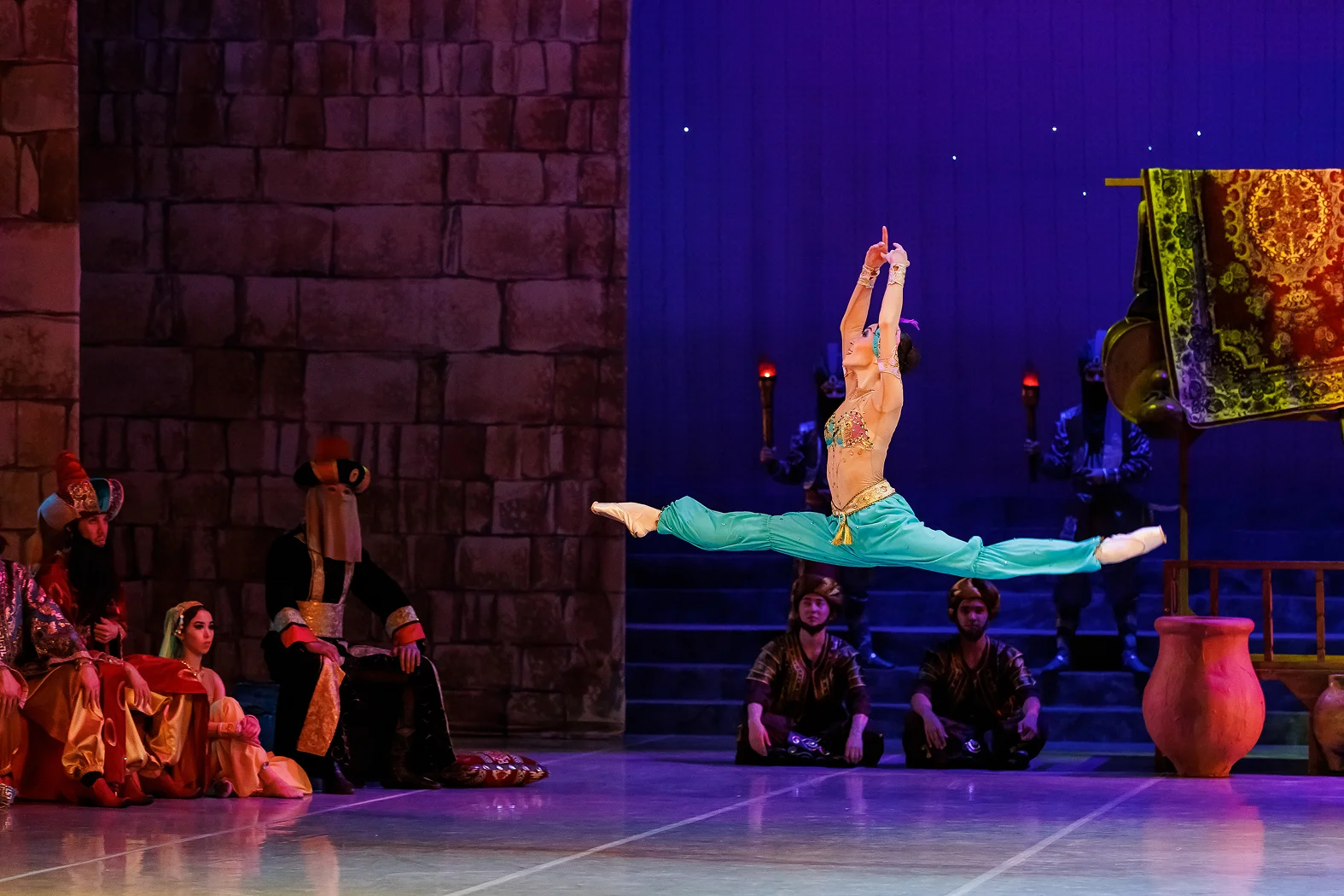
Today, a new version of the ballet is presented to your attention — modern, enchanting, exciting and dynamic, with Gulzhan Tutkibayeva as choreographer-producer. The new performance, staged by conductor Yerbolat Akhmedyarov, set designer William Orlandi, production designer Esengeldy Tuyakov and costume designer Vyacheslav Okunev, will be a gift to the audience. Classical choreography, modern and technically complex scenography, original costumes and music are organically interwoven in the ballet, which will remain in the audience’s memory for its extraordinary grace, danceability and vivid imagery.
A. Adam
Le Corsaire
ballet in two acts
Libretto by J. Saint-Georges and J. Mazilier
based on the poem of the same name by J. Byron
Choreography by M. Petipa, G. Tutkibayeva
The premiere at the Abay Opera House took place on 28.11.2020
Production Team:
Production Conductor – Yerbolat Akhmedyarov, Honored Worker of the Republic of Kazakhstan
Production Choreographer – Gulzhan Tutkibayeva, People’s Artist of the Republic of Kazakhstan
Set Designer – William Orlandi (Italy)
Assistant Set Designer – Esengeldy Tuyakov, Honored Art Worker of the Republic of Kazakhstan
Costume Designer – Vyacheslav Okunev, People’s Artist of Russia, laureate of State Prizes of the Russian Federation and the Republic of Kazakhstan
Videography – Yergen Tokmurzin
Characters
- Conrad, leader of the corsairs
- Isaac Lankedem, slave trader
- Medora
- Gulnara
- Birbanto
- Ali
- Seid, Pasha
- Corsairs, slaves, guards
The action takes place on the shores of the Bosphorus in the early 19th century.
Prologue
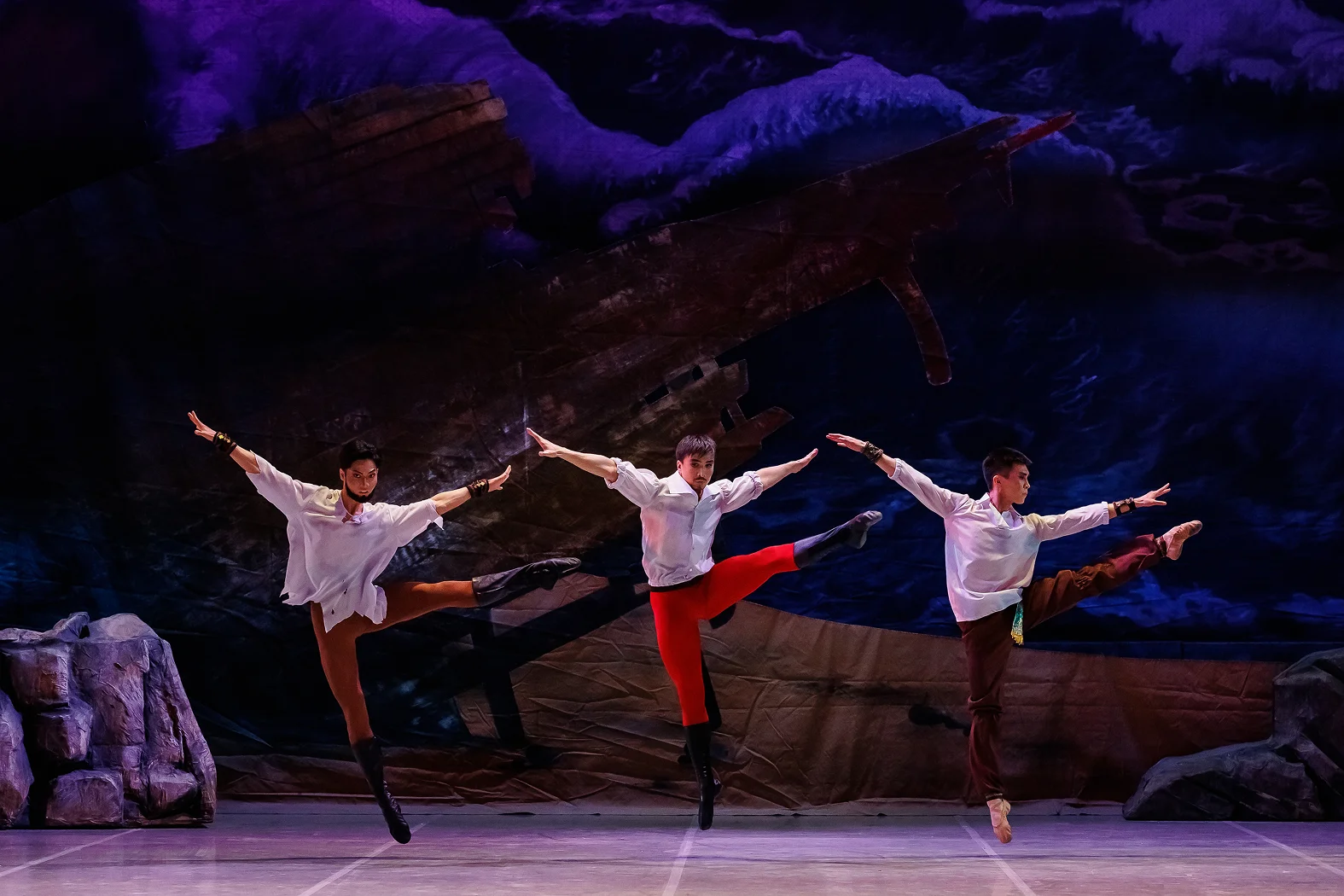
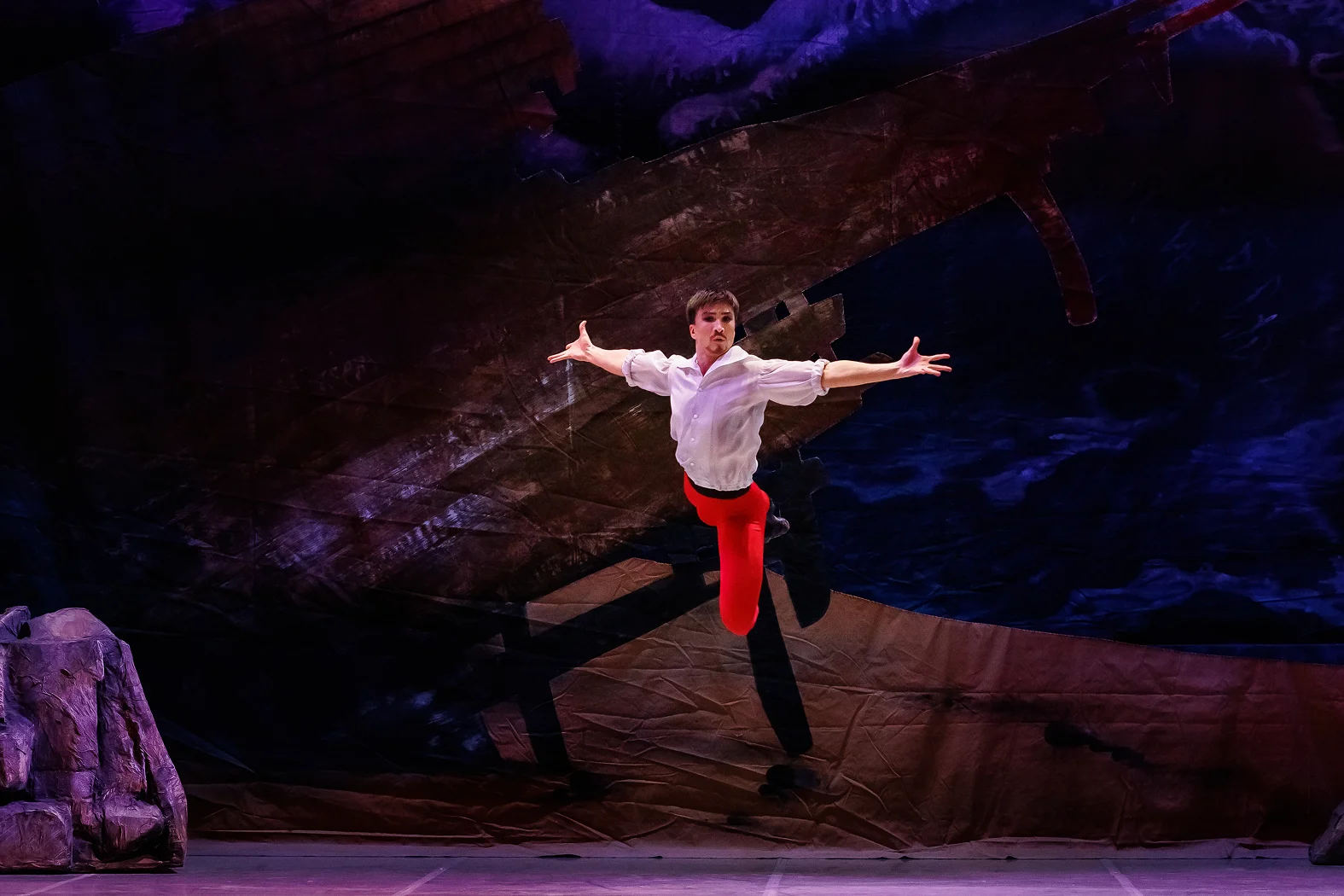
Storm. Shipwreck.
Three brave men on a sailing ship are struggling against the sea.
The ship sinks…
Act I
Scene One
Lagoon
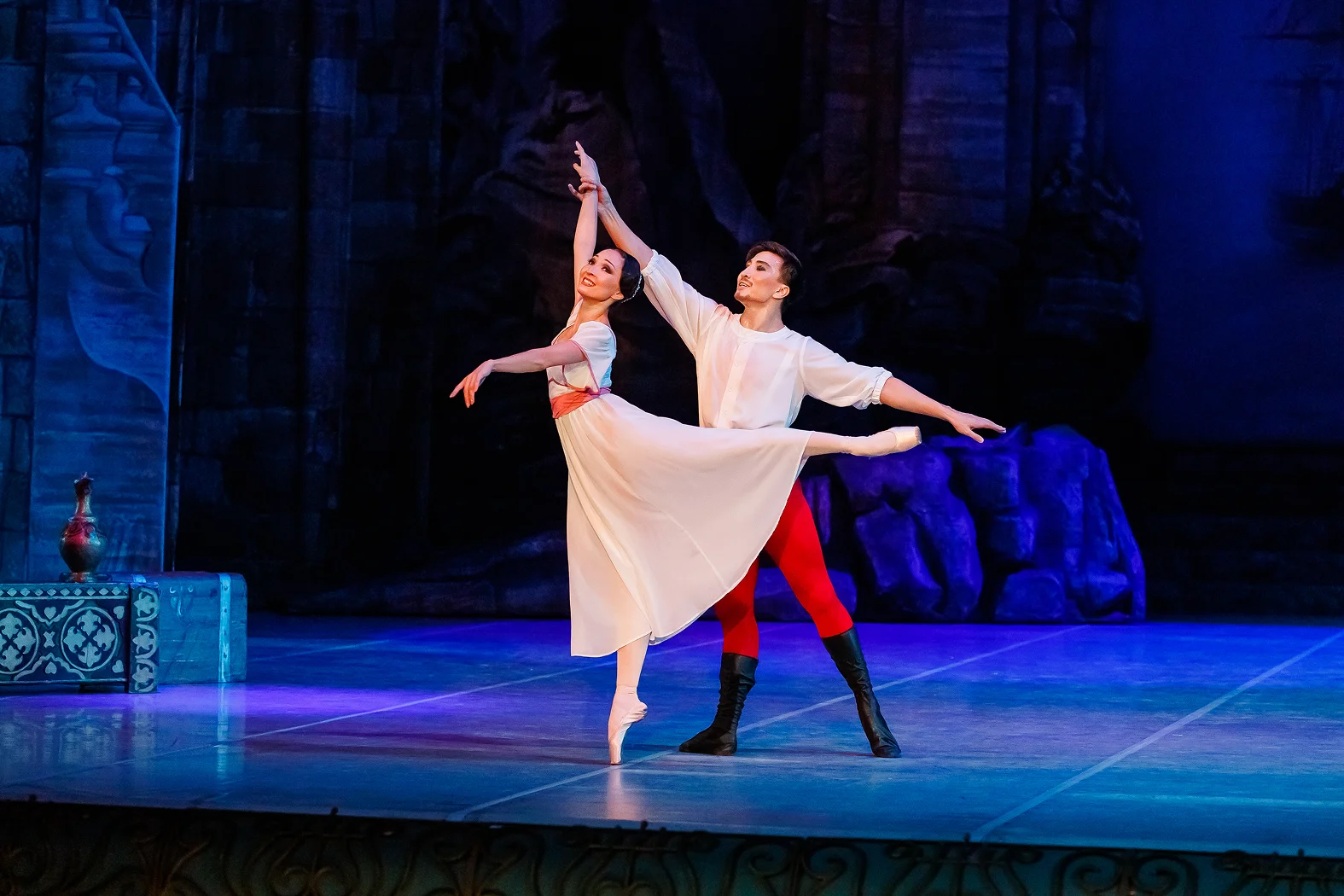
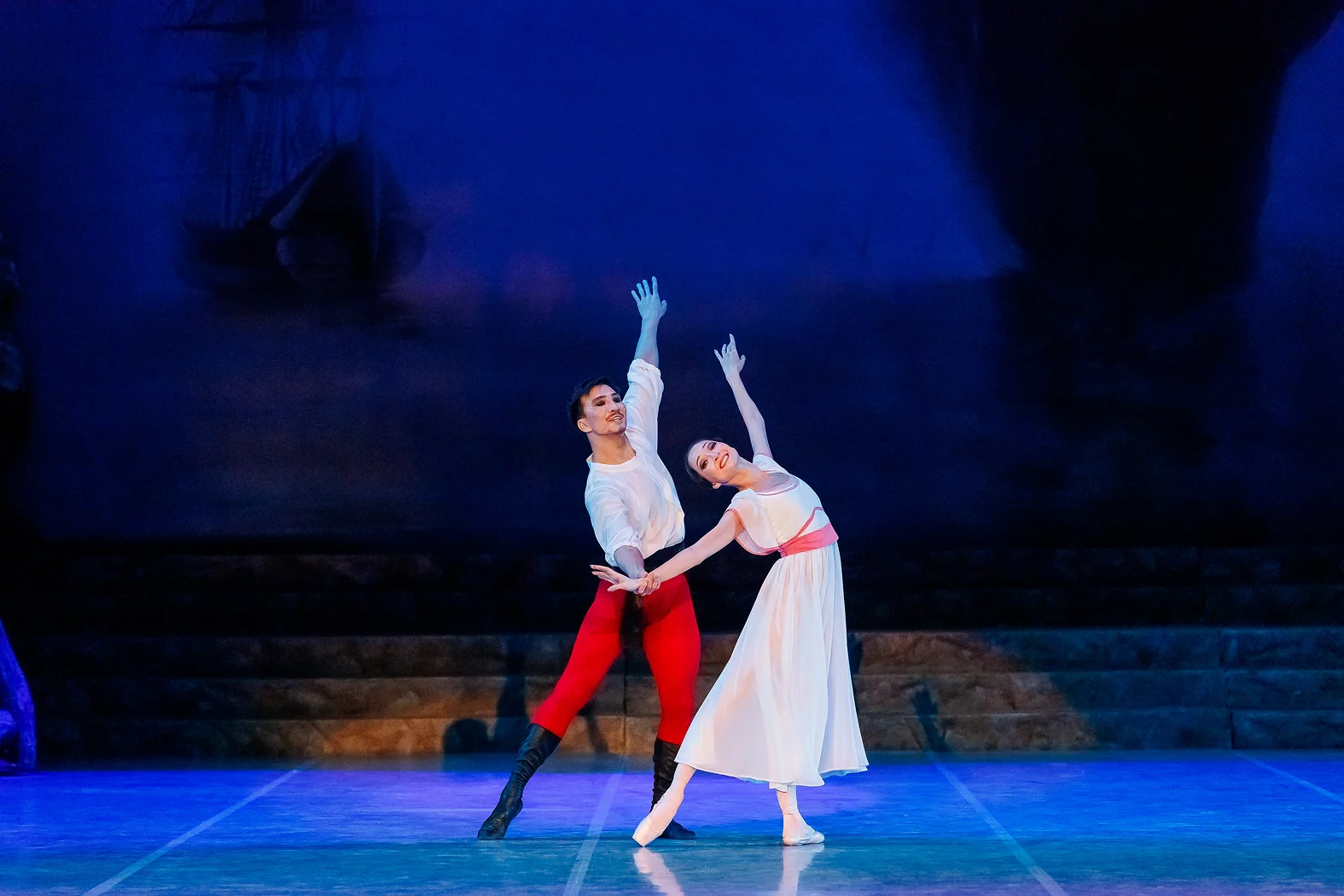
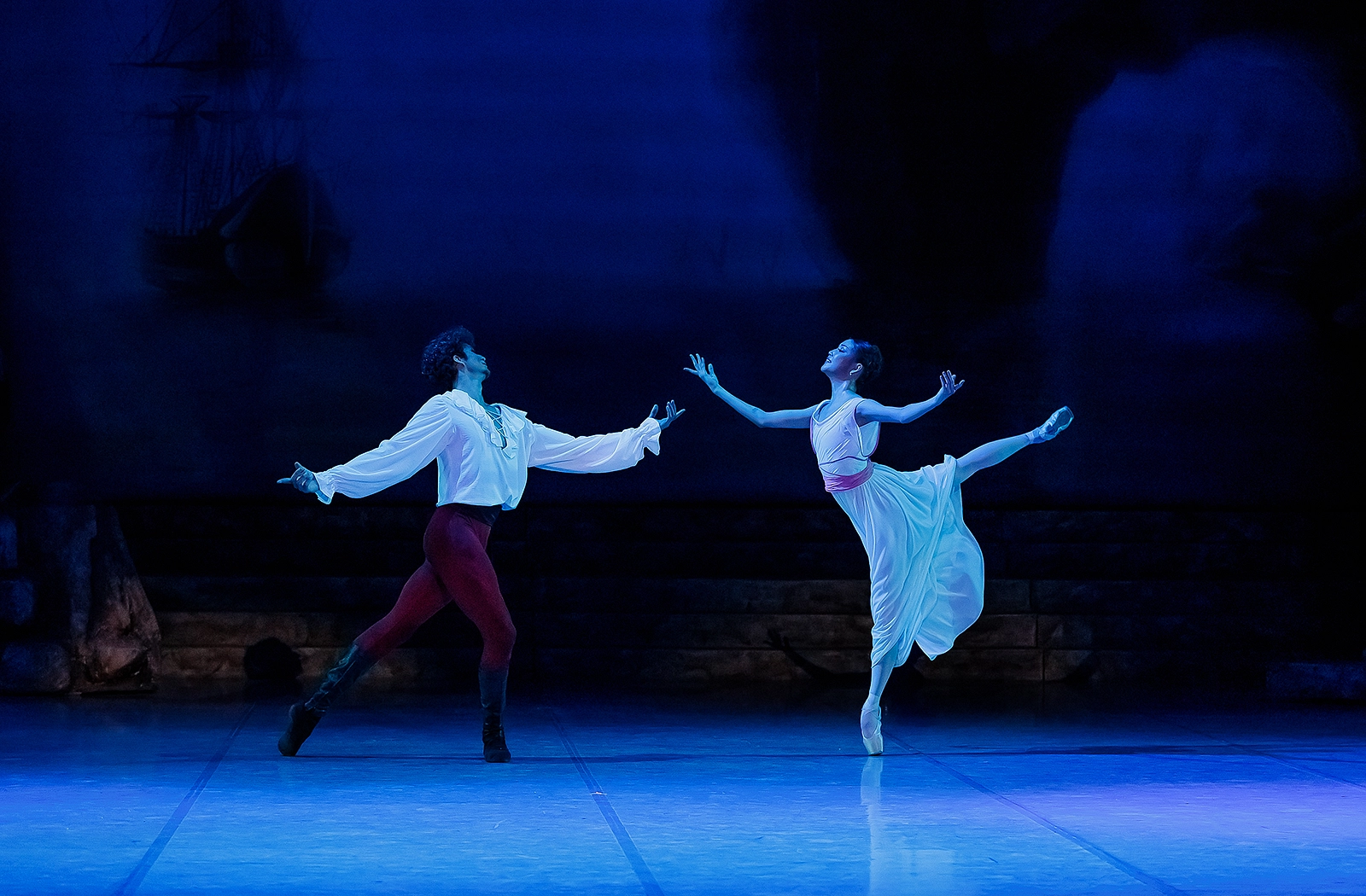
Near the wreckage of the ship, thrown ashore by the waves, are three young men who have survived. Greek girls find them. Medora is especially drawn to one of them — Conrad. He tells them about the shipwreck, about himself and his friends Birbanto and Ali.
The girls announce the approach of a detachment of Turkish soldiers. Medora and Gulnara hide the corsairs, but they themselves are captured.
The slave trader Isaac Lankedem, who has tracked down the girls and led the detachment, is pleased. He generously pays the officer.
The corsairs are unable to help the Greek girls at that moment, but they vow to save them.
Scene Two
Bazaar
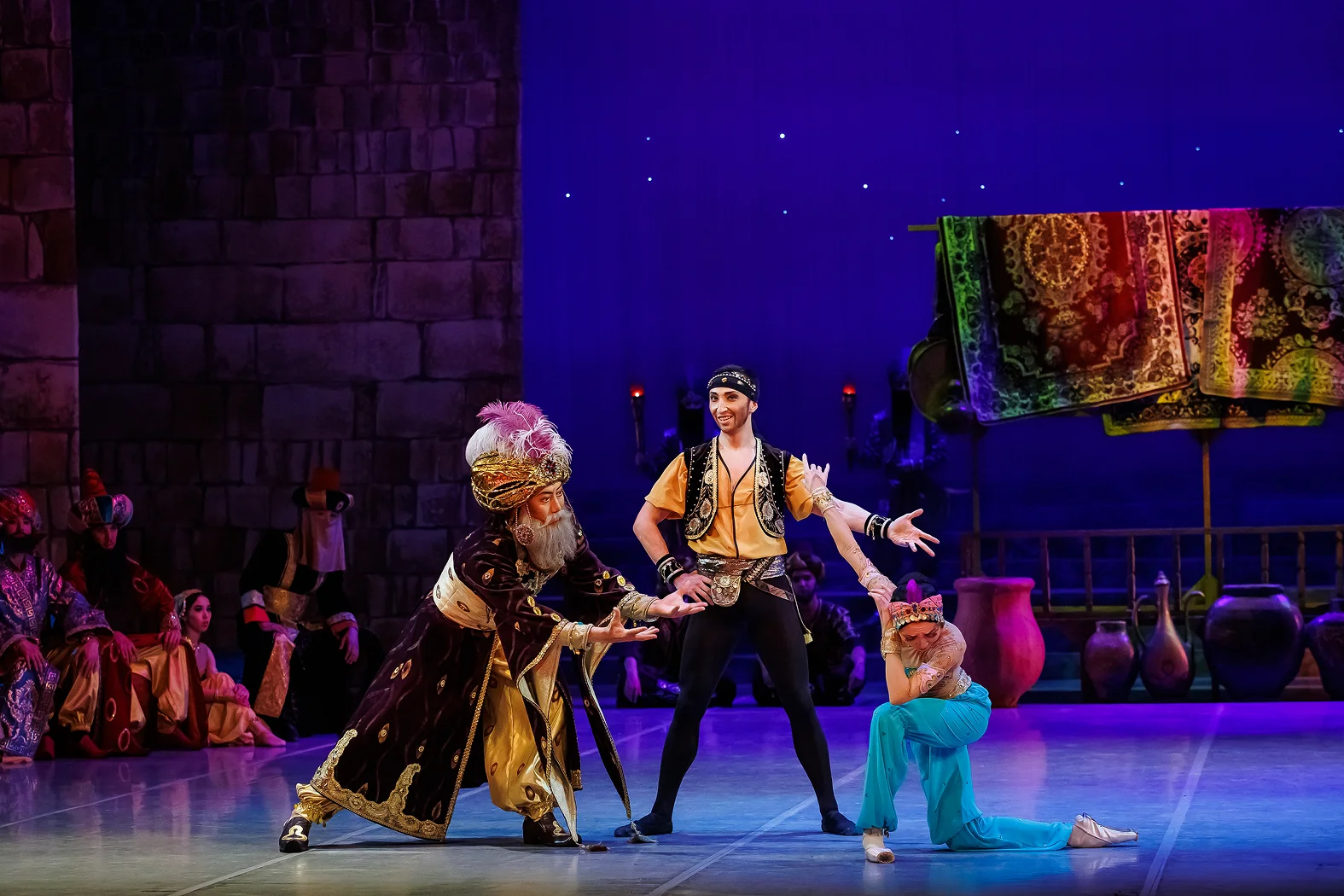
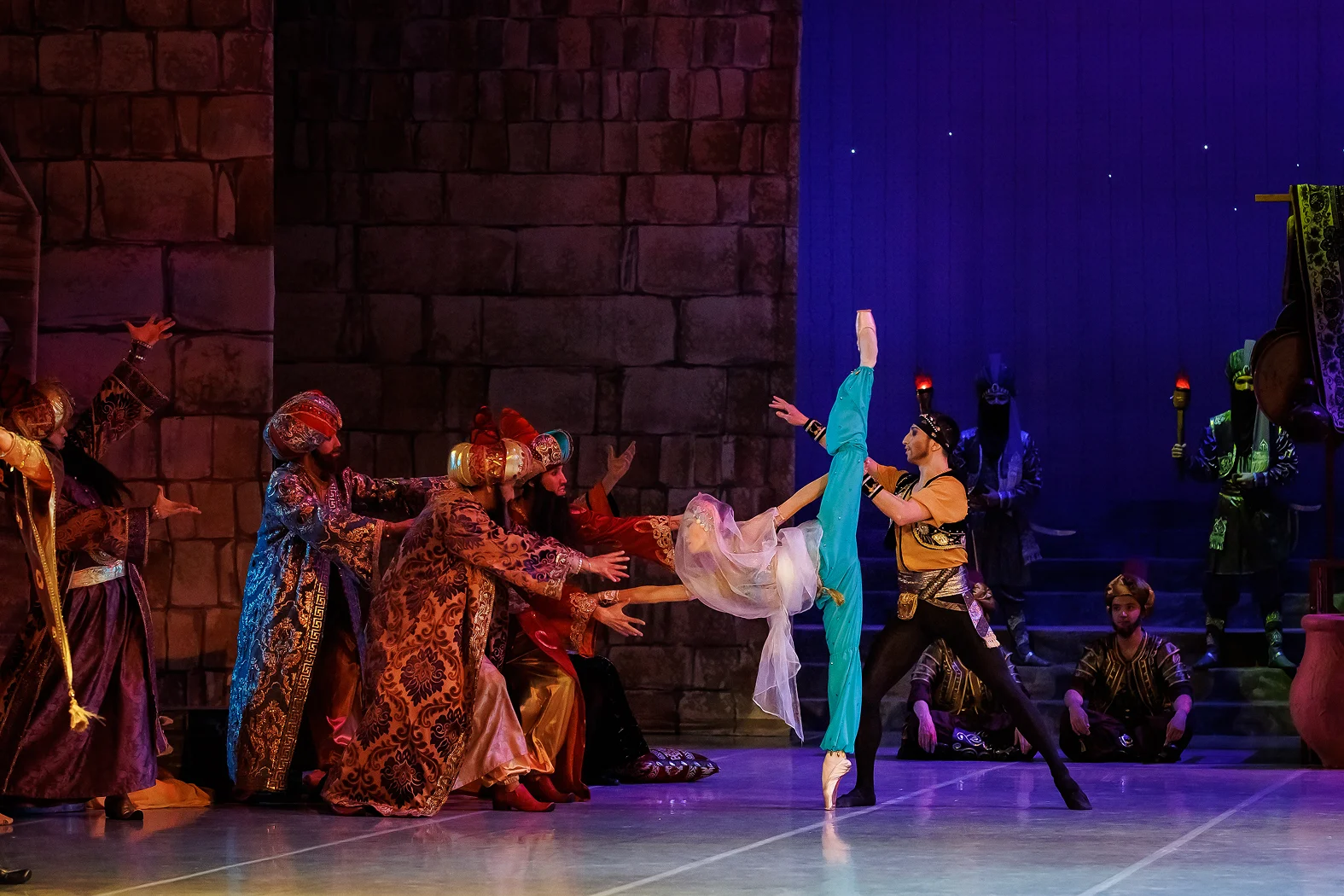
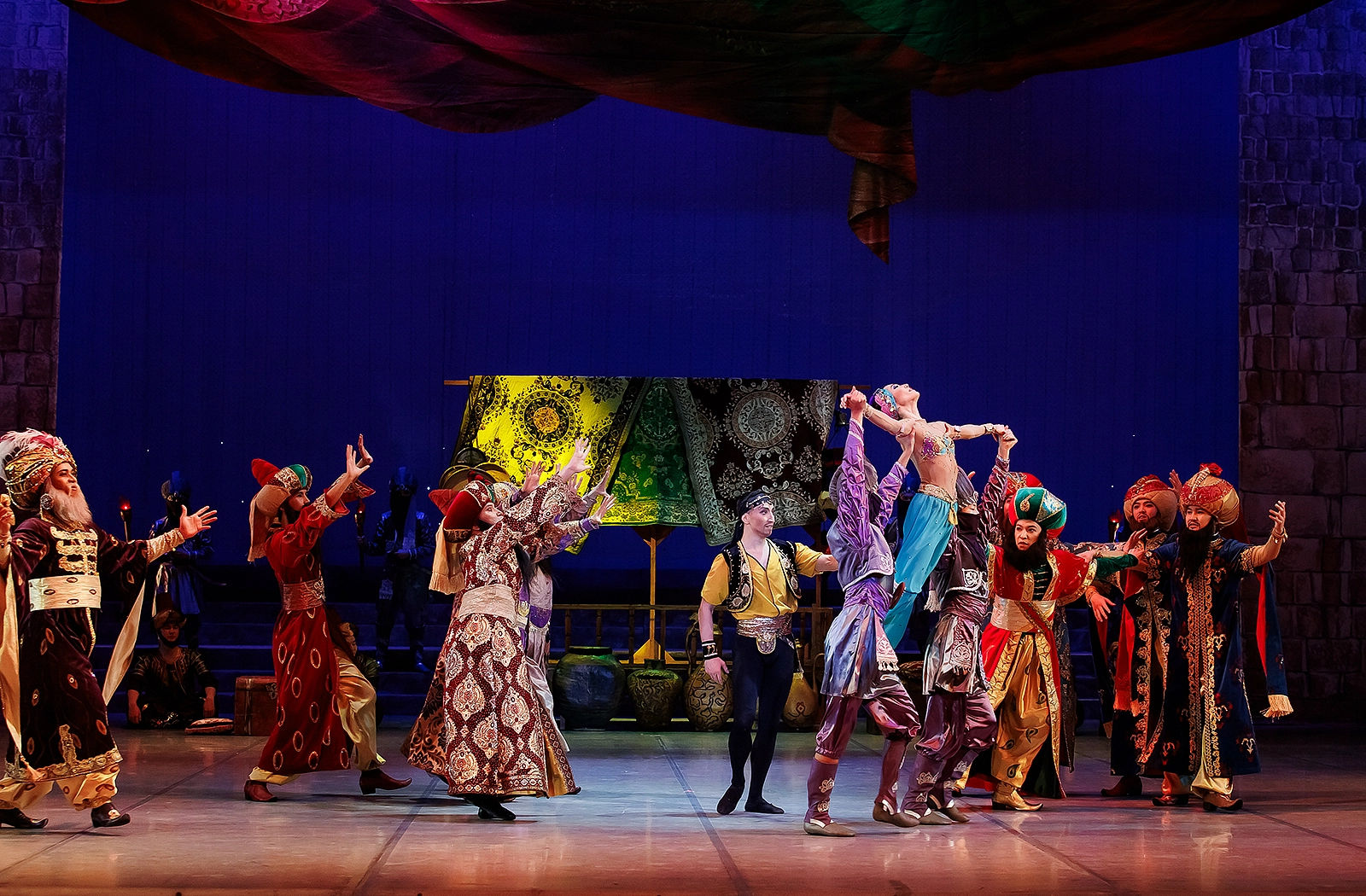
Lankedem shows his slaves to the merchants gathered in the bazaar. Seid Pasha, who wishes to acquire new beauties for his harem, sits in the place of honour. Gulnara catches his attention, and he buys her.
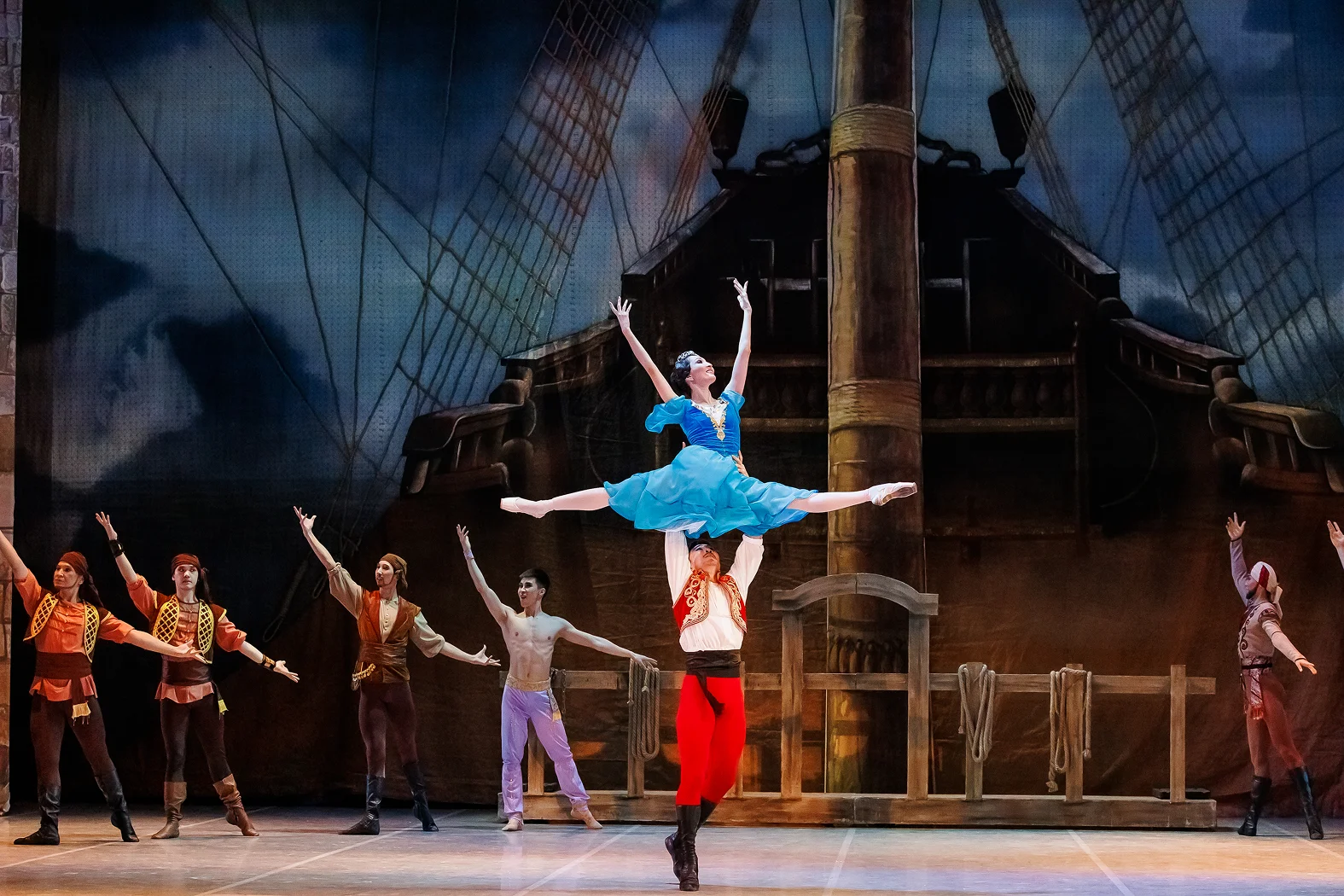
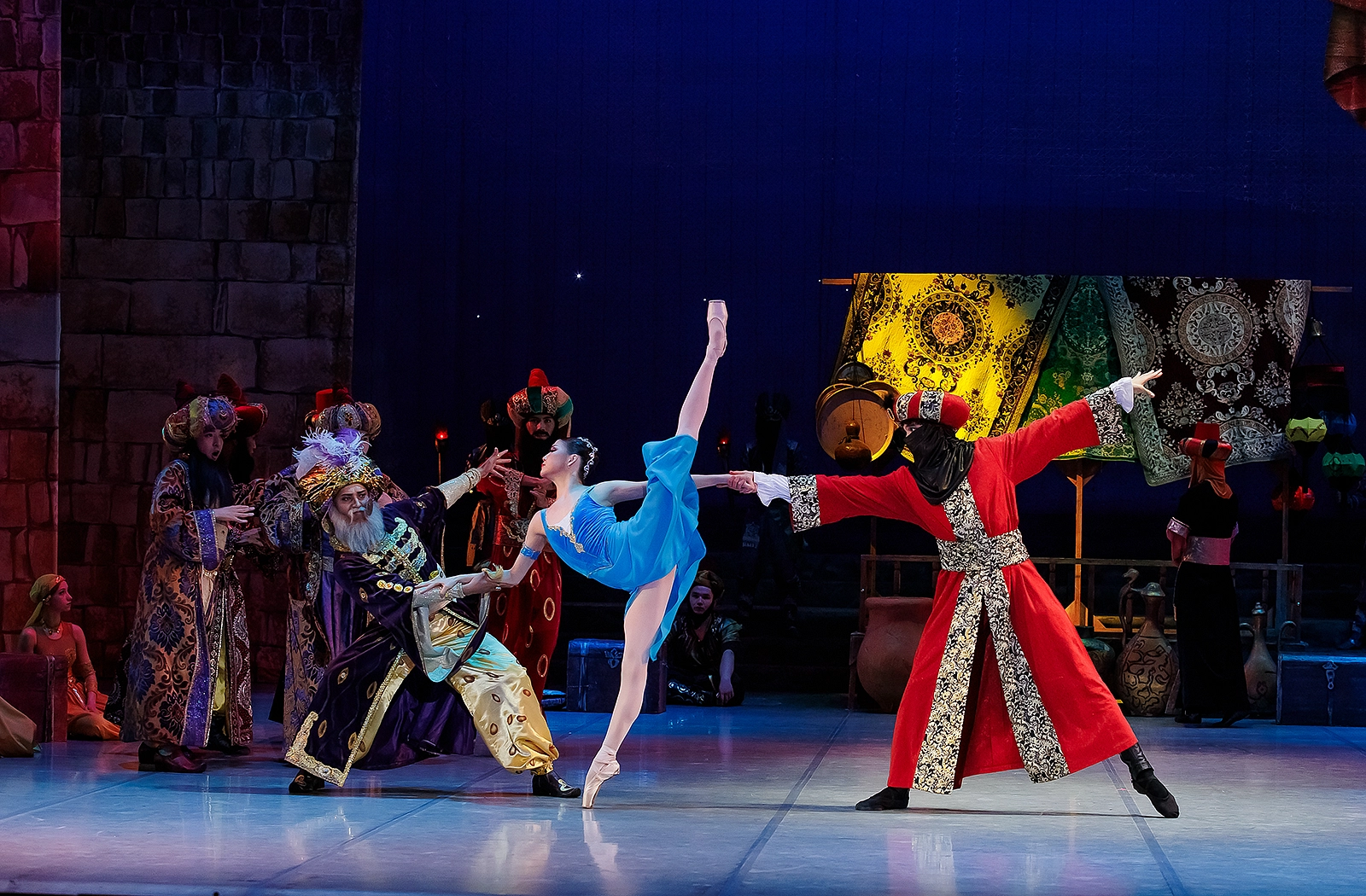
The slave trader presents Medora. She is so beautiful that Seid Pasha is ready to buy her at any price. At this moment, a noble merchant appears. Medora recognizes Conrad in him. Giving the girl a sign not to betray him, the “merchant” begins to bargain, naming an unheard-of high price. Seid Pasha is amazed and invites the wealthy stranger to identify himself. The “merchant” and his retinue throw off their splendid garments, and armed corsairs appear before the astonished Seid Pasha and the merchants. They abduct Medora and the slaves, take Lankedem with them and sail out to sea. The Turkish guards can no longer stop them. Seid Pasha is furious.
Scene Three
Corsair Grotto
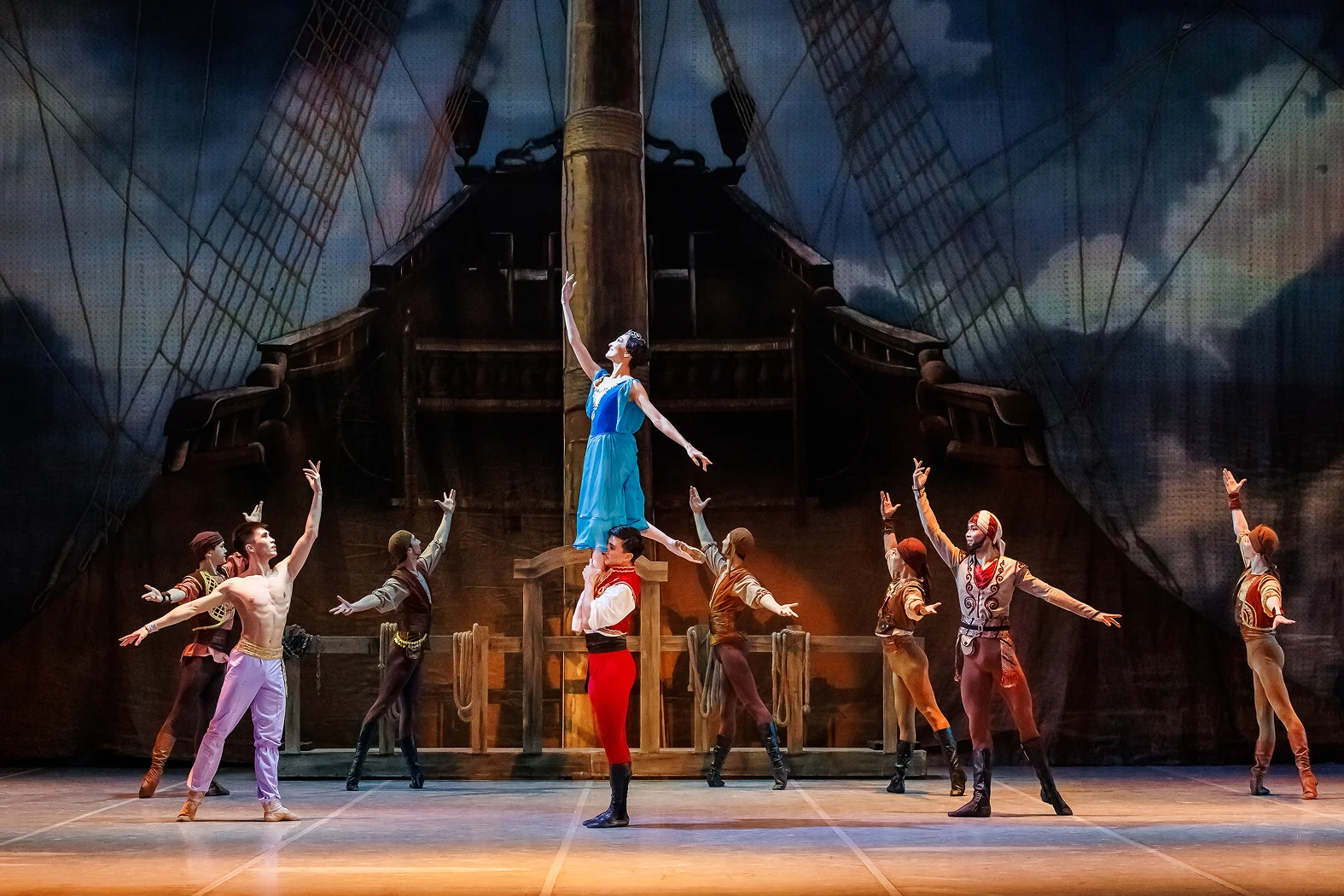
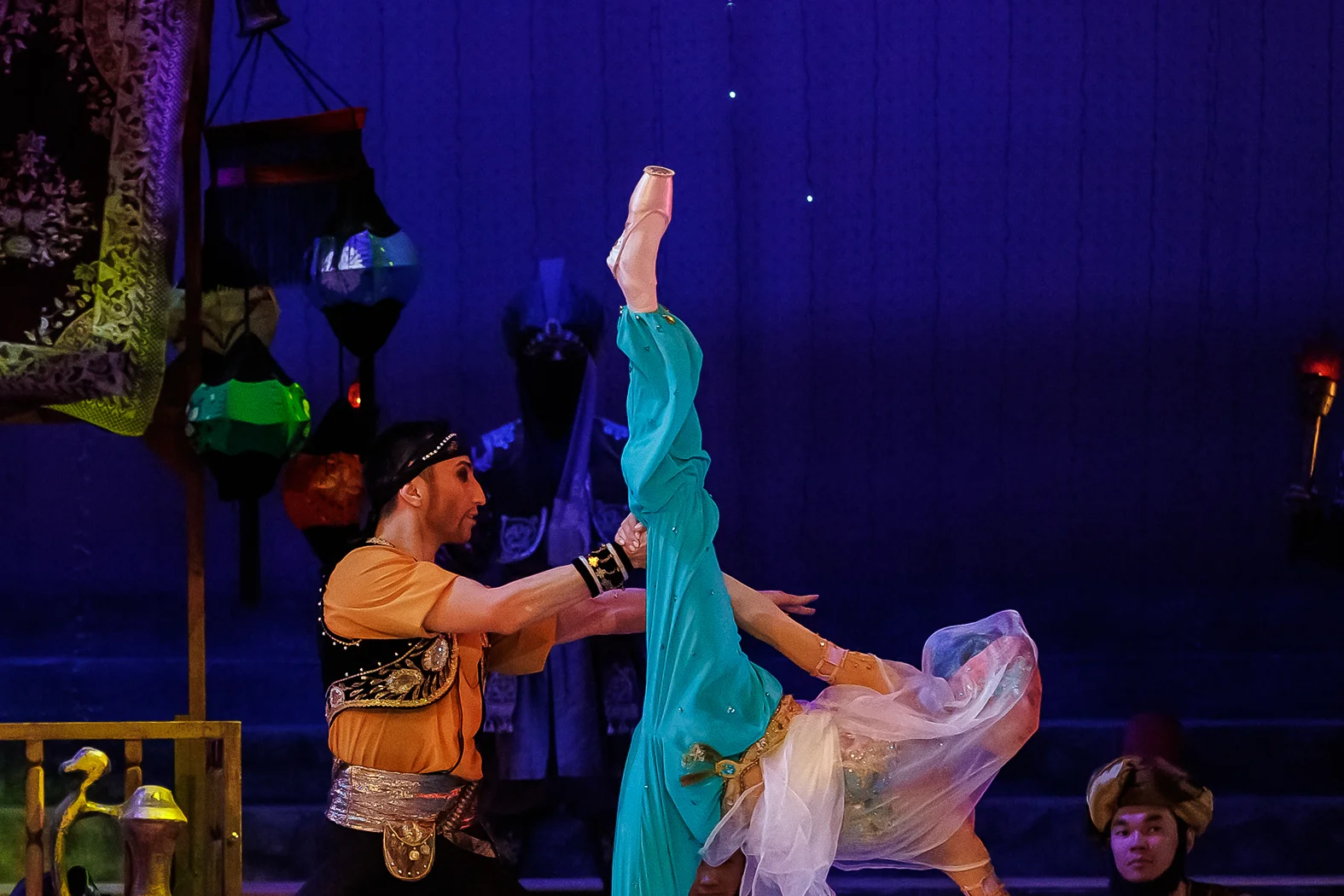
The corsairs are pleased with the rich booty seized from the merchants. In honour of the rescued beauties, they arrange a celebration. The girls join the general merriment. At Conrad’s request, Medora dances with him and his friend Ali. The corsairs admire the beauty of their leader’s chosen one.
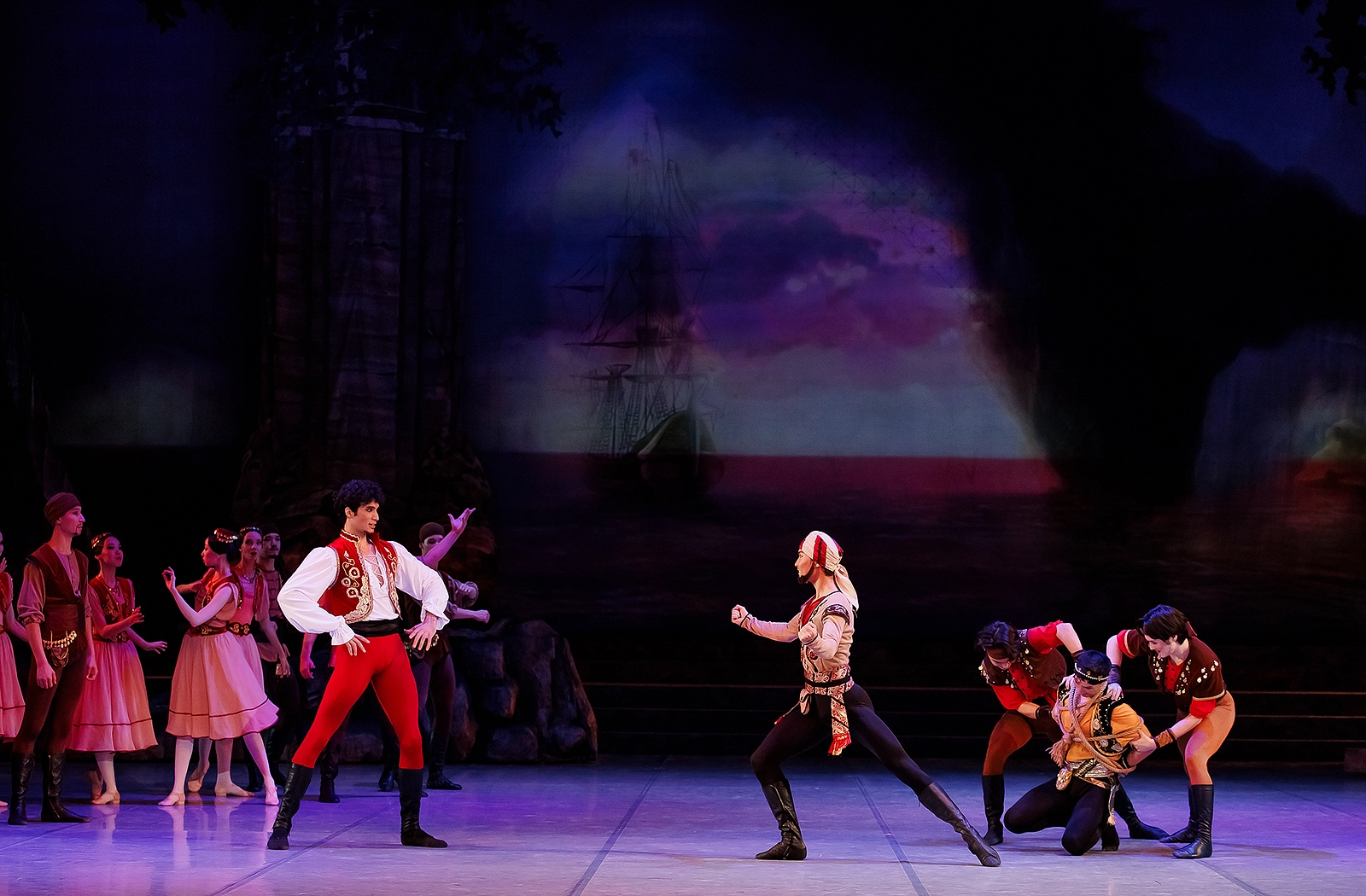
The girls ask Medora to persuade Conrad to let them go home. Conrad agrees, but Birbanto, together with the other corsairs, protests. They demand that the girls remain on the island. A quarrel begins. Conrad nevertheless insists on his decision. Together with Medora, he goes to escort the girls to the seashore.
Birbanto is furious. At that moment, the captive Lankedem calls him over. In exchange for his freedom, he offers Birbanto a chance to take revenge on Conrad. After some thought, Birbanto agrees, and they plan to pour a sleeping potion into Conrad’s wine. The leader of the corsairs falls asleep.
Upon waking, Conrad discovers that his beloved has disappeared. He vows to find and free her.
Act II
Scene Four
Harem of Seid Pasha
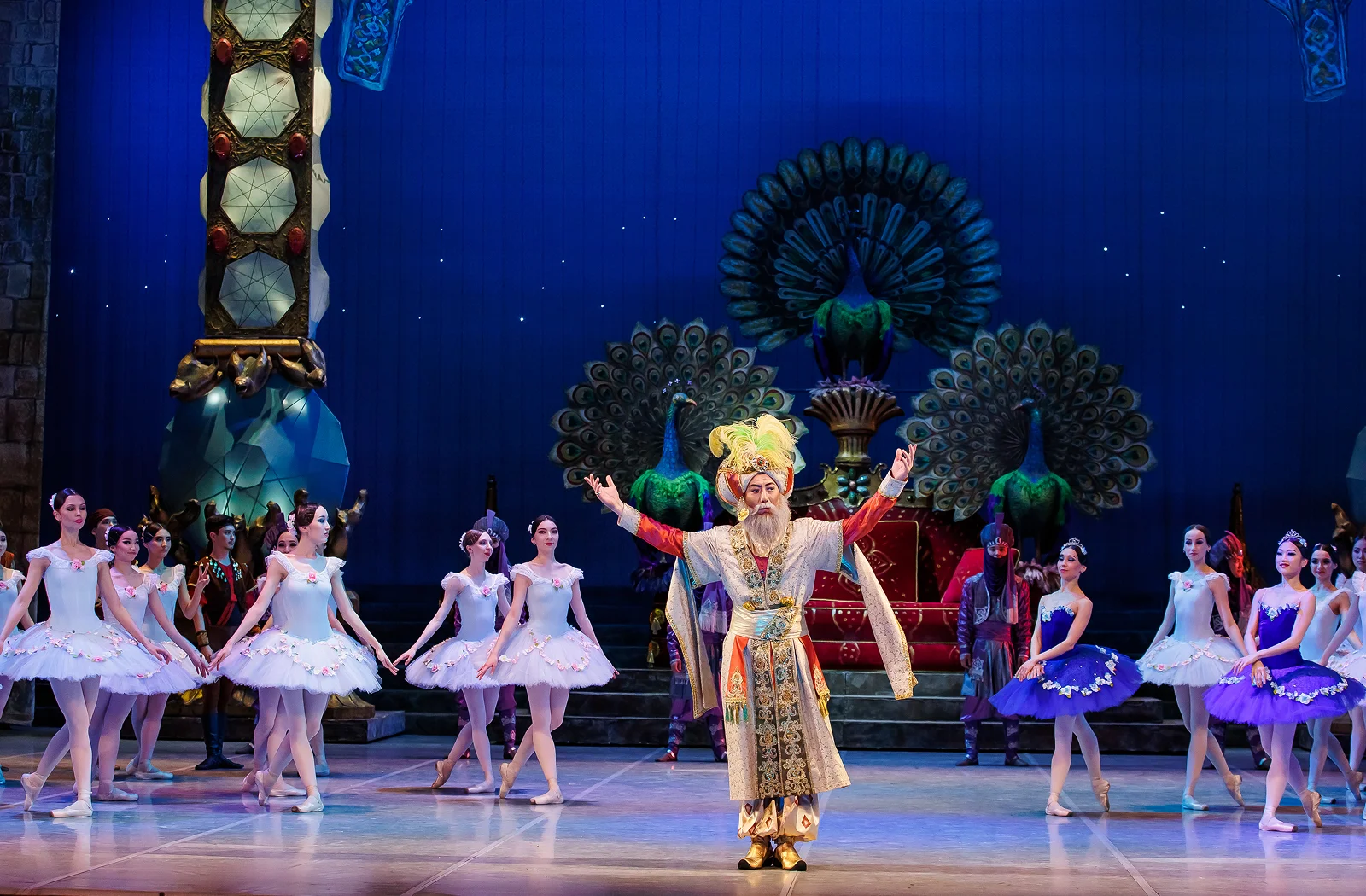
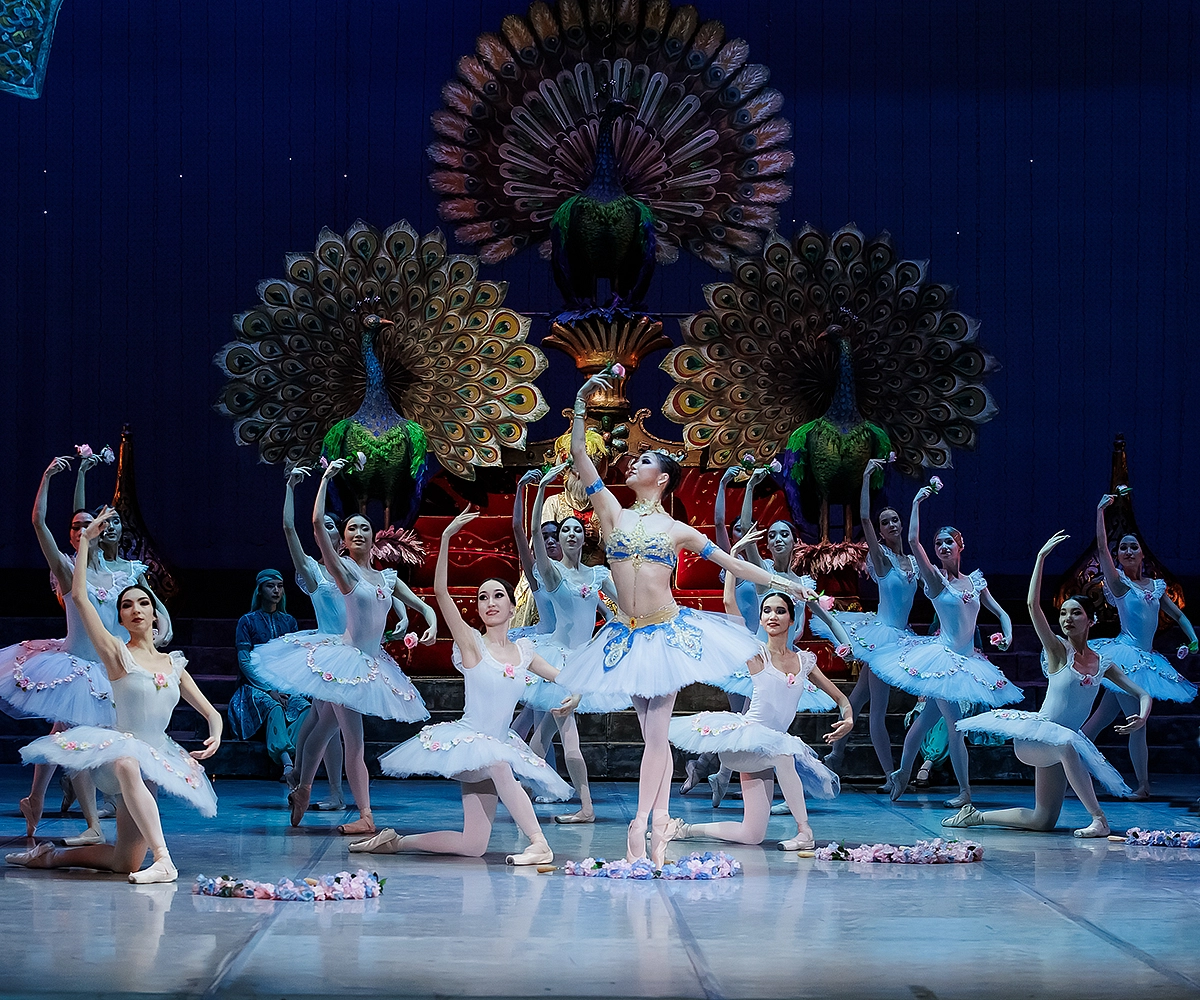
Seid Pasha admires Gulnara’s beauty. The new slaves offered by Lankedem do not please him. Then the slave trader brings Medora into the beautiful “living garden” formed by the girls. The Pasha is delighted. He buys her.
The corsairs appear in the palace disguised as pilgrims. The Pasha invites the “pilgrims” to evening prayer, and Medora recognizes Conrad among them. The corsairs engage the Pasha’s guards in battle and rescue Medora.
Epilogue
Sea
On a free ship, rushing under full sail into the stormy sea, are Conrad, Medora and their friends…
Archived
Le Corsaire is a vivid romantic ballet about love and freedom in a world of sea adventures.
The ballet Le Corsaire has been considered a brilliant pearl in the treasury of world musical classics for more than a century and a half. Alongside another celebrated masterpiece by Adolphe Adam, the ballet Giselle, it belongs to the golden fund of the world ballet repertoire. The libretto is based on Byron’s poem of the same name. Before Adam, Byron’s poem had also been brought to the musical stage by other composers; in particular, G. Verdi composed an opera of the same name in 1848. Ballets were also staged. The first known ballet production under the same title was presented at La Scala in Milan in 1826, choreographed by the Italian ballet master Giovanni Galzerani, but none of these ballets has survived to the present day.
The premiere of the ballet took place on 23 January 1856 at the Paris Opera, and two years later, on 12 January 1858, Le Corsaire was staged for the first time in St. Petersburg by the renowned choreographer Jules-Joseph Perrot. Perrot himself performed the role of Seid Pasha, while Marius Petipa performed the role of Conrad “with great energy”.
The librettists of 19th-century ballet performances, Jules-Henri Vernoy de Saint-Georges and Joseph Mazilier, created a vivid picture from the life of corsairs. Since the first production, the choreography has changed and musical numbers have been added, yet the plot has remained the same from 1856 to the present day. Le Corsaire, which appeared in the very middle of the 19th century, bears the bright imprint of Romantic aesthetics.
Adam is considered one of the finest melodists among 19th-century composers. His ballets Giselle and Le Corsaire occupy an honoured place in the repertoire of major ballet companies around the world. At the Abay Kazakh State Academic Opera and Ballet Theatre, Le Corsaire was first staged in 1993 by the Novosibirsk ballet master Vladimir Vladimirov. The leading ballet soloists shone in the principal roles: Kuralai Sarkytbaeva, Murat Tukeev, Dmitry Sushkov, Ulan Badenov, Serik Turabaev, Yerzhan Doskaraev and Zhumat Kartamysov. The role of Medora was performed by the theatre’s prima ballerina Gulzhan Tutkibayeva.
Today, a new version of the ballet is presented to your attention — modern, enchanting, exciting and dynamic, with Gulzhan Tutkibayeva as choreographer-producer. The new performance, staged by conductor Yerbolat Akhmedyarov, set designer William Orlandi, production designer Esengeldy Tuyakov and costume designer Vyacheslav Okunev, will be a gift to the audience. Classical choreography, modern and technically complex scenography, original costumes and music are organically interwoven in the ballet, which will remain in the audience’s memory for its extraordinary grace, danceability and vivid imagery.
A. Adam
Le Corsaire
ballet in two acts
Libretto by J. Saint-Georges and J. Mazilier
based on the poem of the same name by J. Byron
Choreography by M. Petipa, G. Tutkibayeva
The premiere at the Abay Opera House took place on 28.11.2020
Production Team:
Production Conductor – Yerbolat Akhmedyarov, Honored Worker of the Republic of Kazakhstan
Production Choreographer – Gulzhan Tutkibayeva, People’s Artist of the Republic of Kazakhstan
Set Designer – William Orlandi (Italy)
Assistant Set Designer – Esengeldy Tuyakov, Honored Art Worker of the Republic of Kazakhstan
Costume Designer – Vyacheslav Okunev, People’s Artist of Russia, laureate of State Prizes of the Russian Federation and the Republic of Kazakhstan
Videography – Yergen Tokmurzin
Characters
- Conrad, leader of the corsairs
- Isaac Lankedem, slave trader
- Medora
- Gulnara
- Birbanto
- Ali
- Seid, Pasha
- Corsairs, slaves, guards
The action takes place on the shores of the Bosphorus in the early 19th century.
Prologue
Storm. Shipwreck.
Three brave men on a sailing ship are struggling against the sea.
The ship sinks…
Act I
Scene One
Lagoon
Near the wreckage of the ship, thrown ashore by the waves, are three young men who have survived. Greek girls find them. Medora is especially drawn to one of them — Conrad. He tells them about the shipwreck, about himself and his friends Birbanto and Ali.
The girls announce the approach of a detachment of Turkish soldiers. Medora and Gulnara hide the corsairs, but they themselves are captured.
The slave trader Isaac Lankedem, who has tracked down the girls and led the detachment, is pleased. He generously pays the officer.
The corsairs are unable to help the Greek girls at that moment, but they vow to save them.
Scene Two
Bazaar
Lankedem shows his slaves to the merchants gathered in the bazaar. Seid Pasha, who wishes to acquire new beauties for his harem, sits in the place of honour. Gulnara catches his attention, and he buys her.
The slave trader presents Medora. She is so beautiful that Seid Pasha is ready to buy her at any price. At this moment, a noble merchant appears. Medora recognizes Conrad in him. Giving the girl a sign not to betray him, the “merchant” begins to bargain, naming an unheard-of high price. Seid Pasha is amazed and invites the wealthy stranger to identify himself. The “merchant” and his retinue throw off their splendid garments, and armed corsairs appear before the astonished Seid Pasha and the merchants. They abduct Medora and the slaves, take Lankedem with them and sail out to sea. The Turkish guards can no longer stop them. Seid Pasha is furious.
Scene Three
Corsair Grotto
The corsairs are pleased with the rich booty seized from the merchants. In honour of the rescued beauties, they arrange a celebration. The girls join the general merriment. At Conrad’s request, Medora dances with him and his friend Ali. The corsairs admire the beauty of their leader’s chosen one.
The girls ask Medora to persuade Conrad to let them go home. Conrad agrees, but Birbanto, together with the other corsairs, protests. They demand that the girls remain on the island. A quarrel begins. Conrad nevertheless insists on his decision. Together with Medora, he goes to escort the girls to the seashore.
Birbanto is furious. At that moment, the captive Lankedem calls him over. In exchange for his freedom, he offers Birbanto a chance to take revenge on Conrad. After some thought, Birbanto agrees, and they plan to pour a sleeping potion into Conrad’s wine. The leader of the corsairs falls asleep.
Upon waking, Conrad discovers that his beloved has disappeared. He vows to find and free her.
Act II
Scene Four
Harem of Seid Pasha
Seid Pasha admires Gulnara’s beauty. The new slaves offered by Lankedem do not please him. Then the slave trader brings Medora into the beautiful “living garden” formed by the girls. The Pasha is delighted. He buys her.
The corsairs appear in the palace disguised as pilgrims. The Pasha invites the “pilgrims” to evening prayer, and Medora recognizes Conrad among them. The corsairs engage the Pasha’s guards in battle and rescue Medora.
Epilogue
Sea
On a free ship, rushing under full sail into the stormy sea, are Conrad, Medora and their friends…
Cast and Performers
(February 15, 2026, 18:00)
- Медора Алия Манабасова
- Гюльнара Динара Есентаева
- Конрад, предводитель корсаров Нельсон Пенья
- Али Данияр Рыскул (первое исполнение)
- Исаак Ланкедем, работорговец Рафаэль Уразов
- Бирбанто Сырым Аюпов
- Сеид, паша Даурен Женис
- Трио Акбота Бекболатова, Динара Кудабаева, Нурай Нурсафина (первое исполнение)
- Офицер Амир Жексенбек
- Корсары, невольницы, стража – артисты балета
- Симфонический оркестр и балетная труппа Казахского национального театра оперы и балета имени Абая
- Дирижёр Куаныш Исмаилов
Gallery
Gallery